
Trump Imposes Blanket 25% Tariff on All Indian Products, Including Pharma and Electronics: GTRI
This blanket tariff is being described by GTRI as one of the toughest trade actions taken by the US against a major trading partner in recent years.
- Republic Business
- 3 min read

;'%3e%3cpath%20d='m8,15.99c4.41,0,7.99-3.58,7.99-7.99S12.41,0,8,0,0,3.59,0,8s3.58,7.99,7.99,7.99Z'%20style='stroke:%23fff;%20stroke-miterlimit:10;%20stroke-width:.02px;'/%3e%3cpath%20d='m3.08,3.37l3.82,5.11-3.84,4.15h.87l3.37-3.64,2.72,3.64h2.94l-4.04-5.39,3.58-3.87h-.86l-3.1,3.35-2.5-3.35h-2.94Zm1.27.64h1.35l5.97,7.99h-1.35l-5.97-7.99Z'%20style='fill:%23fff;'/%3e%3c/g%3e%3c/svg%3e)


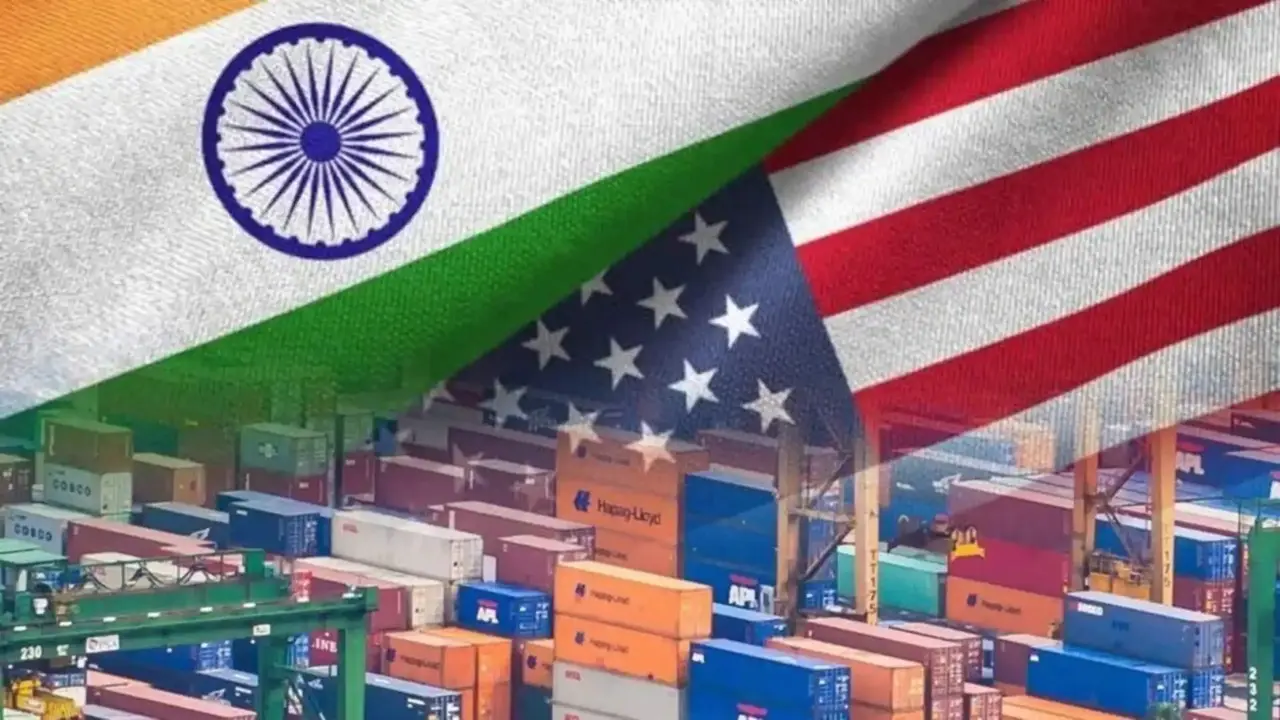
US President Donald Trump has signed an executive order imposing a flat 25% tariff on all goods from India, effective August 7, 2025. This unprecedented move, confirmed by the Global Trade Research Initiative (GTRI), offers no product-level exemptions, a departure from the US's approach with other trading partners. The decision is expected to severely impact Indian exports, with GTRI estimating a potential 30% decline in goods exports to the US in FY2026.
The executive order, dated July 31, states that goods from trading partners who have not concluded "meaningful trade and security agreements" with the United States will be subject to these additional ad valorem duties. Unlike other nations that have secured exemptions for critical sectors, India faces a uniform 25% duty across the board, over and above existing Most Favoured Nation (MFN) tariffs.
This blanket tariff is being described by GTRI as one of the toughest trade actions taken by the US against a major trading partner in recent years. The absence of exemptions for key sectors like pharmaceuticals (USD 9.8 billion in FY2025 exports to US), crude oil (USD 4.1 billion), and electronics, including smartphones (USD 10.9 billion), is expected to hit Indian exports particularly hard. Other sectors such as engineering goods and textiles will also bear the brunt of these increased duties.
GTRI's preliminary estimates suggest that India's goods exports to the US could plummet from USD 86.5 billion in FY2025 to USD 60.6 billion in FY2026. The most vulnerable categories are identified as petroleum products, pharmaceuticals, and electronics, largely due to their high import content and relatively low domestic value addition.
While some trading partners have been granted tariff exemptions for categories like finished pharmaceutical drugs, active pharmaceutical ingredients (APIs), energy products (crude oil, refined fuels, natural gas, coal, and electricity), critical minerals, and various electronics and semiconductors, India has been conspicuously excluded from such concessions.
Goods from India already in transit will receive a grace period, allowing them to clear customs at earlier tariff rates (generally 10% on most products, with steel and aluminum at 50%) until October 5, 2025. However, further clarification is awaited on how the new 25% duty will apply to products like steel and automobiles, which already face existing tariffs of 50% and 25% respectively.
This move comes amidst ongoing, yet stalled, bilateral trade agreement negotiations between India and the US. The tariffs are widely seen as a pressure tactic by the US to expedite a trade deal on its terms.
Also Read: How Uday Kotak Built a Rs 4 Lakh Crore Business Empire from a 4% Spread