
Trump-Putin Meeting: How Ending Ukraine War Could Ease US Tariffs And Benefit India
The upcoming meeting between US President Donald Trump and Russian President Vladimir Putin in Alaska has raised hopes for a possible ceasefire in Ukraine. While the war’s direct impact on India has been limited, a breakthrough could bring multiple benefits for New Delhi — especially at a time of rising trade tensions with Washington.
- Republic Business
- 3 min read

;'%3e%3cpath%20d='m8,15.99c4.41,0,7.99-3.58,7.99-7.99S12.41,0,8,0,0,3.59,0,8s3.58,7.99,7.99,7.99Z'%20style='stroke:%23fff;%20stroke-miterlimit:10;%20stroke-width:.02px;'/%3e%3cpath%20d='m3.08,3.37l3.82,5.11-3.84,4.15h.87l3.37-3.64,2.72,3.64h2.94l-4.04-5.39,3.58-3.87h-.86l-3.1,3.35-2.5-3.35h-2.94Zm1.27.64h1.35l5.97,7.99h-1.35l-5.97-7.99Z'%20style='fill:%23fff;'/%3e%3c/g%3e%3c/svg%3e)


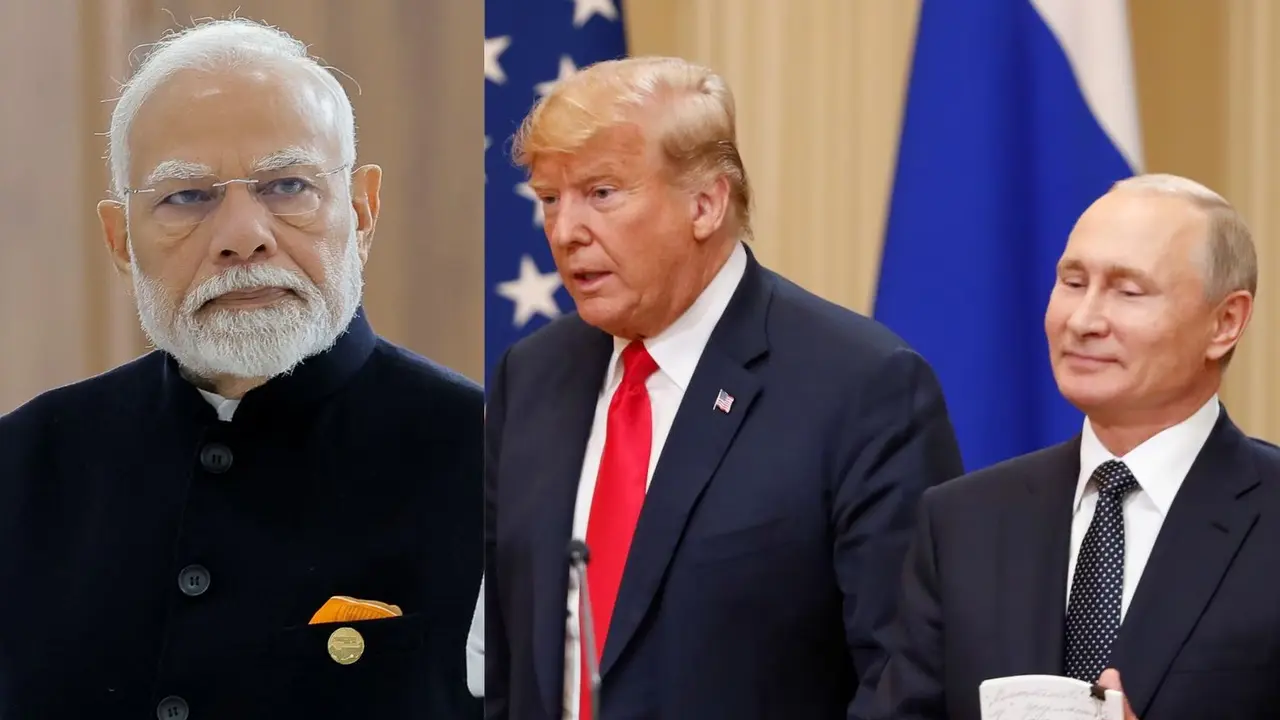
As US President Donald Trump prepares to meet Russian President Vladimir Putin in Alaska on August 15, the stakes are high not only for Ukraine and Europe but also for India.
The meeting could pave the way for a ceasefire in Ukraine, and that outcome might directly influence Washington’s trade policy toward New Delhi.
Why the War Has Led to Higher US Tariffs on India
The US recently announced steep tariff hikes on Indian goods, raising duties to 50% in response to India’s purchases of Russian crude oil and military equipment. On August 6, Trump imposed an additional 25% tariff on most Indian imports, on top of an earlier 25% hike.
The White House has argued that India’s Russian oil imports have “fuelled” Moscow’s war machine.
Advertisement
An executive order imposing these extra tariffs takes effect on August 27, giving both sides a short negotiation window.
India has rejected the US move as “extremely unfortunate” and insisted that its energy policy serves national interests. The Ministry of External Affairs (MEA) pointed out that “several other countries” are also buying Russian energy but have not faced the same punitive action.
Advertisement
How a Peace Deal Could Change the Tariff Equation
If Trump and Putin agree on a ceasefire or path to peace in Ukraine, Washington may have less justification to penalise countries like India for trading with Moscow. In such a scenario:
Tariff Rollback Potential: A major US argument for sanctions and tariffs on India is its alleged indirect financing of Russia’s war effort. If the war ends, that reasoning weakens, opening the door for tariff reductions.
Trade Normalisation: The US is one of India’s top export destinations. Lower tariffs would help restore competitiveness for Indian goods such as textiles, gems, machinery, and pharmaceuticals.
Better US-India Relations: A thaw in the tariff dispute could also smooth the path for broader trade and defence cooperation, which has been strained in recent weeks.
Economic Benefits Beyond Tariffs
Even without immediate tariff cuts, peace in Ukraine could benefit India in other ways:
Oil Price Stability: The war has disrupted global oil markets. While India has enjoyed discounted Russian crude, overall volatility affects costs and budget planning. Peace could bring steadier prices, reducing import costs and inflationary pressures.
Currency and Fiscal Stability: Lower oil prices and improved trade flows could strengthen the rupee, narrow the trade deficit, and ease fiscal stress.
Reopening Trade Channels: Sanctions on Russia have limited banking and shipping routes. A ceasefire might lead to partial easing, allowing India to expand legitimate trade with both Russia and Europe.
Diplomatic and Strategic Leverage
If the US-Russia talks succeed, India could position itself as a pragmatic partner to both Washington and Moscow. This balanced stance could help New Delhi to negotiate for tariff relief more effectively, maintain defence cooperation with Russia without antagonising the US and play a larger role in global energy and security discussions.
Risks if Talks Fail
If the Alaska summit ends without progress, the US tariffs on India could remain — or even escalate. With the executive order already scheduled to take effect on August 27, Indian exporters face an urgent challenge.
Prolonged tariffs would hurt competitiveness, particularly in labour-intensive sectors like textiles, jewellery, and leather goods.