
US Fed Holds Rates At 3.5%–3.75%: What Does It Signal For Indian Stock Market?
In the last policy meeting led by Fed Chair Jerom Powell, the US Federal Reserve Open Committee decided to keep benchmark interest rates at 3.5%-3.75% for the third consecutive policy given the persisting uncertainty due to the US-Iran conflict.
- Republic Business
- 2 min read

;'%3e%3cpath%20d='m8,15.99c4.41,0,7.99-3.58,7.99-7.99S12.41,0,8,0,0,3.59,0,8s3.58,7.99,7.99,7.99Z'%20style='stroke:%23fff;%20stroke-miterlimit:10;%20stroke-width:.02px;'/%3e%3cpath%20d='m3.08,3.37l3.82,5.11-3.84,4.15h.87l3.37-3.64,2.72,3.64h2.94l-4.04-5.39,3.58-3.87h-.86l-3.1,3.35-2.5-3.35h-2.94Zm1.27.64h1.35l5.97,7.99h-1.35l-5.97-7.99Z'%20style='fill:%23fff;'/%3e%3c/g%3e%3c/svg%3e)


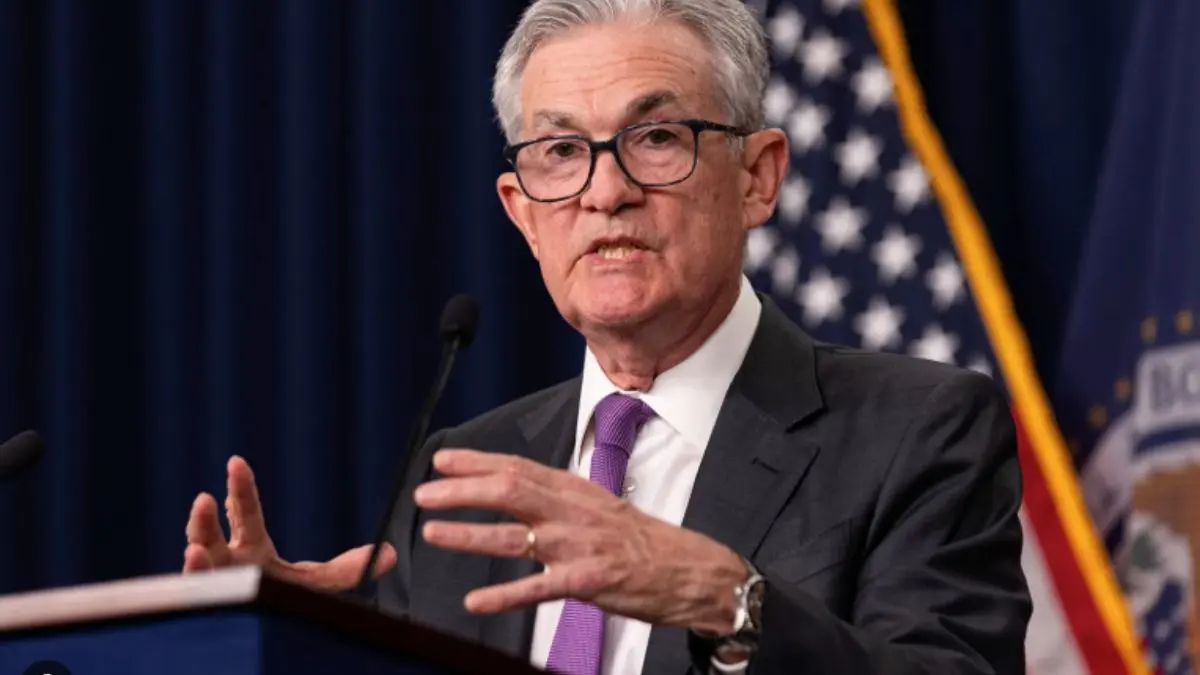
In the last policy meeting led by US Fed Chair Jerom Powell, the US Federal Reserve Open Committee decided to keep benchmark interest rates at 3.5%-3.75% for the third consecutive policy as a result of the continuing uncertainty due to the US-Iran conflict.
The FOMC voted 8-4 to keep benchmark interest rate unchanged in a range steady and highlighted that inflation is elevated, reflecting the recent increase in global energy prices. Economic growth, however, remains in good shape, and the job market is stable.
Fed Chair Powell said it was his last meeting as the chairman, as his term expires on 15 May, however, he added that he "will continue to serve as a governor for a period of time to be determined."
The April FOMC meet ended on expected lines, leaving new economic projections or dot plot for the June policy meet under leadership of Kevin Warsh. He was picked by the US President Donald Trump to lead the Federal Reserve after Powell's term comes to an end.
Advertisement
US Fed Policy Decision: Ho Can It Impact Indian Stock Market?
While the Fed Chair highlighted that the US economy was in a solid state, he also took note of the presence of increased inflationary risks due to higher energy prices.
Advertisement
Meanwhile, there were no clear cues about the near-term trajectory of interest rates, as the FOCM will consider incoming data to adjust the monetary policy stance.
Experts believe the Fed's policy decision will not have any material impact on the Indian stock market. On the other hand, analysts noted that the Fed’s decision would unlikely influence the Indian market now. Meanwhile, the Indian economy and markets are holding reasonably well despite the energy crisis but if the crude prices remain high for long, the downside risk to India’s growth and upside risk to inflation will increase.