
US Sanctions Bill Targets Buyers of Russian Oil: What It Could Mean for India?
A Trump-backed bipartisan US sanctions bill could allow Washington to penalise countries buying Russian oil, with India explicitly named. The move may pose challenges for India’s energy imports, oil pricing and diplomatic balancing, depending on how the legislation is enforced.
- Republic Business
- 4 min read

;'%3e%3cpath%20d='m8,15.99c4.41,0,7.99-3.58,7.99-7.99S12.41,0,8,0,0,3.59,0,8s3.58,7.99,7.99,7.99Z'%20style='stroke:%23fff;%20stroke-miterlimit:10;%20stroke-width:.02px;'/%3e%3cpath%20d='m3.08,3.37l3.82,5.11-3.84,4.15h.87l3.37-3.64,2.72,3.64h2.94l-4.04-5.39,3.58-3.87h-.86l-3.1,3.35-2.5-3.35h-2.94Zm1.27.64h1.35l5.97,7.99h-1.35l-5.97-7.99Z'%20style='fill:%23fff;'/%3e%3c/g%3e%3c/svg%3e)


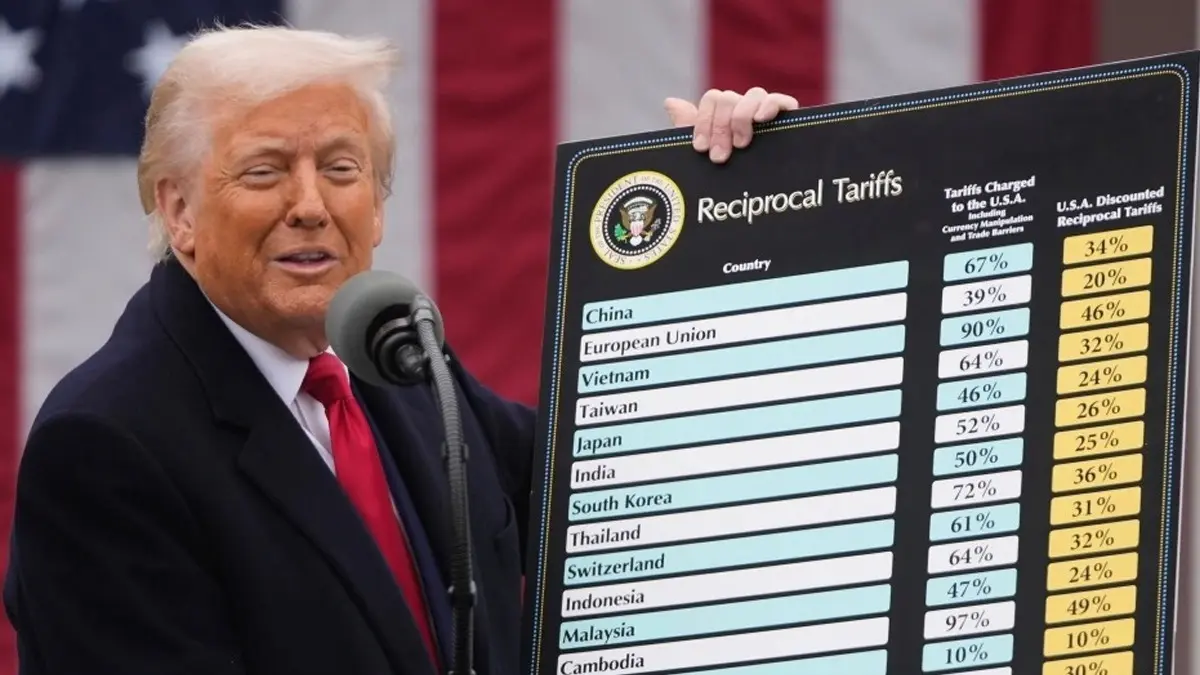
A proposed bipartisan sanctions bill in the United States could place India under renewed scrutiny over its Russian oil purchases. US Senator Lindsey Graham said President Donald Trump has “greenlit” the legislation, which would allow Washington to impose penalties on countries buying discounted Russian crude that helps finance Moscow’s war in Ukraine.
The bill, co-sponsored with Senator Richard Blumenthal, is expected to be tabled for a vote as early as next week.
India Explicitly Named
In his public statement, Graham specifically named India, China, and Brazil as countries that could face pressure under the proposed framework. The bill aims to give the US president broad authority to impose secondary sanctions or economic measures against nations continuing energy trade with Russia.
India has emerged as one of Russia’s largest crude buyers since Western sanctions began in 2022, taking advantage of discounted prices amid supply shifts.
Advertisement
Why It Matters for India?
Russian oil has helped India manage fuel inflation and reduce import costs at a time of global volatility. Any US-led move to penalise buyers could complicate India’s energy security strategy, raise import costs, and force refiners to reconsider sourcing patterns.
Advertisement
Indian refiners, both public and private, have consistently stated that purchases are made within existing international rules and are driven by price and availability. “The imposition of such sanctions would dramatically increase the cost of oil imports for India, raising expenditures by an estimated $9 to $11 billion in the coming year,” said Dinesh Jotwani, Co-Managing Partner, Jotwani Associates, adding, “Russian oil currently accounts for 35 to 40 percent of India’s supply, and the loss of this affordable source would force Indian refiners to turn to higher-priced alternatives from regions such as the Middle East and the United States. This transition is expected to reduce refining margins by approximately 2 percent, inevitably leading to higher domestic fuel prices and a subsequent rise in inflation. Beyond energy, Indian exporters, including those in textiles, pharmaceuticals, gems, and electronics, collectively send $83 billion in goods to the United States each year. The imposition of tariffs would increase their costs, erode margins by 10 to 20 percent, and diminish India’s competitive advantage in global markets.”
Diplomatic Balancing Act Ahead
The development comes at a sensitive moment, with India maintaining strategic ties with both the US and Russia. While New Delhi has not commented on the proposed bill, experts note that enforcement, scope, and exemptions will determine its real impact. “The bill names China, India, and Brazil, three founding members of BRICS, against Russia, another founding member. The consequence for India will be limited, as India has already been cutting down imports of Russian oil and increasing imports from the US,” says Dr Mansi, Assistant Professor and Coordinator, Amity Centre for BRICS studies, Amity University Haryana, adding, "However, it will be a test for Indian diplomacy, as India assumed BRICS presidency this year and is also supposed to hold the QUAD summit. How much impact it will have depends on the level and effectiveness of its implementation, and on how India navigates this pressure from Trump.”
Hence, much will depend on how aggressively the US chooses to use this leverage if the bill becomes law. “At its legal core, the bill relies on the International Emergency Economic Powers Act (IEEPA), which grants the President broad authority to sanction foreign companies engaged in commerce with blacklisted states, irrespective of geographic location,” said Dinesh Jotwani. He further added, “The proposed legislation escalates these powers by making the imposition of up to 500% tariffs nearly automatic, offering minimal scope for exemptions unless countries fully cease Russian energy imports. Should any nation contest these measures at the World Trade Organization, the United States intends to invoke national security as its defense- a position with a strong likelihood of prevailing. Non-compliance by India could result in the U.S. Treasury’s Office of Foreign Assets Control (OFAC) targeting Indian financial institutions, including potential exclusion from the SWIFT banking network or direct sanctions, in a manner reminiscent of actions taken against Iran in 2018.”