
Why Have Oil Markets Not Crashed Despite US' Capture of Venezuela's President Maduro?
Despite the capture of Venezuela’s President Nicolas Maduro, oil markets have remained largely stable. Energy expert Julian Popov says weak infrastructure, global oversupply and market resilience explain the muted response, with any impact likely to emerge only over the long term.
- Republic Business
- 4 min read

;'%3e%3cpath%20d='m8,15.99c4.41,0,7.99-3.58,7.99-7.99S12.41,0,8,0,0,3.59,0,8s3.58,7.99,7.99,7.99Z'%20style='stroke:%23fff;%20stroke-miterlimit:10;%20stroke-width:.02px;'/%3e%3cpath%20d='m3.08,3.37l3.82,5.11-3.84,4.15h.87l3.37-3.64,2.72,3.64h2.94l-4.04-5.39,3.58-3.87h-.86l-3.1,3.35-2.5-3.35h-2.94Zm1.27.64h1.35l5.97,7.99h-1.35l-5.97-7.99Z'%20style='fill:%23fff;'/%3e%3c/g%3e%3c/svg%3e)


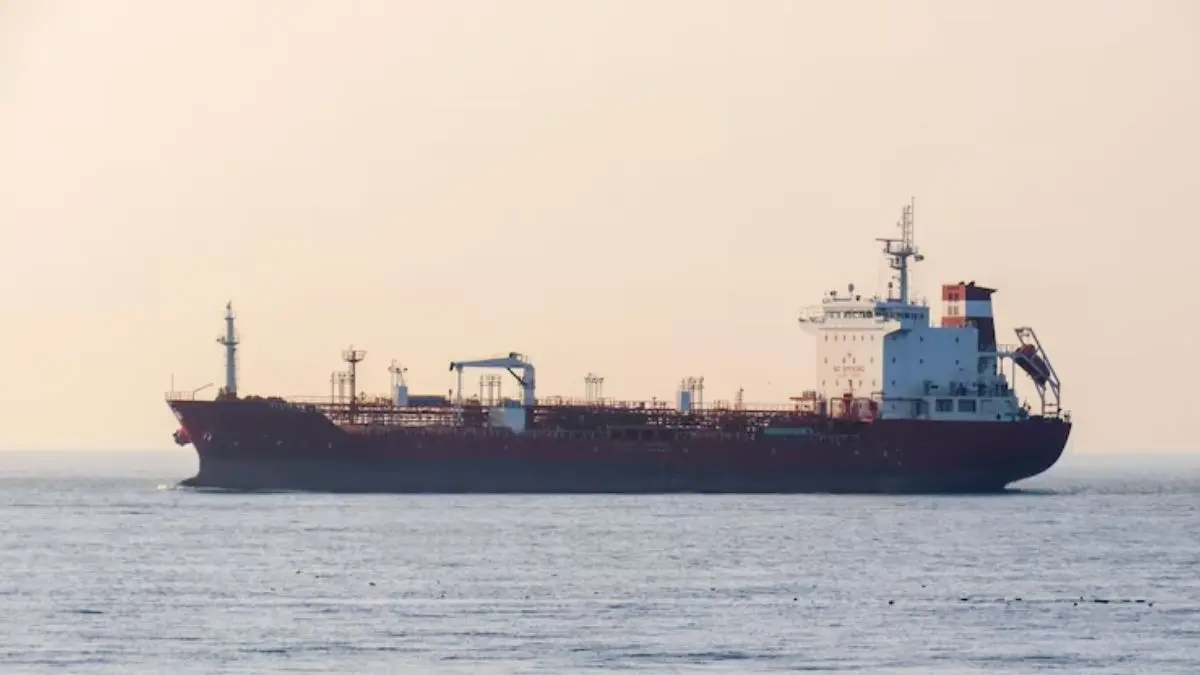
The US military operation in Venezuela that led to the capture of President Nicolas Maduro marked one of the most dramatic geopolitical events in the oil-rich nation’s recent history. Yet, contrary to expectations, global oil markets have reacted with restraint.
Benchmark crude prices showed limited volatility in early trading. This reinforced a broader trend seen over the past few years that geopolitical shocks no longer automatically translate into sharp oil price spikes.
Why Venezuela’s Vast Oil Reserves Haven’t Moved Prices
Venezuela holds the world’s largest proven crude oil reserves at about 303 billion barrels, according to data from the US Energy Information Administration (EIA) and OPEC. In theory, any change in control over such reserves should significantly influence global supply expectations.
However, actual production tells a different story. Venezuela’s oil output has collapsed from over 3 million barrels per day (bpd) in the early 2000s to under 1 million bpd currently, largely due to sanctions, underinvestment and infrastructure decay (EIA, OPEC secondary sources).
Advertisement
This disconnect between reserves and usable supply explains why markets have remained cautious.
Advertisement
“Oil markets are adapting to uncertainty”: Julian Popov
Julian Popov, former Bulgarian environment minister and an energy policy expert, told ANI in an interview, that oil markets have structurally changed how they respond to geopolitical events.
“What we’re seeing in recent months and years is that the oil markets are somehow adapting to uncertainty,” Popov said, noting that even conflicts in oil-producing regions have failed to cause sustained price shocks.
According to Popov, traders now focus less on political headlines and more on whether disruptions materially alter near-term supply.
Why Supply Won’t Surge Anytime Soon?
Despite speculation that Venezuela’s oil could re-enter global markets under a new political order, Popov cautioned against assuming a rapid production rebound.
“Venezuela holds the largest proven oil reserves in the world, but these reserves have been very badly managed,” he said. “The infrastructure of the oil industry is in a very bad shape. It cannot be just turned on and increased.”
Popov stressed that reviving production would require years of investment and large capital inflows, and that uncertainty over governance could deter private companies from committing funds immediately.
This assessment aligns with long-standing EIA reports highlighting Venezuela’s degraded oil infrastructure and operational bottlenecks.
Oversupply Caps Short-Term Price Impact
Another key factor limiting oil price movement is the current global supply balance. According to International Energy Agency (IEA) assessments, the global oil market remains well supplied, with non-OPEC production growth offsetting demand concerns.
“I assume that in the short term, there will not be a great impact,” Popov said. “The global market is oversupplied anyway.”
This oversupply has muted the effect of geopolitical developments. This includes conflicts in the Middle East and disruptions in other energy-producing regions.
Longer-term Implications For Geopolitics And Price
While near-term price reactions have been limited, Popov said a gradual increase in Venezuelan production over time could put downward pressure on oil prices, with wider geopolitical consequences.
“Any decline of oil price will hit the economy and the budget of Russia additionally,” he said, pointing to Moscow’s reliance on energy exports to fund its war in Ukraine.
Lower oil prices, he says, would reshape power dynamics among major producers rather than disrupt consumer markets immediately.
Cheaper Oil Won’t Derail Energy Transition
Popov also rejected the argument that lower crude prices could slow the global shift toward clean energy. “This is a revolution which is not driven by the price of oil,” he said, referring to electric vehicles and clean transport. “It is driven by innovation and fierce competition.”
Industry data from the IEA supports this view, showing continued growth in electric mobility even during periods of lower oil prices.
What Markets Are Watching Next?
For now, oil markets appear to be signalling that Venezuela’s political upheaval is a long-term supply story, not an immediate market shock. Investors remain focused on infrastructure realities, global supply conditions and whether promised reforms translate into actual barrels.
Until then, Venezuela’s crisis may reshape geopolitics, but oil prices are unlikely to react sharply.