
Why India’s Push for E20 Fuel is Stirring Anxiety Among Motorists
India’s nationwide rollout of E20 fuel, a 20% ethanol blend, is sparking confusion among motorists over vehicle compatibility and fuel efficiency. While the government touts savings and greener benefits, drivers fear performance issues and lack of choice at fuel pumps.
- Republic Business
- 2 min read

;'%3e%3cpath%20d='m8,15.99c4.41,0,7.99-3.58,7.99-7.99S12.41,0,8,0,0,3.59,0,8s3.58,7.99,7.99,7.99Z'%20style='stroke:%23fff;%20stroke-miterlimit:10;%20stroke-width:.02px;'/%3e%3cpath%20d='m3.08,3.37l3.82,5.11-3.84,4.15h.87l3.37-3.64,2.72,3.64h2.94l-4.04-5.39,3.58-3.87h-.86l-3.1,3.35-2.5-3.35h-2.94Zm1.27.64h1.35l5.97,7.99h-1.35l-5.97-7.99Z'%20style='fill:%23fff;'/%3e%3c/g%3e%3c/svg%3e)


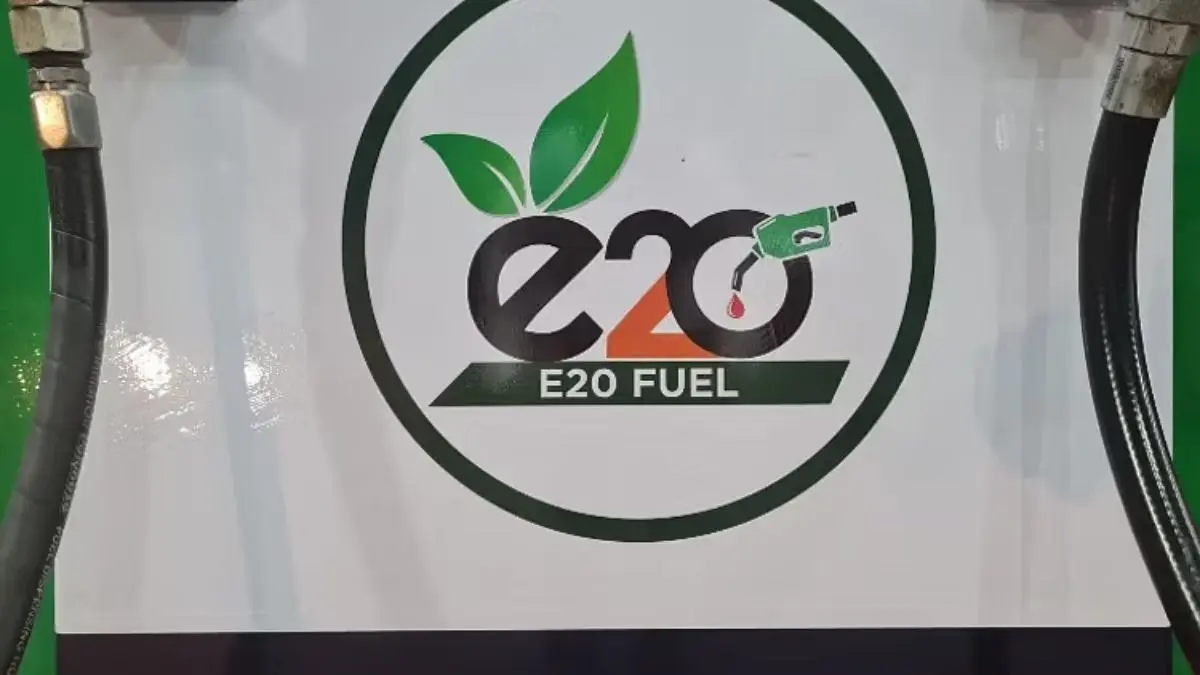
The rapid roll-out of ethanol-blended petrol, known as E20, has rattled car owners and sparked debate across the auto sector. As Reuters reports in its exclusive, the policy is aimed at reducing oil imports and boosting farmer incomes, but its sudden implementation has created confusion in the world’s third-largest automobile market.
What is E20 and Why is It Being Promoted?
E20 is a blend of petrol mixed with 20% ethanol – an alcohol derived mainly from sugarcane and food grains like maize and rice. India began limited trials in April 2023, but from April 2025, the blend has been rolled out nationwide, phasing out the earlier E10 fuel that most vehicles were designed for.
The government argues that E20 brings three big benefits:
- Lower oil imports, saving an estimated $5 billion in foreign exchange annually.
- Higher farmer incomes, with an additional $4.6 billion expected through ethanol demand.
- Cleaner emissions, making it more environment-friendly than conventional petrol.
Why Are Motorists Upset?
In countries such as the United States and Brazil, multiple blends like E10, E15, or E20 are available, giving drivers a choice. India, however, has taken away that choice – E20 is now the only fuel available across nearly 90,000 petrol stations.
This has alarmed motorists, particularly those with older vehicles. Many car manuals mention only E5 or E10 as permissible fuels, leading to fears that E20 might harm engines, reduce efficiency, or invalidate warranties. Despite industry assurances that insurance claims will be honoured, uncertainty persists.
Advertisement
What Do Automakers and the Government Say?
The government insists E20 is safe, although older vehicles may require minor part replacements such as rubber hoses or gaskets. Officials describe this as a “simple process.”
The auto industry, once sceptical, has largely come on board. Recent lab tests suggest fuel efficiency dips by 2–4% with E20, though the decline could be sharper in older vehicles. The Society of Indian Automobile Manufacturers (SIAM), which in 2020 had warned against eliminating E10, now echoes the government’s position that E20 is a necessary step forward.