
Will Canadian Imports Get Costlier? Trump’s 35% Tariff May Hit Autos, Metals, Dairy from August 1
US President Donald Trump has threatened a 35% tariff on all Canadian goods from August 1, escalating tensions just days before a self-imposed deadline for a new trade deal. Trump linked the tariffs to Canada’s trade policies, fentanyl flow, and existing levies, complicating negotiations between the two nations.
- Republic Business
- 3 min read

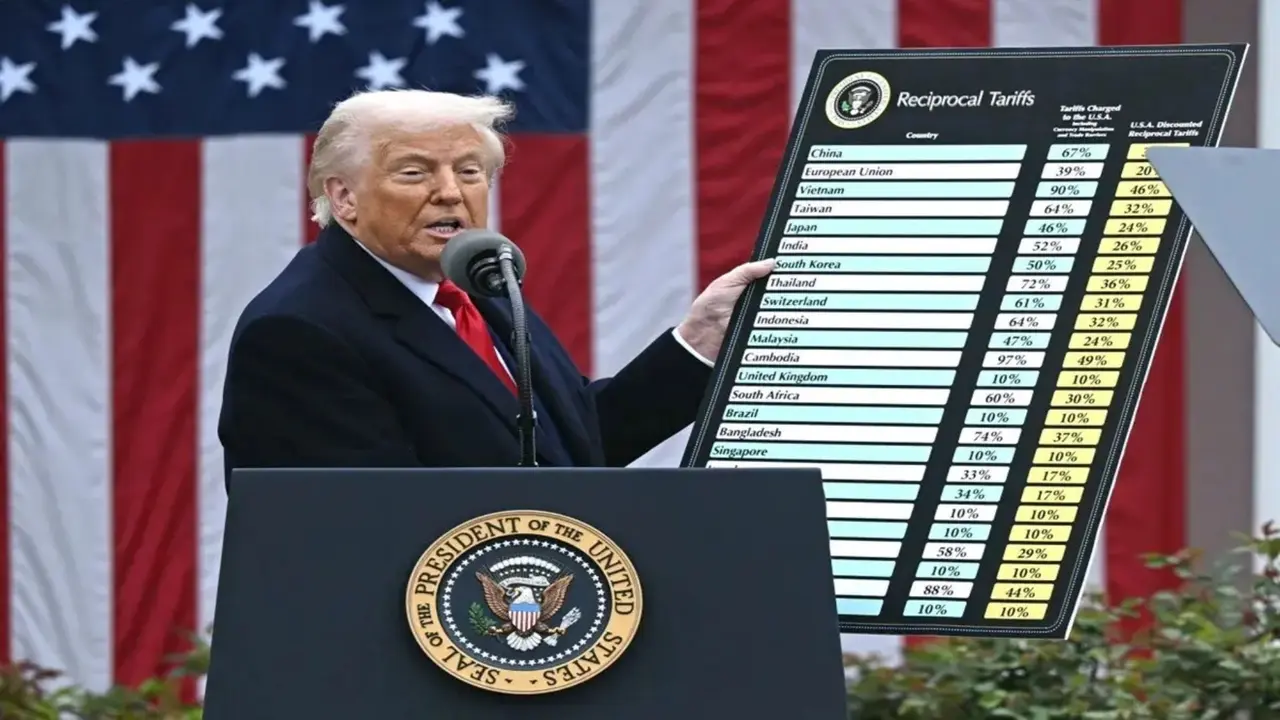
US President Donald Trump has announced sweeping new tariffs of 35% on all Canadian goods starting August 1, escalating pressure on Canada just days before a deadline to finalise a new trade and security agreement between the two nations.
The announcement came in a letter posted by Trump to social media, addressed directly to Canadian Prime Minister Mark Carney, and is part of a broader series of tariff threats aimed at over 20 US trade partners, including Japan, South Korea, and Sri Lanka.
New Tariffs Separate from Sector-Specific Duties
Trump’s new 35% tariff threat is in addition to existing sector-specific tariffs already hurting Canada’s key industries. The US has already imposed a 25% blanket tariff on Canadian imports, along with a global 50% tariff on aluminium and steel, and a 25% tariff on non-US-made automobiles and trucks.
“These 35% tariffs are separate to those sector-specific levies,” Trump clarified in his letter
Trump also stated that Canadian companies can avoid the tariff by relocating manufacturing to the US.
“As you are aware, there will be no tariff if Canada, or companies within your country, decide to build or manufacture products within the United States,” he wrote.
Linking Tariffs to Fentanyl, Dairy and Trade Deficit
In the same letter, Trump linked the tariff threat to several grievances with Canada, including:
Canada’s failure to curb the flow of fentanyl into the US,
Canadian levies on US dairy farmers, and
The US-Canada trade deficit.
These reasons are outside the typical scope of trade negotiations, raising concerns that political and policy disputes are being bundled into trade policy.
Trade Talks Under Pressure Ahead of July 21 Deadline
The timing of the threat is crucial: Trump’s announcement comes just days ahead of a July 21 deadline, agreed upon at the June G7 Summit, where both Trump and Carney pledged to hammer out a new trade and security deal within 30 days.
Trump’s administration has made it clear that failure to comply with US terms may trigger unilateral trade actions.
Unclear If CUSMA-Protected Goods Are Exempt
Currently, Canadian goods that comply with the Canada-United States-Mexico Agreement (CUSMA) are exempt from some US tariffs. However, it remains unclear whether the new 35% tariff would apply to CUSMA-covered goods, creating uncertainty for Canadian exporters.
Canada sells approximately 75% of its goods to the US, with major exports including automobiles, metals, and energy. Any broad-based tariff could significantly impact Canadian manufacturing, trade balance, and employment.
Canada Responds Cautiously as Negotiations Continue
Canadian officials have not issued an official response yet. However, the BBC reported that it had reached out to the Canadian government for comment.
Earlier in June, Prime Minister Carney removed a tax on large US tech companies following criticism from Trump, who had labelled the measure a “blatant attack” on US firms.
Carney at the time said the move was “part of a bigger negotiation” on trade.
Read More - Why This Hidden Metal Could Decide Future Of India’s EV Industry?
As the trade clock ticks toward the July 21 deadline, the future of US-Canada relations hinges on whether diplomacy or tariffs will define the next chapter of cross-border cooperation.
(With Inputs From BBC)