
World Bank urges Maldives to safeguard natural capital for economy
CEA highlights unsustainable coastal development, pollution, resource overuse, and climate change as threats to natural capital.
- Republic Business
- 2 min read

;'%3e%3cpath%20d='m8,15.99c4.41,0,7.99-3.58,7.99-7.99S12.41,0,8,0,0,3.59,0,8s3.58,7.99,7.99,7.99Z'%20style='stroke:%23fff;%20stroke-miterlimit:10;%20stroke-width:.02px;'/%3e%3cpath%20d='m3.08,3.37l3.82,5.11-3.84,4.15h.87l3.37-3.64,2.72,3.64h2.94l-4.04-5.39,3.58-3.87h-.86l-3.1,3.35-2.5-3.35h-2.94Zm1.27.64h1.35l5.97,7.99h-1.35l-5.97-7.99Z'%20style='fill:%23fff;'/%3e%3c/g%3e%3c/svg%3e)


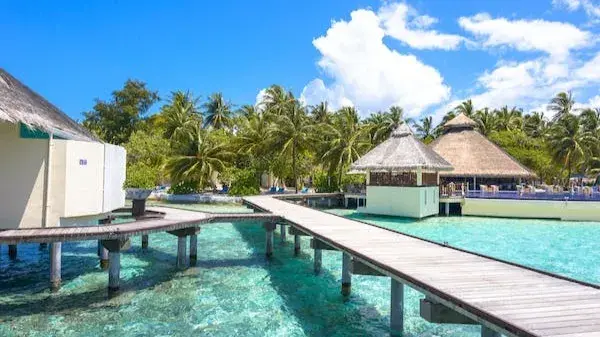
Maldives natural capital: In a new report, the World Bank highlights key recommendations for the Maldives to protect its natural capital, crucial for its economy. The Country Environmental Analysis (CEA) assesses environmental and climate challenges, offering suggestions for a sustainable future.
With tourism and fisheries making up about 50 per cent of GDP and employment, the Maldivian economy heavily relies on natural capital like marine ecosystems. Coral reefs, vital for climate resilience, also prevent significant flood damage, costing 8 per cent of GDP annually.
Minister of State, Ministry of Climate Change, Environment, and Energy, Muaviyath Mohamed, emphasised the need for a sustainable blue economy, focusing on nature-based solutions, waste management, protected areas, and strategic planning.
The CEA highlights unsustainable coastal development, pollution, resource overuse, and climate change as threats to natural capital despite economic and human development progress.
Advertisement
The World Bank Country Director for the Maldives, Nepal, and Sri Lanka, Faris Hadad-Zervos, stressed the importance of reducing the environmental impact of coastal development and improving natural resource management for a sustainable blue economy.
The report recommends enhancing the environmental framework through monitoring, planning, and capacity building. It also suggests conserving biodiversity, sustainable coastal protection, pollution management, and nature-based solutions for climate adaptation, like coral reef restoration.
Advertisement
Addressing the $12 billion shortfall in nature and climate finance is crucial, requiring innovative financing methods like conservation trust funds or use-of-proceeds bonds.
The CEA, developed with input from the government, civil society, academia, and international partners, will be followed by the Maldives Country Climate and Development Report.