
Atmanirbharta Key to India’s Strategic Resilience, Says CDS Gen NS Raja Subramani
This makes the domestic defence ecosystem increasingly important. India’s ability to design, manufacture, upgrade and support critical systems at home can provide greater freedom of action to the armed forces and reduce exposure to disruptions in global supply chains.
- Defence News
- 3 min read

;'%3e%3cpath%20d='m8,15.99c4.41,0,7.99-3.58,7.99-7.99S12.41,0,8,0,0,3.59,0,8s3.58,7.99,7.99,7.99Z'%20style='stroke:%23fff;%20stroke-miterlimit:10;%20stroke-width:.02px;'/%3e%3cpath%20d='m3.08,3.37l3.82,5.11-3.84,4.15h.87l3.37-3.64,2.72,3.64h2.94l-4.04-5.39,3.58-3.87h-.86l-3.1,3.35-2.5-3.35h-2.94Zm1.27.64h1.35l5.97,7.99h-1.35l-5.97-7.99Z'%20style='fill:%23fff;'/%3e%3c/g%3e%3c/svg%3e)


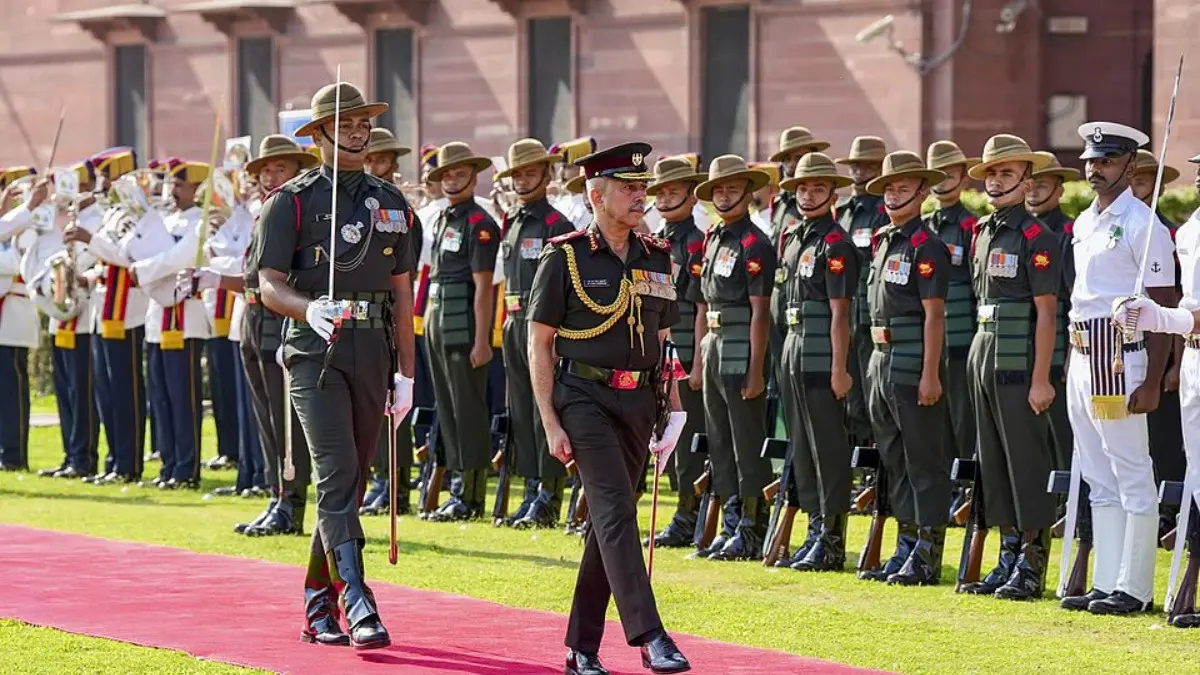
New Delhi: India’s push for defence self-reliance is not merely an industrial or procurement objective but a critical pillar of national security, Chief of Defence Staff General NS Raja Subramani said, stressing that technological independence will be central to the country’s strategic resilience.
Addressing an event in Delhi on AI, defence and strategic resilience, Gen Subramani said India must build the ability to develop and deploy critical defence technologies without excessive dependence on external sources. In a rapidly changing security environment, such dependence can become a strategic vulnerability, particularly during a prolonged crisis.
The CDS linked Atmanirbharta directly with resilience. A resilient nation needs more than military strength on paper. It needs the industrial depth, technological capability and supply networks required to sustain that strength when circumstances become uncertain.
This makes the domestic defence ecosystem increasingly important. India’s ability to design, manufacture, upgrade and support critical systems at home can provide greater freedom of action to the armed forces and reduce exposure to disruptions in global supply chains. But self-reliance cannot mean the armed forces working in isolation. The country needs a much closer relationship between military users and the technology and industrial communities that build solutions for them. Startups, MSMEs, private companies and academic institutions can bring speed, specialised expertise and new ideas to a sector traditionally dominated by large defence organisations. The military, meanwhile, brings a clear understanding of operational needs and battlefield realities.
Bringing these strengths together could help India shorten the distance between an idea and a deployable capability.
Advertisement
The challenge becomes more pressing as emerging technologies develop at extraordinary speed. Artificial intelligence, autonomous systems and advanced digital tools can evolve much faster than conventional defence procurement cycles. A country that can develop and adapt technology quickly can respond to emerging threats with greater flexibility.
Gen Subramani also made clear that technology itself does not guarantee victory. The strategic value lies in converting technology into capability, capability into operational advantage and operational advantage into strategic effect.
Advertisement
That formulation gives Atmanirbharta a wider meaning. It is not simply about producing more defence equipment domestically. It is about ensuring that India possesses the knowledge, people, companies and industrial capacity needed to turn technological advances into military outcomes.
The CDS also pointed to India’s large talent pool, technological foundation, economic ambitions and geopolitical weight as significant national advantages. The challenge now is to connect those strengths.
For India, the self-reliance agenda is therefore becoming closely tied to strategic resilience. The ability to innovate at home, sustain critical capabilities and reduce avoidable dependencies could determine how much strategic freedom the country retains when faced with an unpredictable security environment.