
Focus Shifts to LCA Mk II, AMCA as Tejas Programme Turns 25 Years: DRDO Chief
Bengaluru: The LCA Tejas marks 25 years of flight operations, prompting a focus on LCA Mk II and the Advanced Medium Combat Aircraft (AMCA), as stated by DRDO Chairman Samir V Kamat. The 'Aeronautics 2047' seminar highlighted the Tejas' milestone and future aviation developments.
- Defence News
- 3 min read

;'%3e%3cpath%20d='m8,15.99c4.41,0,7.99-3.58,7.99-7.99S12.41,0,8,0,0,3.59,0,8s3.58,7.99,7.99,7.99Z'%20style='stroke:%23fff;%20stroke-miterlimit:10;%20stroke-width:.02px;'/%3e%3cpath%20d='m3.08,3.37l3.82,5.11-3.84,4.15h.87l3.37-3.64,2.72,3.64h2.94l-4.04-5.39,3.58-3.87h-.86l-3.1,3.35-2.5-3.35h-2.94Zm1.27.64h1.35l5.97,7.99h-1.35l-5.97-7.99Z'%20style='fill:%23fff;'/%3e%3c/g%3e%3c/svg%3e)


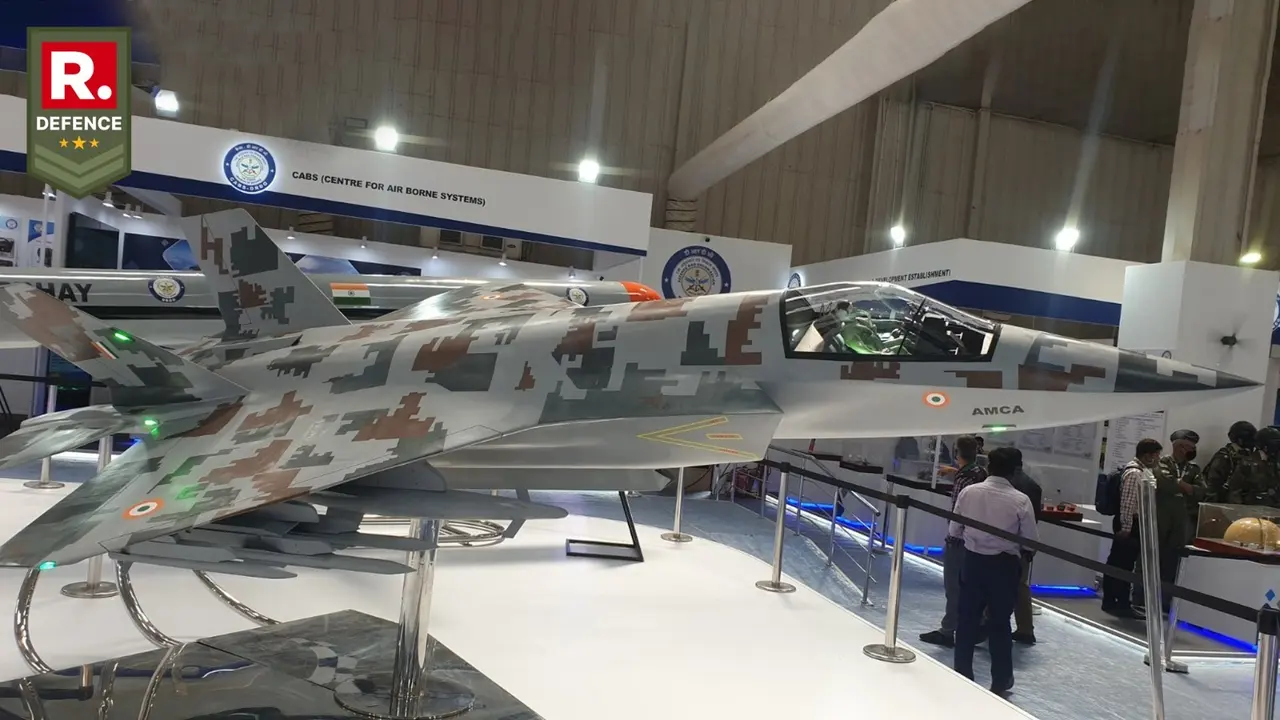
Bengalur: With the Light Combat Aircraft (LCA) Tejas completing 25 years of flight operations, focus has now shifted to the development of LCA Mk II and the Advanced Medium Combat Aircraft (AMCA), DRDO Chairman Samir V Kamat said on Sunday.
Speaking at a two-day national seminar, 'Aeronautics 2047', organised by the Aeronautical Development Agency (ADA) in Bengaluru, Kamat said the Tejas programme has reached a major milestone and future efforts are now centred on next-generation fighter platforms.
"LCA has been a marvellous journey. Now this aircraft is inducted. Now our focus is on Mark II and AMCA... Both these programmes are now on schedule, and we hope to deliver our commitments to the Air Force... AMCA will have several new technologies because it's a fifth-generation aircraft; it is a stealth aircraft, so several new technologies will come in with the AMCA", Kamat said.
The 'Aeronautics 2047' seminar is being held at the Centre for Airborne Systems (CABS), Bengaluru, to mark 25 years of the Tejas programme and chart the future of Indian aviation. It was inaugurated by Chief of the Air Staff Air Chief Marshal Amar Preet Singh.
Advertisement
Addressing the audience, the Air Chief Marshal praised ADA for completing 25 years of Tejas flight operations and pointed out the importance of meeting delivery deadlines to keep the Indian Air Force operationally prepared in the face of changing security challenges.
He also stated that the Tejas programme had revolutionised India's defence aviation and aircraft design capabilities.
Advertisement
"It is an exceptional milestone that we achieved in 2001, and that has changed the history of our defence aviation and defence designing. We are looking forward very eagerly to the further programmes, Mark II and AMCA, and I'm sure they're going to be more successful than what Tejas was and with better timelines," he said.
Kamat underlined the importance of developing indigenous, cutting-edge technology to minimise dependence on imports, thereby realising the vision of Viksit Bharat @2047.
The seminar has brought together experts from industry, academia, government laboratories and the aerospace sector. Discussions are focused on next-generation aircraft design, advanced manufacturing, propulsion systems, flight testing, avionics, digital twin technology, artificial intelligence in aircraft design and certification challenges.
ADA has designed and developed the LCA Tejas, which has completed more than 5,600 successful flight trials. Over 100 design work centres, including government laboratories, academic institutions and private industries, contributed to the programme.
Several critical technologies, such as carbon composites, lightweight materials, fly-by-wire flight control systems, digital utility management systems and glass cockpit architecture, were developed as part of the Tejas programme, making it a fourth-generation fighter aircraft.
The LCA Mk1A is an advanced variant designed to meet the Indian Air Force's operational requirements, while the LCA Mk II and the naval variant are currently under development.
So far, 38 Tejas aircraft, including 32 fighters and six trainers, have been inducted into two Indian Air Force squadrons. Officials said the programme has enabled India to acquire the capability and capacity to design and build fighter aircraft indigenously.
Several public sector units, defence PSUs, industries and MSMEs are showcasing indigenously developed airborne systems and components as part of the seminar.