
6 Years After Operation Bandar: The Balakot Cover-Up and Why Pakistan Won’t Accept Its Terror Ties
As India gets ready to mark the sixth anniversary of the Balakot airstrike, Pakistan’s misinformation campaign continues to distort facts about the operation.
- Defence News
- 5 min read

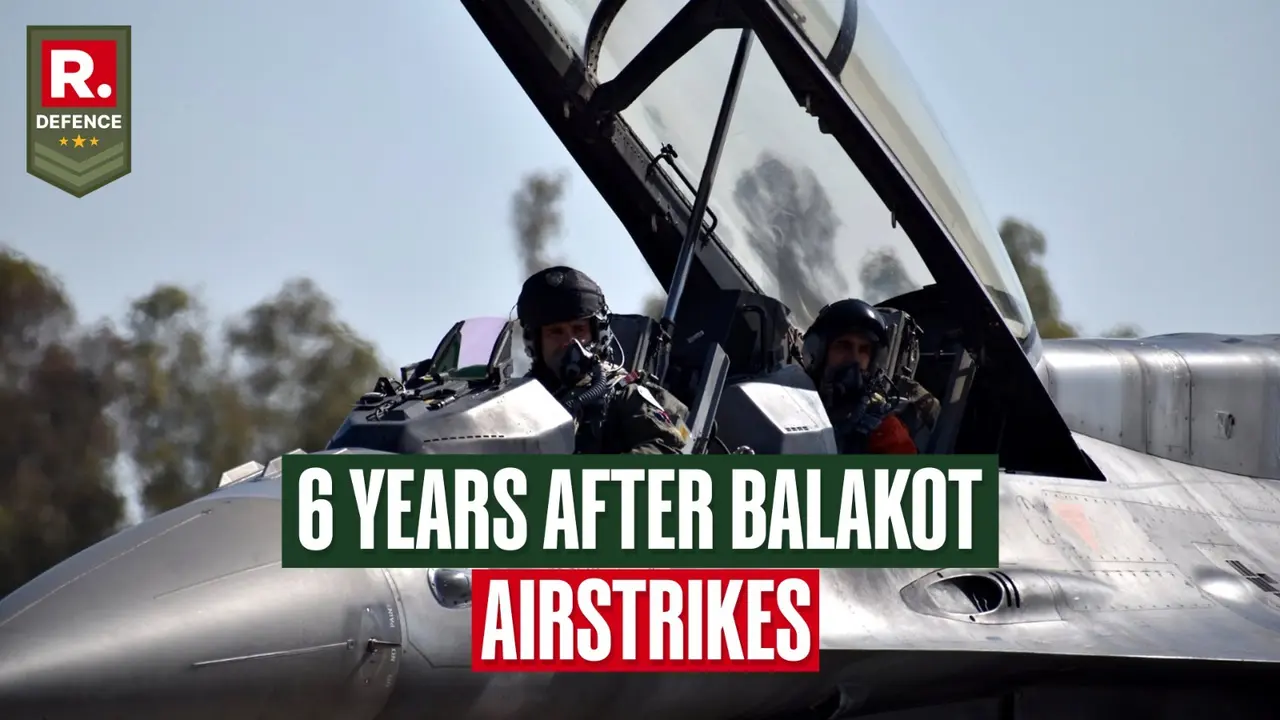
New Delhi, India – As India is set to mark the sixth anniversary of the Balakot airstrike, the debate over the operation’s success and Pakistan ’s continued misinformation campaign rages on. The surgical strike, executed by the Indian Air Force (IAF) in retaliation for the Pulwama terror attack, remains one of India’s most decisive counter-terrorism measures against Pakistan-backed terror groups. However, six years later, Pakistan’s Inter-Services Public Relations (ISPR) continues its orchestrated attempt to distort facts, deflect accountability, and paint itself as the victim.
On February 26, 2019, India launched a precision airstrike on a Jaish-e-Mohammed (JeM) training camp in Balakot, located in Pakistan-occupied Kashmir. The strike was in response to the Pulwama suicide bombing just 12 days earlier, in which 40 Central Reserve Police Force (CRPF) personnel were killed. India, armed with satellite imagery, intelligence reports, and eyewitness accounts, provided evidence of a successful strike that neutralized a significant number of terrorists.
Pakistan’s Denial: A Strategic Cover-up by ISPR
However, from the very moment the operation was executed, Pakistan’s ISPR launched an aggressive misinformation campaign. Denying the strike’s impact, Pakistan’s military authorities claimed that the Indian jets had only hit an empty forest area after being “repelled” by Pakistani defences. ISPR officials, under strict state-controlled media censorship, restricted access to the bombing site for foreign journalists, allowing them to view only select, undamaged areas to falsely support claims that no casualties or destruction had occurred.

Six years later, ISPR’s fabricated narrative remains unchanged. It has continued pushing the "no casualties, no impact" claim, despite independent satellite imagery, intelligence assessments, and testimonies from locals contradicting Pakistan’s stance. By controlling the flow of information and suppressing alternative accounts, ISPR has ensured that Pakistan’s official version remains dominant within its domestic media landscape.
Advertisement
The Larger Problem: Pakistan’s Terrorism Nexus
Pakistan’s reaction to the Balakot strike highlights a broader issue—its deep-rooted support for terrorism. For decades, Pakistan has served as a safe haven for terror organizations like JeM, Lashkar-e-Taiba (LeT), and Hizbul Mujahideen, despite international pressure to crack down on these groups. The Balakot airstrike was not an unprovoked act of aggression but a measured response to Pakistan’s persistent refusal to dismantle terror infrastructure operating within its borders.
The fact remains that JeM’s Balakot terror camp was an active training ground for jihadist recruits, many of whom had carried out attacks against Indian security forces. Reports from intelligence agencies and security analysts confirm that JeM leadership continues to enjoy safe passage in Pakistan, with the group’s chief, Masood Azhar, reportedly being shielded by the state. Despite being designated as a global terrorist by the United Nations, Azhar’s presence and operations within Pakistan have faced little to no crackdown.
Advertisement
ISPR’s PsyOps: Manipulating Global Perceptions
ISPR’s strategy following the Balakot airstrike was not merely one of denial but an elaborate and well-coordinated psychological warfare (PsyOps) campaign designed to manipulate international perception.
- Orchestrated media tours: Pakistan invited select foreign journalists to Balakot weeks after the strike but only permitted visits to controlled locations, ensuring no real evidence of destruction was accessible.
- Social media propaganda: A vast network of Pakistan-based Twitter handles, bots, and online influencers worked to push a narrative that the airstrike was a failure. Fake videos and doctored images were circulated to mislead audiences globally.
- Diplomatic posturing: Pakistan’s government used the incident to falsely project India as an aggressor while downplaying its role in harbouring terrorist groups.
This propaganda model is not new. ISPR has consistently used similar tactics to shift blame for terror activities onto India while shielding militant groups operating from Pakistani soil.
Despite overwhelming evidence exposing Pakistan’s deception, global powers have largely avoided directly challenging ISPR’s falsehoods. While organizations like the Financial Action Task Force (FATF) have placed Pakistan on its "grey list" multiple times for terror financing, no major international force has held Pakistan fully accountable for its duplicity.
Why does ISPR’s narrative still hold weight?
Selective global media coverage: Many Western media outlets choose neutrality or avoid directly confronting Pakistan’s false claims, either due to geopolitical interests or lack of access to ground intelligence. Pakistan’s strategic alliance with China ensures that it has a powerful diplomatic shield against pressure from global watchdogs.
Moreover, ISPR consistently portrays Pakistan as a victim of Indian aggression, conveniently ignoring its own role in exporting terrorism. This silence from the international community emboldens ISPR to continue manipulating facts, ensuring that Pakistan avoids any real consequences for its inaction on terrorism.
India’s Strategic Imperative: Countering False Narratives
As India approaches the sixth anniversary of the Balakot airstrike, it is crucial for the government, media, and security experts to continue countering Pakistan’s misinformation campaign. It is crucial for the nation to promote the dissemination of satellite imagery, intelligence reports, and firsthand accounts to keep the truth in focus. India must work with allies to expose Pakistan’s continued support for terrorism at global platforms like the United Nations, FATF, and G20.
Just as ISPR uses disinformation tactics, the need of the hour for the nation is to strengthen its strategic communications to challenge falsehoods effectively.
The Key Question: How Long Will Pakistan’s Duplicity Be Tolerated?
Pakistan’s failure to acknowledge the reality of terrorism within its borders continues to pose a significant threat to regional stability. The Balakot airstrike was a warning, but the larger problem persists—Pakistan’s active role in harbouring and enabling terror groups.
As India observes six years since the Balakot strike, the world must ask:
- How much longer will Pakistan’s deception be ignored?
- When will the international community hold Pakistan accountable for its state-sponsored terrorism?
- How long will ISPR’s falsehoods continue to distort the truth?
India must remain steadfast in its commitment to exposing Pakistan’s propaganda, ensuring that facts prevail over falsehoods. The battle is not just military—it is also informational and diplomatic, and it is one that the nation cannot afford to lose.