
Could Asteroids Hit Earth in 2032? China Now Recruiting Graduates for New Planetary Defence Force
China is ramping up efforts to defend Earth from potential asteroid impacts by recruiting young talent for a new planetary defence force.
- Defence News
- 5 min read

;'%3e%3cpath%20d='m8,15.99c4.41,0,7.99-3.58,7.99-7.99S12.41,0,8,0,0,3.59,0,8s3.58,7.99,7.99,7.99Z'%20style='stroke:%23fff;%20stroke-miterlimit:10;%20stroke-width:.02px;'/%3e%3cpath%20d='m3.08,3.37l3.82,5.11-3.84,4.15h.87l3.37-3.64,2.72,3.64h2.94l-4.04-5.39,3.58-3.87h-.86l-3.1,3.35-2.5-3.35h-2.94Zm1.27.64h1.35l5.97,7.99h-1.35l-5.97-7.99Z'%20style='fill:%23fff;'/%3e%3c/g%3e%3c/svg%3e)


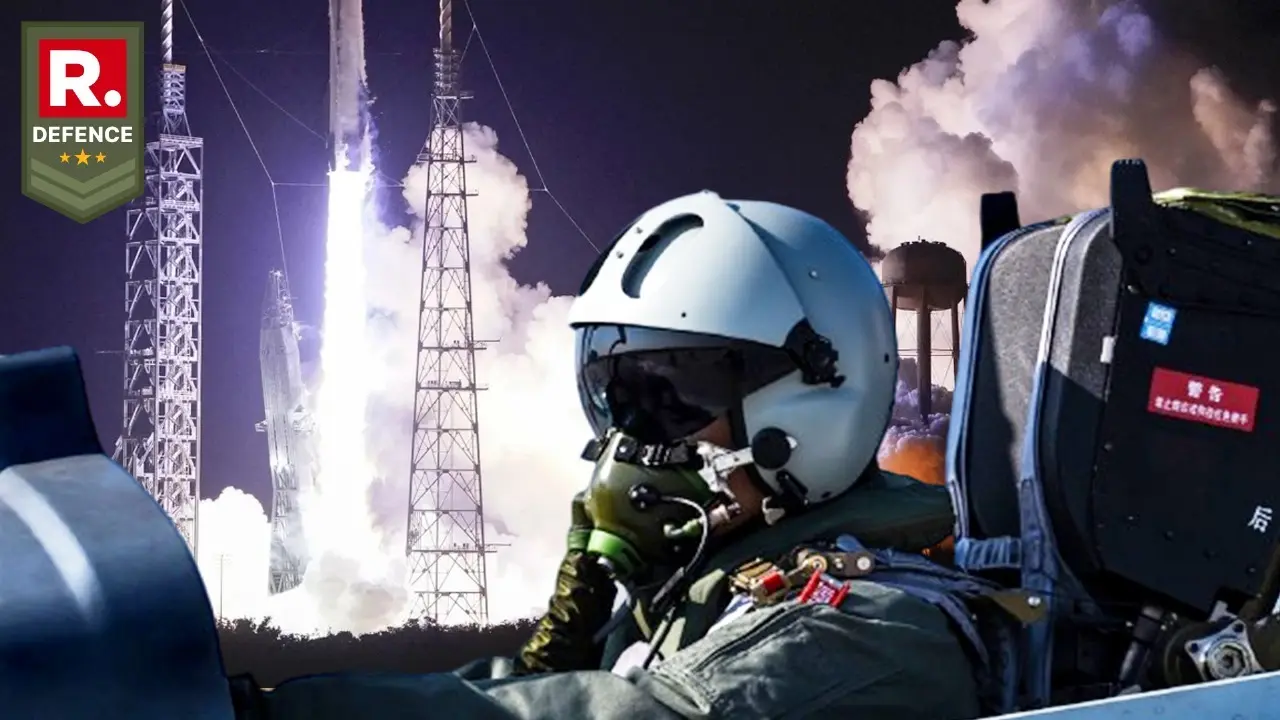
Beijing, China – China is looking to beef up its planetary defence capabilities by recruiting young talent for a new planetary defence force, responding to the increasing threat of an asteroid impact in 2032. The State Administration of Science, Technology, and Industry for National Defence (SASTIND) recently posted job ads seeking graduates in fields like aerospace engineering, asteroid detection, and international cooperation. The move comes as the European and US space agencies have raised concerns over the 2024 YR4 asteroid, with analysts recently bumping up the chances of it hitting Earth from 1.3% to 2.2%—still a low risk, but higher than before.
The recruitment ad, posted on WeChat earlier this week, makes it clear that China is not just looking for young graduates. They want those who are not only technically proficient but also politically loyal—graduates under 35, with a firm commitment to the Chinese Communist Party and its ideology under Xi Jinping. With China's youth unemployment rates hitting an all-time high in 2023, the job openings have drawn plenty of attention, raising questions about the implications of combining science, technology, and political loyalty in a field as crucial as planetary defence.
A Growing Concern, But Still a Low Risk
While 2024 YR4’s likelihood of impacting Earth in seven years remains relatively low, its position on the radar of European and US space agencies means it's getting more attention. These space agencies have been keeping a close watch on it, and the UN’s Space Mission Planning Advisory Group, which includes China, has been in discussions to figure out the best course of action.

The job postings suggest that the planetary defence force will focus primarily on developing systems for monitoring and early warning of near-Earth asteroids. Candidates will need a master's degree or higher in astrophysics, aerospace science, or related fields, and will be expected to help design new technologies that could ultimately protect Earth. But experts caution that while the recruitment may be related to the asteroid, it's also part of China's broader plan to strengthen its aerospace sector, which has been ramping up efforts in planetary defence for years.
Advertisement
Political Allegiance Tied to High-Tech Space Jobs
Aside from the technical qualifications, the ads highlight something a bit more unusual: political loyalty. Applicants must show that their ideologies align with the Communist Party and Xi Jinping’s leadership. This emphasis on ideological conformity has sparked plenty of debate, especially among young Chinese professionals, who are already dealing with the pressures of a tough job market. One popular Weibo comment sarcastically remarked, "If you succeed, you’re a hero who saves the world... but if you fail, well, there’d be no one left to punish you."
The recruitment is clearly focused on cutting-edge technology and international cooperation, with a promise of working on experimental tech that could change the future of space defence. But these political requirements are a sharp reminder of the tight grip China places on both science and its youth, raising questions about how much freedom of thought is allowed in the pursuit of national security.
Advertisement
China’s Space Race – Aiming for the Stars, and an Asteroid
This planetary defence drive is more than just a response to the 2024 YR4 asteroid. China is already deep into developing technologies like asteroid redirection, an effort that’s seen as essential if the 2024 YR4 or similar threats ever get close enough to endanger Earth. Just a few years ago, NASA conducted the Double Asteroid Redirection Test (DART), crashing a spacecraft into an asteroid to test whether it could be deflected. China’s own version of this mission is set for 2027, targeting a smaller asteroid named 2015 XF261.
However, experts are concerned that trying to redirect a smaller asteroid could actually make things worse, potentially breaking it into fragments that might pose even more of a problem. Despite the low probability of 2024 YR4 causing any real harm, China’s increased focus on planetary defence signals a broader effort to establish itself as a leader in space. This includes developing monitoring systems both on Earth and potentially in space and testing out ways to nudge dangerous asteroids off course.
Global Collaboration: A Must for Asteroid Defence
Experts agree that no single country, including China, can handle asteroid threats alone. The collaboration between space agencies, including China’s, will be key in figuring out how to tackle the asteroid problem in the future. According to planetary scientist Harrison Agrusa, there’s no need to panic about 2024 YR4. “We know we have the capability to deflect an asteroid like this, as demonstrated by the Dart mission,” Agrusa said. “It doesn’t need to be feared—it just needs to be studied and understood.”
China’s growing ambitions in space have some international observers wondering if the country is moving too quickly or if it’s simply preparing for a challenge that could affect the entire world. What’s clear, though, is that this recruitment drive is just one part of China’s larger push to become a global leader in space exploration and defence, with the future of Earth potentially hanging in the balance.