
Indian Forces Remain Alert as Bangladesh Deploys Turkish Bayraktar TB-2 Drones Near Indian Border Amid Growing Pakistan Ties
Bangladesh has deployed Turkish-made Bayraktar TB-2 drones for surveillance operations along the Indian border, raising security concerns in New Delhi.
- Defence News
- 3 min read

;'%3e%3cpath%20d='m8,15.99c4.41,0,7.99-3.58,7.99-7.99S12.41,0,8,0,0,3.59,0,8s3.58,7.99,7.99,7.99Z'%20style='stroke:%23fff;%20stroke-miterlimit:10;%20stroke-width:.02px;'/%3e%3cpath%20d='m3.08,3.37l3.82,5.11-3.84,4.15h.87l3.37-3.64,2.72,3.64h2.94l-4.04-5.39,3.58-3.87h-.86l-3.1,3.35-2.5-3.35h-2.94Zm1.27.64h1.35l5.97,7.99h-1.35l-5.97-7.99Z'%20style='fill:%23fff;'/%3e%3c/g%3e%3c/svg%3e)


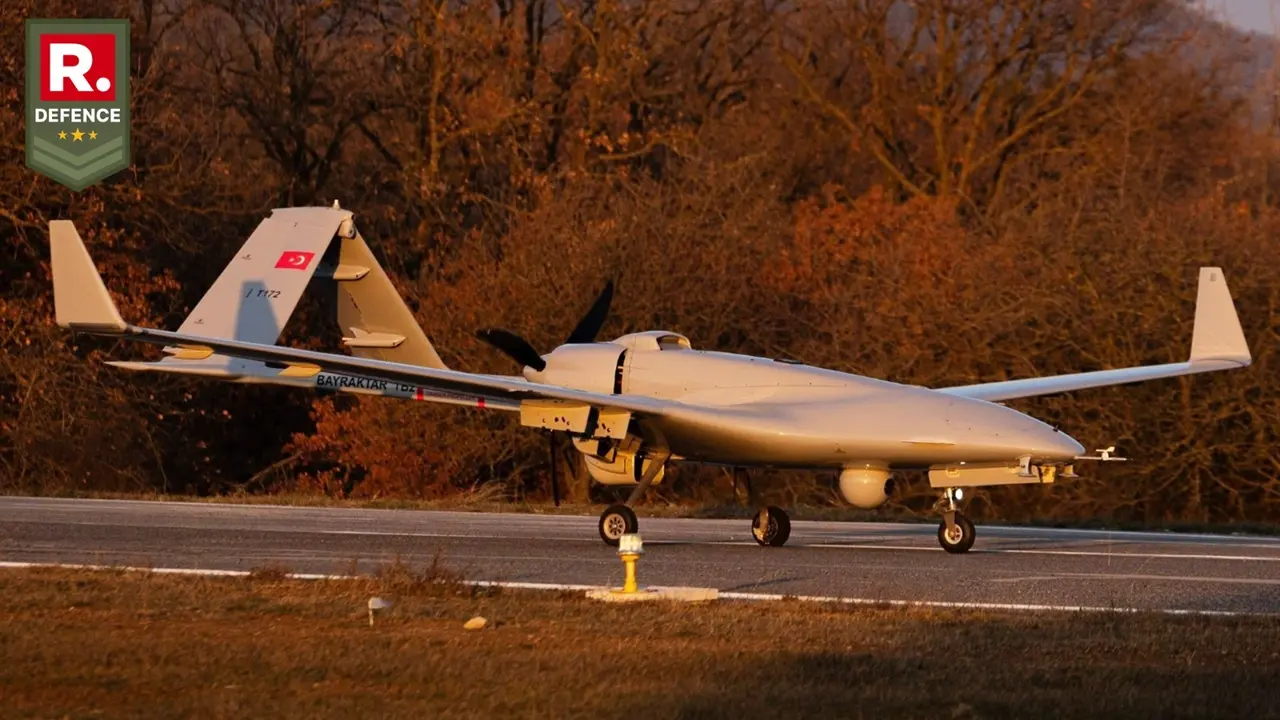
New Delhi, India– In a development that has raised security concerns in India, Bangladesh has reportedly deployed Turkish-made Bayraktar TB-2 drones for surveillance operations along the Indian border. The move comes amid Dhaka's increasing military cooperation with Pakistan, triggering heightened vigilance from Indian defence and intelligence agencies.
According to defence sources, Indian agencies have been tracking the TB-2 drones operating in Bangladeshi airspace near the border over the past few months. These drones, which belong to the Medium Altitude Long Endurance (MALE) category, are capable of extended surveillance missions and carrying out precision strikes.
“We have observed these drones conducting sorties lasting over 20 hours in some instances,” a defence official told reporters. “While they are operating within Bangladeshi territory, we are closely monitoring their movements.”
India's Response: Radars Deployed to Monitor TB-2 Operations
With Bangladesh's drone surveillance activities increasing, Indian forces have reinforced their electronic surveillance infrastructure along the border. Sources indicate that radar systems have been installed to keep real-time track of Bangladeshi drone movements.
Advertisement

The Bayraktar TB-2, developed by Turkey’s Baykar Defence, has gained global recognition for its role in various conflicts, including those in Ukraine, Syria, Libya, and Nagorno-Karabakh. The armed variant of the TB-2 is capable of carrying laser-guided missiles and smart munitions, raising questions about the extent of its intended use by the Bangladeshi military.
Bangladesh-Pakistan Military Ties: A Growing Concern for India
The acquisition of the TB-2 drones comes amid Bangladesh's increasing defence ties with Pakistan, a development that has not gone unnoticed in New Delhi. Under the administration of Mohammed Yunus, Bangladesh has reportedly facilitated visits from Pakistani intelligence and military officials to sensitive areas close to the Indian border.
Advertisement
One such location is the Chicken’s Neck corridor in Siliguri, West Bengal—a strategic stretch of land that connects India’s northeastern states with the rest of the country. Pakistani intelligence officials have reportedly visited areas near the corridor, raising alarms within Indian security establishments.
Indian Army Chief General Upendra Dwivedi recently expressed concern over Pakistan’s increasing influence in Bangladesh, particularly regarding its potential impact on India’s security.
"I had used the word epicentre of terrorism for a particular country (Pakistan). Now those countrymen, if they go to any other place and they happen to be our neighbour, as far as I am concerned, I should be concerned about it. That they should not be able to use that soil to send terrorists to India," General Dwivedi stated in a podcast with ANI.
Strategic Implications: India’s Border Vigilance to Increase
India has long maintained strong diplomatic and security ties with Bangladesh, but recent developments suggest a shift in Dhaka’s geopolitical alignment. With the deployment of TB-2 drones and a growing Pakistani military presence in Bangladesh, New Delhi is likely to intensify border security measures and enhance intelligence cooperation with friendly nations.
While Bangladesh’s drone deployment is currently limited to surveillance, the dual-use capability of the Bayraktar TB-2—which allows it to be armed—remains a significant factor in India’s security calculus. Experts suggest that India’s next steps could include enhanced aerial surveillance, diplomatic engagement with Bangladesh, and counter-drone strategies to neutralize potential threats.
For now, Indian security agencies remain on high alert, closely monitoring the skies along the Bangladesh border as regional dynamics continue to evolve.