
NH-911 Near India-Pakistan International Border Turns Into Military Runway, Indian Army Showcases Aviation Power
On Tuesday, NH-911 in Rajasthan served for military training as Indian Army aviation units conducted highway landing exercises, showcasing helicopter drills for alternative landing areas and enhancing aircrew proficiency and safety.
- Defence News
- 6 min read

;'%3e%3cpath%20d='m8,15.99c4.41,0,7.99-3.58,7.99-7.99S12.41,0,8,0,0,3.59,0,8s3.58,7.99,7.99,7.99Z'%20style='stroke:%23fff;%20stroke-miterlimit:10;%20stroke-width:.02px;'/%3e%3cpath%20d='m3.08,3.37l3.82,5.11-3.84,4.15h.87l3.37-3.64,2.72,3.64h2.94l-4.04-5.39,3.58-3.87h-.86l-3.1,3.35-2.5-3.35h-2.94Zm1.27.64h1.35l5.97,7.99h-1.35l-5.97-7.99Z'%20style='fill:%23fff;'/%3e%3c/g%3e%3c/svg%3e)


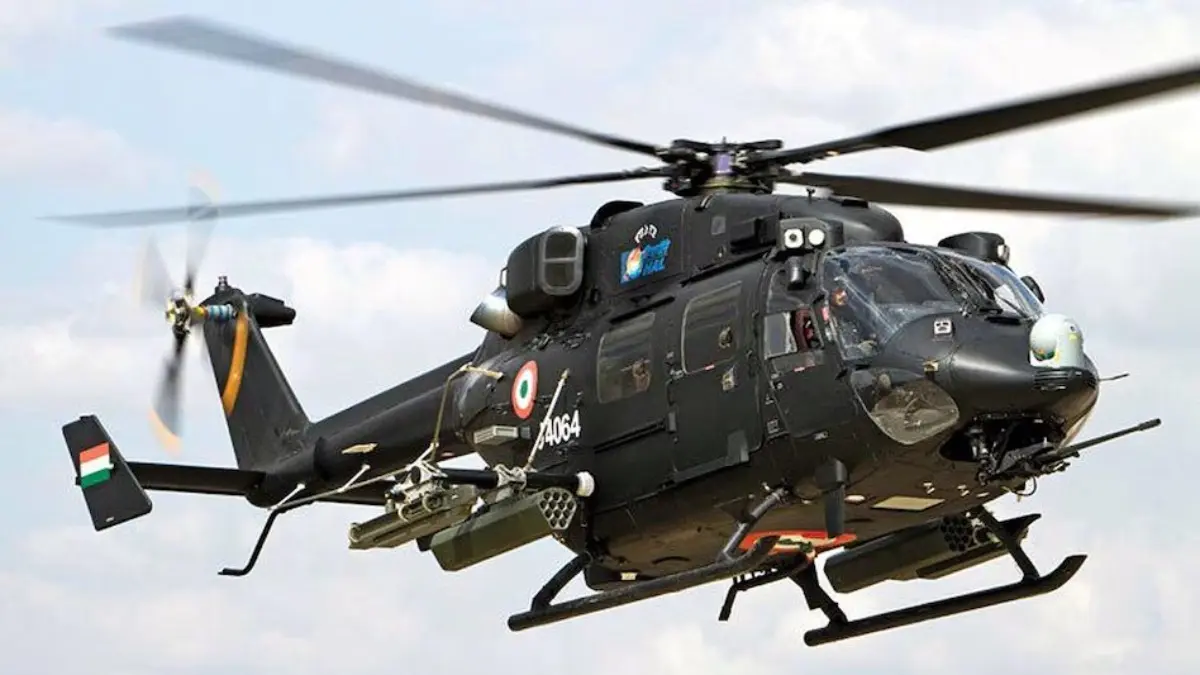
Bikaner: The landscape of a routine national highway in Rajasthan’s border region changed dramatically on Tuesday when a stretch of National Highway-911 (NH-911) was temporarily transformed into a military runway. Near Dantour, close to the India-Pakistan International Border, Indian Army aviation units conducted a highway landing practice, demonstrating the ability to operate helicopters from alternative landing areas in addition to conventional airbases, airfields and designated helipads.
During the exercise, Rudra, Dhruv and Chetak helicopters of the Indian Army conducted landing and take-off drills from the designated highway stretch. The training in the challenging desert environment involved precise flight control, controlled landing and take-off procedures, as well as close coordination between the aircrew and ground teams. The helicopter operations on the highway highlighted the importance of maintaining alternative operating options for military aviation during demanding operational situations.
The location of the exercise near Dantour adds significance to the training. Situated in Rajasthan’s western desert region close to the India-Pakistan International Border, the area presents a demanding operational environment characterised by vast distances, difficult terrain, harsh weather conditions and limited conventional infrastructure. For military aviation units operating in such an environment, the ability to assess and safely utilise alternative landing areas can provide additional operational flexibility.
One of the key objectives of the highway landing practice was to further enhance the proficiency of aircrew and ground elements. Under normal circumstances, helicopters operate from designated airfields and helipads. However, operational conditions can arise where conventional aviation facilities may be unavailable or their use may be restricted. In such circumstances, suitable alternative surfaces can provide additional options for helicopter operations.
Advertisement
A highway landing is not simply a matter of bringing a helicopter down on a road. Pilots have to account for the available landing space, surface conditions, surrounding area, wind conditions, visibility and established safety procedures while maintaining precise control of the aircraft. The role of the ground crew is equally important. From the safe arrival of the helicopter to its subsequent departure, continuous coordination between the aircrew and ground personnel remains essential.

The NH-911 exercise placed considerable emphasis on this coordination and operational training. The designated highway stretch was utilised for military aviation activity, with appropriate safety and operational procedures followed during the landing and take-off drills. The training was aimed at strengthening the practical understanding of alternative landing areas that could potentially be utilised under demanding operational circumstances.
Advertisement
The Indian Army’s aviation fleet includes the Dhruv Advanced Light Helicopter (ALH) family, its armed variant Rudra, and platforms such as the Chetak, which are employed in different operational roles. Depending on mission requirements, these helicopters can support troop movement, logistics, surveillance, command and control and other military tasks. Highway landing exercises provide aircrews with an opportunity to practise procedures in non-traditional and challenging operating environments.
The western desert of Rajasthan presents its own set of challenges for military aviation training. Hot and dry conditions, dust, strong winds, vast open terrain and limited natural reference points require a high degree of preparation and situational awareness from aircrews. Practising helicopter operations from a highway in such an environment is therefore not merely a technical exercise but also forms part of broader operational preparedness.
A major element of the training was operational flexibility—the ability to adapt to changing circumstances and utilise alternative options when required. In modern military operations, mobility and the ability to respond rapidly to changing situations are increasingly important. Helicopters, by their very nature, can support the movement of personnel and essential resources into areas where conventional transportation options may be limited. Training for safe operations from alternative landing areas therefore forms an important component of military aviation preparedness.
The highway exercise also highlighted the potential relationship between civilian infrastructure and military operational requirements. Major road networks can, under specific circumstances and subject to appropriate technical and safety requirements, offer potential alternative operating locations. However, not every road or highway is automatically suitable for military aviation operations, and such activities require specific planning, safety measures and operational clearances.
At Dantour, the designated portion of NH-911 was utilised for the training activity. The same road that normally carries civilian and commercial traffic was temporarily transformed into a military aviation training area. The sight and sound of Army helicopters landing and taking off from the highway created an unusual scene in the border region.
For the Indian Army, exercises of this nature go beyond a mere demonstration. Their objective is to prepare aircrews, ground crews and supporting personnel for situations in which they may have to operate using available alternatives rather than relying solely on established aviation facilities. Such training brings together planning, communications, safety procedures, flight discipline and teamwork.
The participation of Rudra, Dhruv and Chetak helicopters underlined the Indian Army’s continued focus on developing and refining its Army Aviation capabilities across different operational environments. From mountainous terrain to desert regions, helicopter crews must remain prepared to operate under a wide range of geographical and environmental conditions.
The training near the India-Pakistan International Border also forms part of broader preparedness for military mobility and rapid response in border areas. In the desert environment, helicopters can play an important role in supporting the movement of military personnel and essential resources. Training for operations from alternative landing areas gives both aircrews and ground teams practical exposure to such scenarios.
The exercise demonstrated the Indian Army’s broader effort to develop the ability to safely and effectively utilise available resources and alternative locations under challenging circumstances. The highway landing practice brought this concept into a practical setting: a road normally used by civilian vehicles was temporarily converted into a controlled military aviation operating area, where Army helicopters conducted landing and take-off drills.
Another important aspect of the exercise was mobility and operational resilience. Modern military operations increasingly require forces to avoid dependence on a single permanent facility and to retain the ability to use alternative options when necessary. Helicopters are particularly significant in this regard because they can operate from relatively confined areas and provide support in difficult terrain.
The highway landing exercise near Dantour therefore represented a practical demonstration of this training philosophy. The sound of helicopters cutting through the silence of the Rajasthan desert, the sight of Rudra, Dhruv and Chetak helicopters landing on and taking off from the highway, and the coordinated work of the ground teams demonstrated the range of operational options that military aviation can train for.
For a brief period, an ordinary national highway was transformed into a military training area. The exercise showcased precision flying, discipline, advance planning, air-ground coordination and mission readiness—all critical elements of Army Aviation operations.
Conducted close to the India-Pakistan International Border in Rajasthan’s desert region, the training was more than a simple helicopter landing and take-off activity. It provided a practical demonstration of alternative operating capability, aircrew proficiency, ground-team coordination and preparedness for challenging operational environments.
For a short period, NH-911 became an improvised military runway, offering a striking demonstration of the Indian Army’s aviation training, operational flexibility and readiness to operate beyond conventional aviation infrastructure.