
No 'Rose-Tinted Glasses': Russia Reacts to Trump Granting Ukraine Patriot Missile Production License
The Kremlin says it has "no illusions" and wears no "rose-tinted glasses" after Donald Trump granted Ukraine a license to build Patriot missile interceptors.
- Defence News
- 3 min read

;'%3e%3cpath%20d='m8,15.99c4.41,0,7.99-3.58,7.99-7.99S12.41,0,8,0,0,3.59,0,8s3.58,7.99,7.99,7.99Z'%20style='stroke:%23fff;%20stroke-miterlimit:10;%20stroke-width:.02px;'/%3e%3cpath%20d='m3.08,3.37l3.82,5.11-3.84,4.15h.87l3.37-3.64,2.72,3.64h2.94l-4.04-5.39,3.58-3.87h-.86l-3.1,3.35-2.5-3.35h-2.94Zm1.27.64h1.35l5.97,7.99h-1.35l-5.97-7.99Z'%20style='fill:%23fff;'/%3e%3c/g%3e%3c/svg%3e)


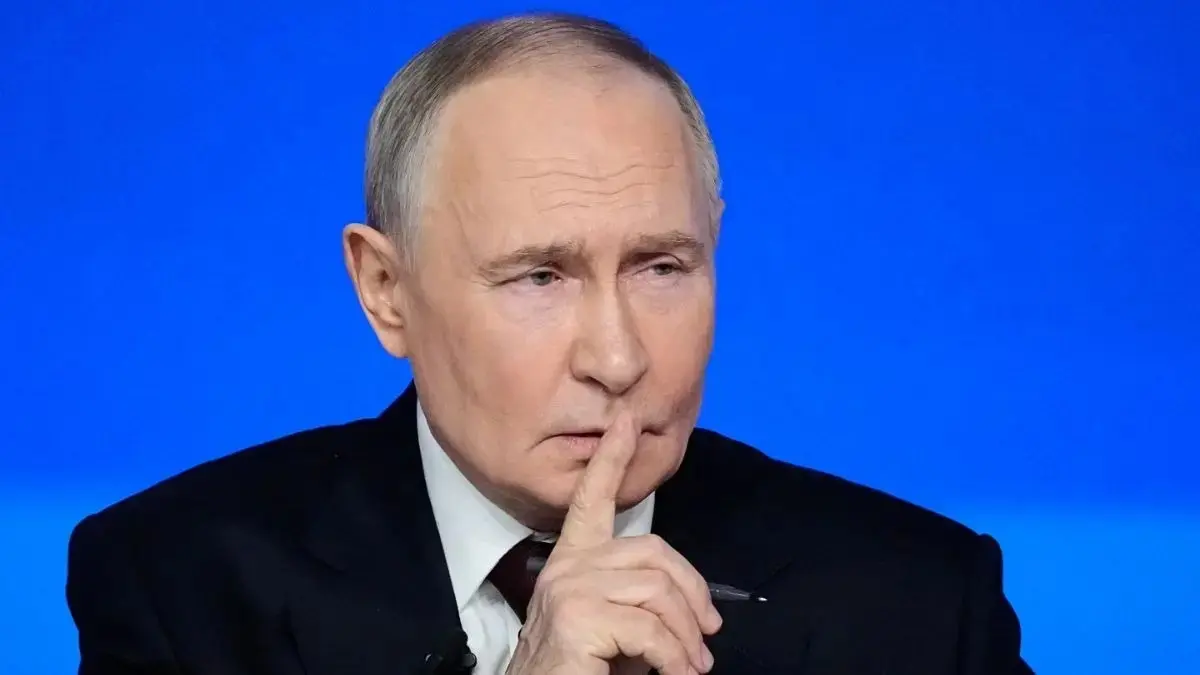
Russia has reacted directly to US President Donald Trump’s decision to authorize a manufacturing license for Ukraine to build its own Patriot missile interceptors. Responding to the announcement, the Kremlin stated it is under "no illusion" about the reality of ongoing American military support for Kyiv.
Kremlin spokesperson Dmitry Peskov noted that while the specific licensing details were new to Moscow, the overarching reality of US military aid remains completely clear to Russian leadership. "We know the United States is supplying weapons to Ukraine. We do not wear rose-tinted glasses. The licence is new information for us," Peskov stated.
Moscow Sees 'Duality' in Washington's Strategy
Despite the newly announced defense agreement, Peskov indicated that Russia still detects a distinct approach from Washington compared to its European allies. According to a Reuters report, the Kremlin believes the US administration maintains an underlying interest in moving toward a diplomatic resolution.
"We do not view the situation through rose-tinted glasses, and President Putin is fully aware of this. At the same time, there is a certain duality in the US position: unlike the Europeans, the United States maintains a desire to facilitate a move toward a peace process. They may be mistaken or wrong at times, but that desire strikes us as sincere," Peskov explained.
Advertisement
However, the Kremlin firmly rejected recent arguments from US officials who suggested that enabling deeper Ukrainian strikes inside Russian territory could accelerate the end of the conflict.
The Debate Over Military Escalation and Buffer Zones
The statements follow comments made at a NATO summit in Turkey, where US Secretary of State Marco Rubio argued that Russia is facing increasing difficulty defending its airspace, potentially creating leverage for future negotiations. President Trump echoed this perspective, describing the manufacturing license as "an escalation, but it's also an escalation that can help lead to an end."
Advertisement
Peskov countered this logic, pointing to what he called "certain misconceptions within the White House administration" regarding the idea that intensifying military capabilities can foster peace. Instead, he warned that these steps would extend the timeline of the war and compel Russia to push its borders outward.
"It will result in our having to establish a larger security zone, a larger buffer zone. Consequently, stoking tensions and taking actions that drive escalation will in no way contribute to the peace process," Peskov warned.
Trump's Patriot License Offer to Zelenskyy
The diplomatic friction peaked just a day after President Trump held a bilateral meeting with Ukrainian President Volodymyr Zelenskyy on the sidelines of the NATO summit. It was during this meeting that Trump announced the plan to allow Ukraine to build the advanced air defense interceptors on its own soil.
"We're going to give a license to you to make Patriots. That's pretty cool. This way, you can't complain that we're not giving 'em enough," Trump told Zelenskyy.
While the policy shift represents a major change in how the US handles long-term military assistance—transitioning from direct hardware transfers to domestic production capabilities—the actual timeline remains a challenge. Defense experts point out that Ukraine faces immediate industrial hurdles. Before any production lines can go live, Kyiv will require extensive technology transfers, secure manufacturing facilities, reliable supply chains, complex certification, and finalized commercial agreements with American defense contractors.