
'Use of Air Power Could Have Slowed Chinese Offensive in 1962': CDS Gen Anil Chauhan
While speaking at the launch of Reveille to Retreat, CDS Gen Anil Chauhan has said that the use of IAF during the 1962 war with China could have significantly slowed, if not stopped, the Chinese military offensive.
- Defence News
- 3 min read

;'%3e%3cpath%20d='m8,15.99c4.41,0,7.99-3.58,7.99-7.99S12.41,0,8,0,0,3.59,0,8s3.58,7.99,7.99,7.99Z'%20style='stroke:%23fff;%20stroke-miterlimit:10;%20stroke-width:.02px;'/%3e%3cpath%20d='m3.08,3.37l3.82,5.11-3.84,4.15h.87l3.37-3.64,2.72,3.64h2.94l-4.04-5.39,3.58-3.87h-.86l-3.1,3.35-2.5-3.35h-2.94Zm1.27.64h1.35l5.97,7.99h-1.35l-5.97-7.99Z'%20style='fill:%23fff;'/%3e%3c/g%3e%3c/svg%3e)


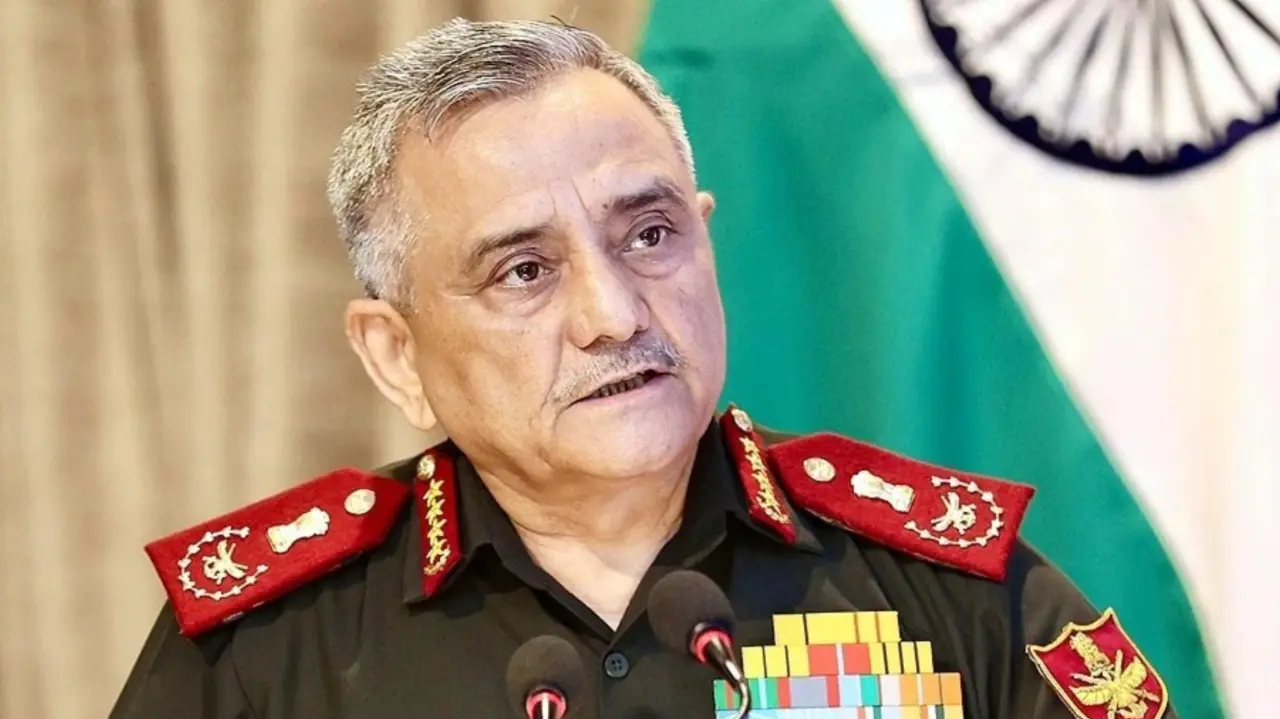
New Delhi: Chief of Defence Staff (CDS) General Anil Chauhan has said that the use of the Indian Air Force (IAF) during the 1962 war with China could have significantly slowed, if not stopped, the Chinese military offensive.
He made these remarks while speaking at the launch of Reveille to Retreat, the autobiography of Lieutenant General B.M. Thorat, who served as the General Officer Commanding-in-Chief of India’s Eastern Command prior to the 1962 conflict.
General Chauhan described the autobiography as more than just a personal account, calling it a thoughtful reflection on military leadership, strategy, and India’s defence history.
On Forward Policy and the 1962 War
Commenting on India’s controversial “forward policy” in the lead-up to the war, Gen Chauhan noted that assessing its effectiveness today is difficult due to changes in geography, geopolitics, and military strength over the years.
Advertisement
He emphasized that the policy should not have been applied in the same way to both Ladakh and the North East Frontier Agency (NEFA), now Arunachal Pradesh.
“Ladakh and NEFA had different historical backgrounds, security challenges, and terrain. In Ladakh, China had already occupied large parts of Indian territory, while in NEFA, India had a stronger legal claim. Treating both regions the same way, in my view, was a flawed decision,” he said.
Advertisement
Air Force Could Have Changed the Outcome
General Chauhan revealed that Lt Gen Thorat had considered using the IAF during the conflict, but the government at the time chose not to proceed.
He argued that air support would have provided a major tactical advantage, with faster response times, better geographic positioning, and the ability to deliver heavier payloads against enemy targets.
“The use of air power could have considerably slowed down the Chinese advance, and possibly prevented it. This would have given the Army more time to prepare,” he said.
He added that back then, the use of the Air Force was seen as a step that could escalate the conflict. “That is no longer the case. Operation Sindoor is a recent example where air power was used decisively,” he said, referring to the IAF-led strikes in May this year on terror camps in Pakistan and Pakistan-occupied Kashmir, following the Pahalgam massacre in April.
Legacy of Lt Gen Thorat
General Chauhan paid tribute to Lt Gen Thorat's distinguished military career, which spanned both the pre- and post-independence eras. He served in several conflict zones that remain volatile even today, including Waziristan and Peshawar (now in Pakistan).
During World War II, he led his battalion in Burma’s Arakan region (present-day Rakhine State) and later fought in the key battles of Kohima and Imphal. For his leadership, he was awarded the Distinguished Service Order.
After independence, Lt Gen Thorat commanded the Custodian Force in Korea following the Korean War armistice and was honoured with the Ashoka Chakra Class II (now known as the Kirti Chakra) and the Padma Bhushan.
Referring to Korea’s continued division along the 38th parallel, General Chauhan said, “It highlights the lasting nature of conflicts that Thorat once helped to manage.”
CDS Chauhan concluded by saying that Reveille to Retreat offers valuable insights not only into military history but also into leadership and decision-making that remain relevant even today.