
4% inflation focus may not necessarily indicate prolonged higher rates: Panel Members
Both Varma and Goyal highlighted that despite occasional supply shocks, core inflation is moving toward the 4% target.
- Economy News
- 3 min read

;'%3e%3cpath%20d='m8,15.99c4.41,0,7.99-3.58,7.99-7.99S12.41,0,8,0,0,3.59,0,8s3.58,7.99,7.99,7.99Z'%20style='stroke:%23fff;%20stroke-miterlimit:10;%20stroke-width:.02px;'/%3e%3cpath%20d='m3.08,3.37l3.82,5.11-3.84,4.15h.87l3.37-3.64,2.72,3.64h2.94l-4.04-5.39,3.58-3.87h-.86l-3.1,3.35-2.5-3.35h-2.94Zm1.27.64h1.35l5.97,7.99h-1.35l-5.97-7.99Z'%20style='fill:%23fff;'/%3e%3c/g%3e%3c/svg%3e)


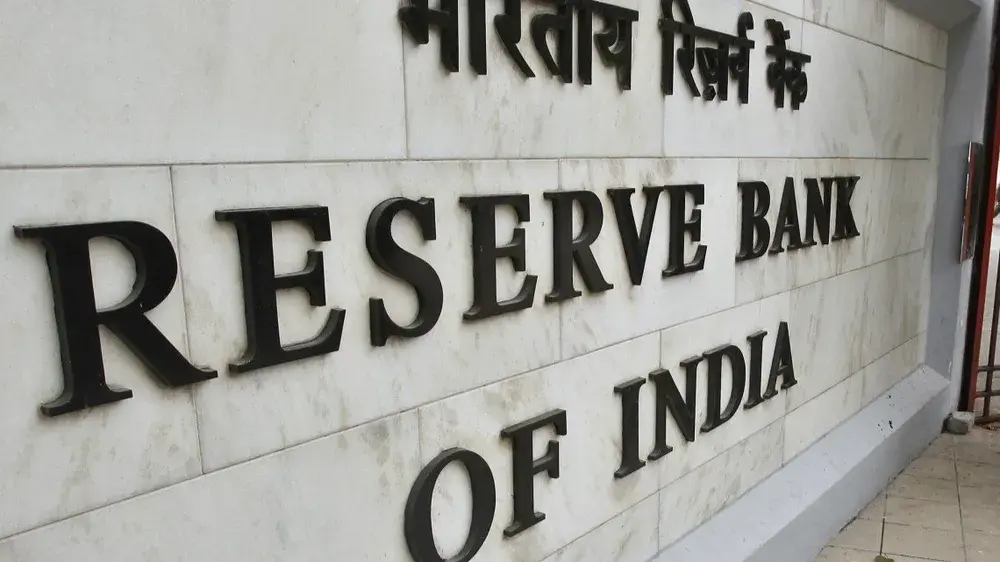
Reserve Bank of India’s (RBI) Monetary Policy Committee (MPC) has reaffirmed its commitment to maintaining a 4 per cent retail inflation target. This decision has been made in light of inflation returning to the comfort zone of 2 per cent to 6 per cent.
However, this focus on the 4 per cent target does not necessarily indicate that interest rates will remain elevated for an extended period, according to two external members of the committee who spoke to Reuters.
Over the past year, the country’s inflation exceeded the upper limit of 6 per cent set by the MPC in five out of the last 12 months. In the remaining seven months, it remained within the 4 per cent to 6 per cent range, even decreasing to 5 per cent in September after a couple of months of food cost-driven spikes.
One committee member, Jayanth Varma, explained that the MPC's primary objective was to bring inflation within the tolerance band, which has largely been achieved. The focus is now shifting towards achieving the long-term goal of 4 per cent inflation, and Varma emphasised that there is no ambiguity regarding this target.
Advertisement
The MPC, consisting of six members, including three external members, decided to keep interest rates unchanged in the most recent meeting but signaled their commitment to the 4 per cent inflation target. This signalling has raised expectations that interest rates might remain elevated in India's economy.
However, Ashima Goyal, another committee member, clarified that the focus on the 4 per cent target doesn't imply a commitment to higher interest rates for an extended period. Decisions regarding interest rates will continue to be data-dependent.
Advertisement
Both Varma and Goyal highlighted that despite occasional supply shocks, core inflation is moving toward the 4 per cent target. Varma mentioned that a real interest rate of around 1 per cent, which factors in inflation, will be essential for achieving sustainable 4 per cent inflation. As projected inflation declines, the nominal repo rate (the rate at which the central bank lends to commercial banks) consistent with a 1 per cent real rate will also decrease. The future path of inflation over the next three to four quarters will be a critical determinant in this regard.
Varma pointed out that the MPC's patience in gradually reducing inflation is primarily motivated by concerns about the fragility of economic growth.
Recent data from the central bank showed that net financial savings in Indian households have decreased to a 50-year low of 5.1 per cent of GDP, accompanied by rising leverage. Goyal suggested measures such as higher capital requirements for fast-growing loan categories to prevent excessive risk-taking during economic upswings.
In terms of household leverage, Goyal noted that while it is relatively low in the country, it will need to increase at a measured pace. Implementing countercyclical prudential policies can support financial stability and growth while allowing interest rates to be set according to domestic inflation and growth requirements.
Both committee members acknowledged that households' willingness to take on debt may support short-term consumption and growth, but it is crucial to ensure robust economic growth so that this borrowing can be repaid from rising incomes. If economic growth falters, the accumulated debt could become a burden in the years to come.
(With Reuters Inputs)