
State Bank of India expects limited impact from stricter regulations on personal loans
Khara noted that factoring in the bank's half-yearly profit, yet to be adjusted in the capital ratios, would lead to a rise of 109 bps in the capital adequacy r
- Economy News
- 2 min read

;'%3e%3cpath%20d='m8,15.99c4.41,0,7.99-3.58,7.99-7.99S12.41,0,8,0,0,3.59,0,8s3.58,7.99,7.99,7.99Z'%20style='stroke:%23fff;%20stroke-miterlimit:10;%20stroke-width:.02px;'/%3e%3cpath%20d='m3.08,3.37l3.82,5.11-3.84,4.15h.87l3.37-3.64,2.72,3.64h2.94l-4.04-5.39,3.58-3.87h-.86l-3.1,3.35-2.5-3.35h-2.94Zm1.27.64h1.35l5.97,7.99h-1.35l-5.97-7.99Z'%20style='fill:%23fff;'/%3e%3c/g%3e%3c/svg%3e)


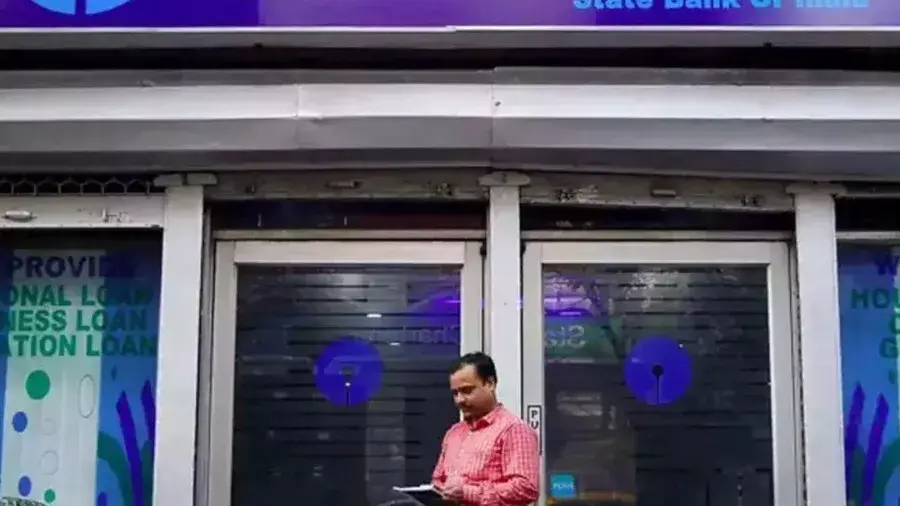
In response to the Reserve Bank of India's (RBI) recent directive to banks to increase capital reserves for personal loans, State Bank of India (SBI), the country's largest lender, expects minimal impact on its capital ratios.
SBI's Chairman, Dinesh Kumar Khara, in a phone interview with Reuters said that the augmented risk weight on personal loans, including credit cards, would result in a 55-60 basis points (bps) impact.
Khara noted that factoring in the bank's half-yearly profit, yet to be adjusted in the capital ratios, would lead to a rise of 109 bps in the capital adequacy ratio. Despite the increased capital requirement, SBI asserts that it possesses sufficient buffers and does not foresee the need to expedite fundraising. The bank has already taken steps to moderate growth in the unsecured personal loans segment, he added.
The RBI's move to tighten capital requirements aims to address concerns about the rapid expansion of certain personal loans. However, Khara clarified that the capital requirements remain unaffected for essential sectors such as car loans, home loans, and gold loans, crucial for economic growth. He expressed confidence that the central bank is unlikely to impose stricter capital requirements on these segments.
Advertisement
While SBI expects to maintain approximately 15 per cent growth in its retail loan portfolio this fiscal year, Khara acknowledged that loans facilitated by digital lenders for short-term consumption could experience a slowdown.
SBI's subsidiary, SBI Cards and Payment Services, focused on credit cards, is expected to face a more substantial impact on its capital ratios, with an estimated 400 bps impact. Nevertheless, the capital ratio for SBI Cards is projected to remain at around 17-18 per cent, exceeding the regulatory requirement of 15 per cent. The board of SBI Cards will assess the need for additional capital, with the company stating that it can strengthen tier-2 capital if required, without an immediate necessity to raise equity.
Advertisement
Despite these reassurances, both SBI and SBI Cards witnessed declines in their stock prices, with SBI shares closing 3.6 per cent lower and SBI Cards experiencing a 5.1 per cent decline.
(With Reuters inputs)