
China stocks fall as country pushed back into deflation
According to data, China's consumer prices reverted to contraction in October, with factory-gate deflation persisting, indicating domestic demand challenges.
- Economy News
- 2 min read

;'%3e%3cpath%20d='m8,15.99c4.41,0,7.99-3.58,7.99-7.99S12.41,0,8,0,0,3.59,0,8s3.58,7.99,7.99,7.99Z'%20style='stroke:%23fff;%20stroke-miterlimit:10;%20stroke-width:.02px;'/%3e%3cpath%20d='m3.08,3.37l3.82,5.11-3.84,4.15h.87l3.37-3.64,2.72,3.64h2.94l-4.04-5.39,3.58-3.87h-.86l-3.1,3.35-2.5-3.35h-2.94Zm1.27.64h1.35l5.97,7.99h-1.35l-5.97-7.99Z'%20style='fill:%23fff;'/%3e%3c/g%3e%3c/svg%3e)


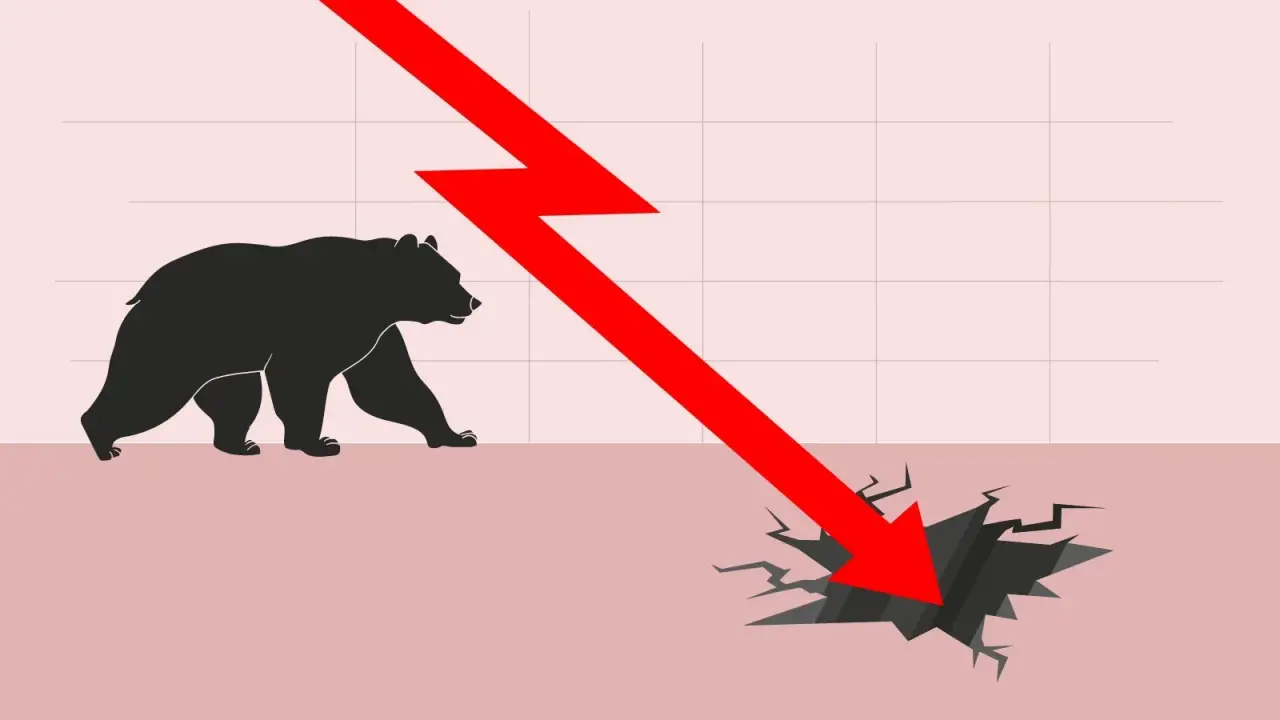
In Thursday's market update, China stocks exhibited a lack of significant movement as concerns regarding the economic recovery resurfaced amidst the latest consumer prices data. Investors remained attentive to developments in the property sector and ongoing stimulus measures.
The morning trade witnessed fluctuations in the blue-chip CSI 300 Index and the Shanghai Composite Index, ultimately closing largely unchanged by midday. Meanwhile, Hong Kong's Hang Seng Index experienced a marginal decline of 0.3 per cent.
According to recent data, China's consumer prices reverted to contraction in October, with factory-gate deflation persisting, indicating domestic demand challenges. The Consumer Price Index (CPI) dropped 0.2 per cent year-on-year in October, surpassing expectations.
Robert Carnell, the regional head of research for Asia-Pacific at ING, attributed the current market conditions to a supply excess rather than a demand collapse.
Advertisement
While overall investor sentiment is gradually improving due to signs of stabilisation in China's economic data and a pause in U.S. rate hikes, shares of Chinese property giant Country Garden faced a volatile morning trade. The company experienced a 7 per cent decline, partially offsetting the previous day's gains. This downturn followed a report suggesting that Beijing had approached Ping An Insurance Group to acquire a controlling stake in the troubled homebuilder.
Despite a late surge in property stocks on Wednesday, triggered by reports of China's State Council instructing the local government of Guangdong province to facilitate a rescue of Country Garden by Ping An, the latter clarified in a statement to Reuters that it had not been asked by the government to take over Country Garden.
Advertisement
In response to these developments, shares of other Chinese developers also witnessed declines, with the Hang Seng Mainland Properties Index falling by 3.7 per cent. Notably, China Evergrande Group and CIFI Holdings shares led the downward trend.
Ping An's Hong Kong-listed shares experienced a 1.6 per cent drop, while its mainland A shares recorded a nearly 3 per cent decrease. Analysts from BofA noted that in China, distressed asset managers typically handle toxic assets or bankrupt companies. Previous experiences indicate that Ping An is likely cautious about involvement in property company operations to avoid excessive responsibility that could impact its financial stability.