
Will not accept unfair taxes on steel industry, says Piyush Goyal
Speaking at a steel industry event, Goyal stressed India's serious approach towards CBAM, assuring that the matter is being earnestly taken up with the WTO.
- Economy News
- 3 min read

;'%3e%3cpath%20d='m8,15.99c4.41,0,7.99-3.58,7.99-7.99S12.41,0,8,0,0,3.59,0,8s3.58,7.99,7.99,7.99Z'%20style='stroke:%23fff;%20stroke-miterlimit:10;%20stroke-width:.02px;'/%3e%3cpath%20d='m3.08,3.37l3.82,5.11-3.84,4.15h.87l3.37-3.64,2.72,3.64h2.94l-4.04-5.39,3.58-3.87h-.86l-3.1,3.35-2.5-3.35h-2.94Zm1.27.64h1.35l5.97,7.99h-1.35l-5.97-7.99Z'%20style='fill:%23fff;'/%3e%3c/g%3e%3c/svg%3e)


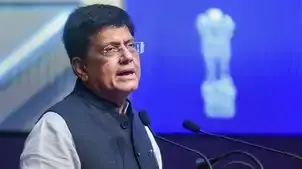
Expressing strong opposition to the European Union's proposed carbon tax on specific sectors like steel, Commerce and Industry Minister Piyush Goyal reassured industry players of their adamant stance against such unjust taxes. Goyal said that India would not accept these taxes and would vehemently fight to secure fair treatment for the country's producers and exporters.
Highlighting India's concerns, Goyal noted that the country has already raised objections regarding the carbon tax with the European Union and within the World Trade Organization (WTO). The Carbon Border Adjustment Mechanism (CBAM), akin to a form of import duty, is slated to take effect from January 1, 2026. However, from October 1 of this year, companies in seven carbon-intensive sectors, including steel, cement, fertilizers, aluminum, and hydrocarbon products, are required to share data concerning carbon emissions with the EU.
Speaking at a steel industry event, Goyal stressed India's serious approach towards CBAM, assuring that the matter is being earnestly taken up with the WTO. The Minister asserted India's commitment to advocating for fair treatment for its producers and exporters, demonstrating the nation's determination against the implementation of such unfair taxes on industries like steel and aluminum.
Goyal also highlighted the necessity for global consensus on the issue and mentioned India's intent to collaborate with other countries to address this pressing concern. He underlined that India will explore innovative solutions but firmly stated that the country will not acquiesce to unjust taxes or levies imposed on its industries.
Advertisement
Citing India's status as a developing economy, Goyal mentioned the need for the EU to recognize the principle of "common but differentiated responsibility" in this context.
The impending CBAM could mean a substantial tax of 20-35 percent on specific imports into the EU, significantly impacting Indian exports of iron ore pellets, iron, steel, and aluminum products. India exported these goods worth $7.4 billion to the EU in 2023, constituting 26.6 percent of its exports in these sectors.
Advertisement
Goyal additionally mentioned the government's efforts to enhance the steel industry's access in various countries through free trade agreements (FTAs). To safeguard domestic steel players from dumping, India is incorporating provisions such as "high" value-added norms and "melt and pour" in these agreements, aimed at preventing misuse of FTAs.
Moreover, Goyal urged the industry to report cases where businesses are importing steel available domestically at competitive prices, as irrational imports negatively impact domestic manufacturing and demand.
The Minister also expressed optimism about achieving the target of doubling steel production to around 300 million tonnes per year by 2030 and emphasized the need for the industry to focus on alternatives for coking coal imports to foster sustainable production practices and reduce pollution through steel recycling.