
Decoding Water Bodies: Straits, Channels, Gulfs in the Spotlight
Straits are narrow natural passages linking seas and oceans, often turning into global chokepoints like the Strait of Hormuz. Understanding how straits differ from channels, sounds, bays, and gulfs reveals their impact on trade, energy, and geopolitics.
- Education News
- 3 min read

;'%3e%3cpath%20d='m8,15.99c4.41,0,7.99-3.58,7.99-7.99S12.41,0,8,0,0,3.59,0,8s3.58,7.99,7.99,7.99Z'%20style='stroke:%23fff;%20stroke-miterlimit:10;%20stroke-width:.02px;'/%3e%3cpath%20d='m3.08,3.37l3.82,5.11-3.84,4.15h.87l3.37-3.64,2.72,3.64h2.94l-4.04-5.39,3.58-3.87h-.86l-3.1,3.35-2.5-3.35h-2.94Zm1.27.64h1.35l5.97,7.99h-1.35l-5.97-7.99Z'%20style='fill:%23fff;'/%3e%3c/g%3e%3c/svg%3e)


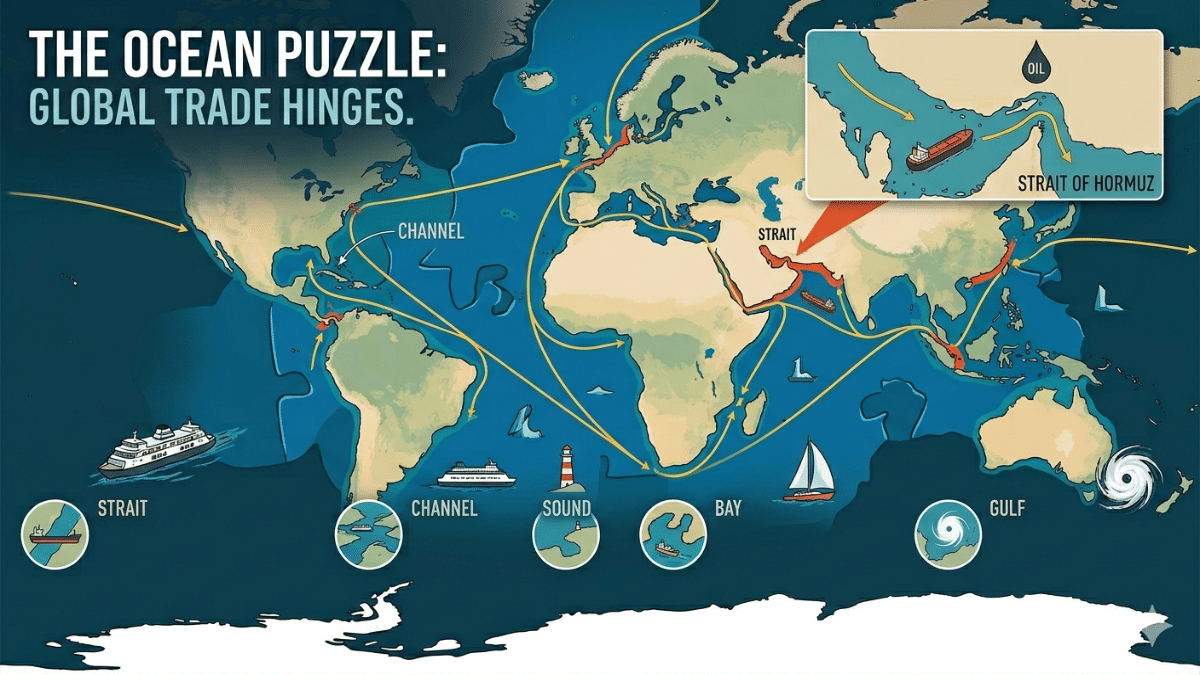
New Delhi: Picture the world's oceans as a giant puzzle, where narrow passages like straits act as the critical hinges holding trade routes together. Right now, with headlines buzzing about the Strait of Hormuz amid Iran-US friction, it's a perfect moment to unpack this.
What is a Strait?
A strait is essentially nature's skinny bridge between two larger bodies of water, like seas or oceans. It's narrow by design, often just a few kilometers wide, formed by landmasses squeezing close, channelling massive flows of water, ships, and sometimes geopolitical drama. Unlike man-made canals such as the Suez or Panama, straits are purely natural, born from erosion, tectonics, or rising seas.
Strait vs. the Rest: Untangling the Terms
Straits stand out for their connector role and tight squeeze, but they share the seas with cousins like bays, gulfs, channels, and sounds - each with distinct vibes that shape navigation, economies, and even battles.
Advertisement
Let's dive in, starting with why Hormuz grabs the spotlight: this 33-kilometer-wide chokepoint between Iran and Oman funnels about 20-30% of global oil from the Persian Gulf to the Arabian Sea, making it a powder keg for energy markets and naval standoffs.
A channel, by contrast, is more of a versatile pathway- often deeper and wider than a strait, threading through seas, rivers, or island clusters without always linking major oceans. The English Channel, separating the UK from France, links the Atlantic to the North Sea over 560 kilometers, wide enough for bustling ferry traffic but not the intense bottleneck of Hormuz. Another gem: the Mozambique Channel, a 1,700-km stretch between Madagascar and Africa's east coast, vital for Indian Ocean shipping.
Advertisement
Sounds take it wider and calmer, typically where seawater floods ancient river valleys or glacial fjords, creating broad, sheltered expanses. They're less about global connections and more local havens. Puget Sound in Washington state sprawls over 250 kilometers of intricate waterways, perfect for ferries and salmon runs. Up north, the Long Island Sound between New York and Connecticut offers a mellow 190-km passage, dodging the raw urgency of straits.
Bays and Gulfs: The Coastal Curves
Shift to bays, those cozy indents where the sea nibbles into the land, forming sheltered curves ideal for ports and beaches. They don't bridge water bodies; they're endpoints, cradling cities like Mumbai's Back Bay on the Arabian Sea or Sydney Harbour in Australia, basically natural harbours shielding ships from open-ocean fury.
Gulfs amp up the scale, like supersized bays plunging deep into continents, often vast enough to influence weather and fisheries across borders. The Gulf of Mexico, bordering the US, Mexico, and Cuba, spans over 1.5 million square kilometers, powering oil rigs and hurricanes alike. Closer to Hormuz drama, the Persian Gulf itself is a prime example, feeding the strait that keeps Asia's fuel tanks full like the Gulf of Thailand for Southeast trade or the Gulf of Aden guarding the Red Sea gateway.
These terms aren't just geography trivia; they dictate everything from oil prices (Hormuz's daily 21 million barrels affect your gas pump) to melting Arctic routes like the Northwest Passage, where straits like Lancaster Sound could unlock new shipping lanes as ice retreats. In a world of rising tensions and trade wars, knowing your strait from your sound keeps the big picture clear.