
Farmers' Welfare, Student Support, Women's Empowerment, Healthcare: Check DMK's Promises for Tamil Nadu Elections
MK Stalin highlighted the success of the Dravidian model of governance, positioning the DMK as the champion of inclusive development and social justice. He asserted that Tamil Nadu is the only state in India with double-digit growth, crediting sustained welfare initiatives for the state's progress.
- Election News
- 3 min read

;'%3e%3cpath%20d='m8,15.99c4.41,0,7.99-3.58,7.99-7.99S12.41,0,8,0,0,3.59,0,8s3.58,7.99,7.99,7.99Z'%20style='stroke:%23fff;%20stroke-miterlimit:10;%20stroke-width:.02px;'/%3e%3cpath%20d='m3.08,3.37l3.82,5.11-3.84,4.15h.87l3.37-3.64,2.72,3.64h2.94l-4.04-5.39,3.58-3.87h-.86l-3.1,3.35-2.5-3.35h-2.94Zm1.27.64h1.35l5.97,7.99h-1.35l-5.97-7.99Z'%20style='fill:%23fff;'/%3e%3c/g%3e%3c/svg%3e)


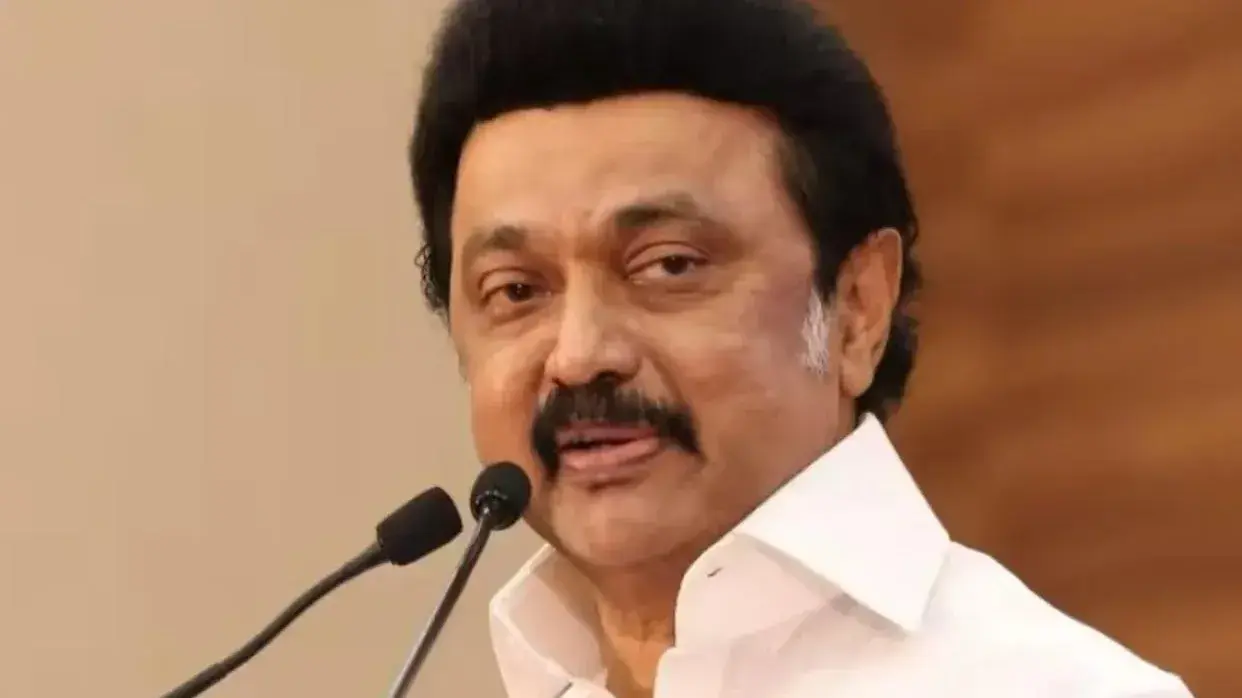
Chennai: Tamil Nadu Chief Minister and DMK president M.K. Stalin on Sunday unveiled the party's election manifesto for the upcoming Assembly polls, outlining a slew of ambitious welfare measures aimed at farmers, students, women, youth, and the common people. The release comes ahead of the single-phase elections scheduled for April 23.
Addressing a gathering, Stalin highlighted the success of the Dravidian model of governance, positioning the DMK as the champion of inclusive development and social justice. He asserted that Tamil Nadu is the only state in India with double-digit growth, crediting sustained welfare initiatives for the state's progress.
"Tamil Nadu has emerged as a leading state under the Dravidian model of governance, with several welfare schemes benefiting the public. DMK will form the government for the seventh time with continued public support. No other state in India has implemented welfare schemes as successfully as Tamil Nadu," Stalin said.
Key Promises in the Manifesto
The manifesto focuses heavily on expanding existing schemes and introducing new ones:
Advertisement
Agriculture and Farmers' Welfare: Installation of free electric meters for 20 lakh farmers and provision of free pump sets. The government also pledged to reduce milk prices by Rs 5 per litre to ease the burden on consumers and support dairy farmers.

Education and Student Support: Expansion of the breakfast scheme to cover 15 lakh students up to 8th standard. Additionally, free meals for 15 lakh students, monthly financial assistance increased to Rs 1,500 per student under the Pudhumai Penn and Tamil Pudhalvan schemes, and a renewed push for Tamil language in Chennai schools.
Advertisement
Women's Empowerment: Significant boost to women's financial security. The monthly aid under Kalaignar Mahila Riti Yojana (Kalaignar Magalir Urimai Thogai Thittam) will be doubled and increased to Rs 2,000. Stalin noted that despite alleged obstructions by the BJP, the scheme has already benefited around 1.3 crore families with direct financial assistance.
"The BJP attempted to obstruct the implementation of Kalaignar Magalir Urimai Thogai Thittam... Despite challenges, the scheme has benefited around 1 crore 30 lakh families, with financial assistance of Rs 5,000 provided to beneficiaries. The DMK government remains committed to continuing and expanding welfare initiatives aimed at improving the lives of the people," he said.
Healthcare: The CM's medical insurance policy will continue to cover a minimum of Rs 5 lakh, while government hospitals will be provided twice the amount of equipment to strengthen public healthcare infrastructure.
Housing and Basic Amenities: Assurance of 10 lakh new homes for the people of Tamil Nadu and free power to over 20 lakh people.
Employment: Creation of 2 lakh additional jobs by 2030 targeted at the youth of Tamil Nadu.
Stalin reiterated the party's commitment to inclusive growth: "The breakfast scheme to be expanded for 15 lakh students, up to 8th standard. Rs two thousand per month will be provided under the Kalaignar Mahila Riti Yojana."
The DMK leader also announced plans to launch the party's statewide campaign starting March 31, with senior leaders including Deputy CM Udhayanidhi Stalin and MP Kanimozhi Karunanidhi taking the message to the grassroots.
The manifesto release follows the announcement of the DMK's list of 164 candidates, which includes over 60 new faces and a balance of experience and youth.
With the Dravidian model at its core, the DMK is positioning these promises as a continuation and expansion of its pro-people governance, appealing directly to key voter bases--women, farmers, students, and the urban and rural poor--ahead of what is expected to be a keenly contested election.