
From Ratna Debnath To Kalita Majhi: Newcomers Who Defied Odds To Secure Historic Mandates In 2026 Assembly Polls
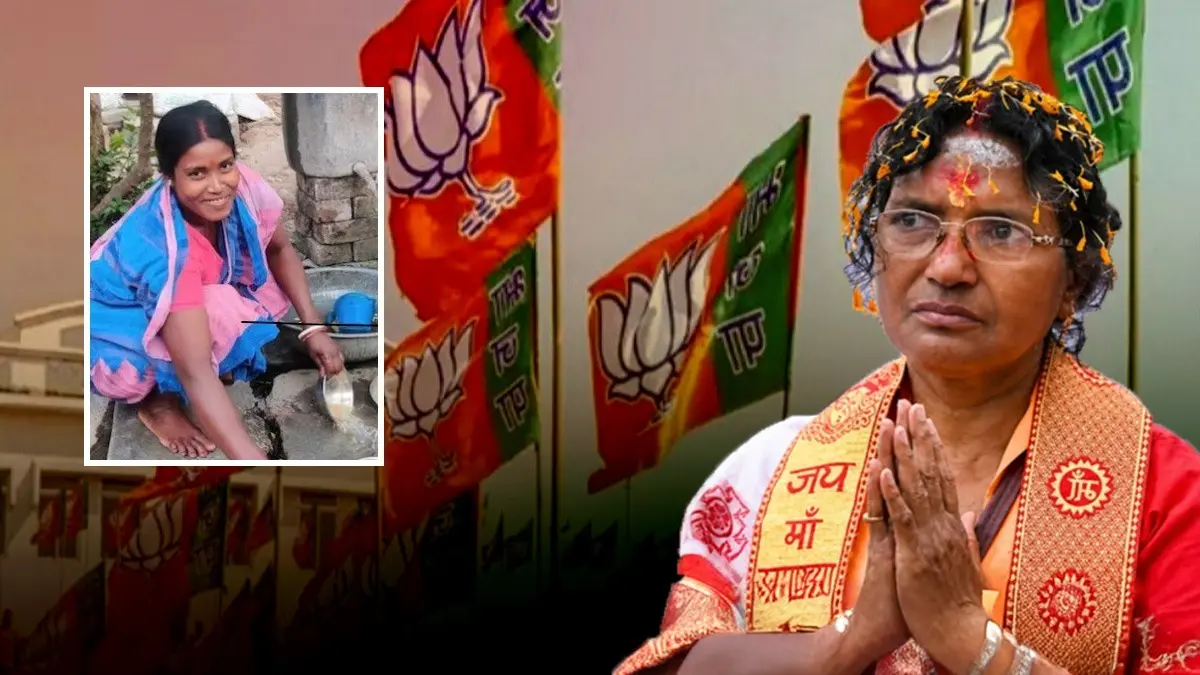
Ratna Debnath, mother of the RG Kar victim, and Kalita Majhi, a domestic worker, have scripted history. As first-time BJP candidates in West Bengal, they defied the odds to defeat established rivals, proving the power of a grassroots "newcomer wave."
- Election News
- 4 min read

;'%3e%3cpath%20d='m8,15.99c4.41,0,7.99-3.58,7.99-7.99S12.41,0,8,0,0,3.59,0,8s3.58,7.99,7.99,7.99Z'%20style='stroke:%23fff;%20stroke-miterlimit:10;%20stroke-width:.02px;'/%3e%3cpath%20d='m3.08,3.37l3.82,5.11-3.84,4.15h.87l3.37-3.64,2.72,3.64h2.94l-4.04-5.39,3.58-3.87h-.86l-3.1,3.35-2.5-3.35h-2.94Zm1.27.64h1.35l5.97,7.99h-1.35l-5.97-7.99Z'%20style='fill:%23fff;'/%3e%3c/g%3e%3c/svg%3e)


New Delhi: The 2026 assembly elections have delivered a tectonic shift in Indian politics, defined not by the calculated moves of veterans, but by a breathtaking "revolt of the commoner."
From the industrial heartlands of Bengal to the rural outposts of Assam, a new vanguard of grassroots winners has stormed the gates of power, dismantling decades-old institutional strongholds with little more than public sentiment and raw resilience.
This was a mandate where the "unconquerable" fell and the marginalized rose and where mothers seeking justice and local workers became the new giants, proving that in 2026, the pulse of the street has officially overpowered the machinery of the state.
Panihati’s Moral Mandate: Ratna Debnath
In what is being described as the "Referendum of Justice," Ratna Debnath, the mother of the young doctor from RG Kar Medical College, secured a historic victory in the Panihati constituency.
Advertisement
Running on a BJP ticket, she defeated TMC’s Tirthankar Ghosh by a significant margin of 28,836 votes.
Her victory is a profound symbolic shift in North 24 Parganas, a district the TMC has dominated for 15 years. Debnath’s campaign was less about policy and more about a mother's silent prayer for judicial accountability.
Advertisement
Despite facing alleged intimidation and verbal abuse during the polling phases- incidents that sparked a massive "silent voting" wave among women- she successfully transformed a local urban seat into the moral epicenter of the 2026 polls. For many, her entry into the Assembly marks the transition of the "Justice for Abhaya" movement from the streets to the legislature.
The Sandeshkhali Surge
The rural bastion of Sandeshkhali, which dominated national headlines in 2024, has delivered a decisive verdict against the status quo. Sanat Sardar of the BJP claimed the seat with 1,07,189 votes, defeating TMC’s Jharna Sardar by a margin of 17,510 votes.
The victory is seen as a direct consequence of the grassroots upheaval involving allegations of land grab and institutional apathy that shook the Sundarbans fringe earlier. By electing a local face who stood at the forefront of the protests, Sandeshkhali has sent a clear message of reclamation to the corridors of power.
From Maid to MLA: Kalita Majhi’s Triumph
In another remarkable story of grassroots empowerment, Kalita Majhi, who once earned her living as a domestic worker, has won the Ausgram seat in West Bengal.
Representing the BJP, she defeated TMC’s Shyama Prasanna Lohar by 12,535 votes. Majhi’s victory is being hailed as the ultimate triumph of the "Aam Aadmi" over political machinery. Her journey from cleaning floors to the floor of the Legislative Assembly has become a rallying cry for the marginalized across the state.
A resident of Guskara Municipality, Majhi worked as a domestic help in four households before entering politics. Her candidature had drawn attention for its grassroots nature, and her victory now stands as a rare example of socio-economic mobility through electoral politics.
Other Notable First-Timers
The "newcomer wave" extended far beyond Bengal-
- VS Babu (Kolathur, TN): VS Babu, a grassroots worker for Vijay’s TVK, defeated sitting Chief Minister MK Stalin in his own citadel. Stalin, who won this seat by 80,000 votes in 2021, fell to a first-timer. Babu’s win signifies the "Gen Z" wave and a total exhaustion with the DMK-AIADMK binary.
- Rajeev Chandrasekhar (Nemom, Kerala): While a veteran in Delhi, Rajeev Chandrasekhar made history by becoming a first-time winner in the Kerala Assembly. By winning the Nemom seat, he secured the BJP’s first significant entry into the 140-member house, breaking the UDF-LDF monopoly in the state capital.
- Ramesh Pisharody (Palakkad, Kerala): The popular actor turned the tide for the Congress-led UDF to enter the assembly for the first time.
As the dust settles on the 2026 polls, the common thread among these winners is clear- the electorate has favored candidates who mirror their own lived experiences over those with high-profile political lineages.