
Karnataka Assembly elections 2023: As model code comes into effect, here's what changes
In Karnataka, voting is scheduled for May 10 and the counting will take place on May 13, announced the chief election commissioner (CEC) Rajiv Kumar.
- Election News
- 3 min read

;'%3e%3cpath%20d='m8,15.99c4.41,0,7.99-3.58,7.99-7.99S12.41,0,8,0,0,3.59,0,8s3.58,7.99,7.99,7.99Z'%20style='stroke:%23fff;%20stroke-miterlimit:10;%20stroke-width:.02px;'/%3e%3cpath%20d='m3.08,3.37l3.82,5.11-3.84,4.15h.87l3.37-3.64,2.72,3.64h2.94l-4.04-5.39,3.58-3.87h-.86l-3.1,3.35-2.5-3.35h-2.94Zm1.27.64h1.35l5.97,7.99h-1.35l-5.97-7.99Z'%20style='fill:%23fff;'/%3e%3c/g%3e%3c/svg%3e)


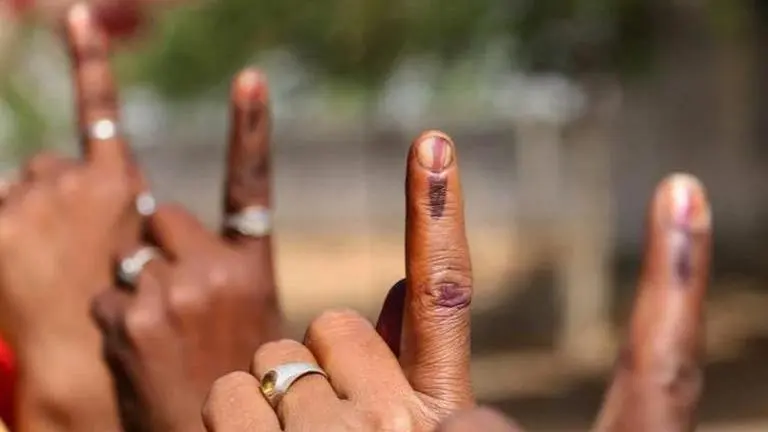
As the poll schedule for Karnataka was announced by the Election Commission of India (ECI) Wednesday, the Model Code of Conduct has also come into effect in the state. The voting is scheduled for May 10 and the counting will take place on May 13, announced the chief election commissioner (CEC) Rajiv Kumar. He also announced various steps taken by the commission to increase the voting percentage and also rein in the abuse of money power.
Notably, with the announcement of the polls in the state, the implementation of the MCC also becomes mandatory for the political parties. The objective of the model code is to hold polls in accordance with the various rules and regulations that are set by the election commission before and during the elections. CEC Kumar announced the number of elections officials have been increased this year to check any violation of the MCC. While in the last polls, the number of election observers was 1,900, they have increased to 2,400 in these elections.
What is the Model Code of Conduct ?
The election commission makes sure the polls are held as per the rules. They are categorised with respect to the general conduct by the party and the candidates, the election meetings organised, the processions, campaigns held by them, polling day rules and the election manifestos.
Party in power
From the time the elections are announced, the state or the Centre shall not make announcements that would amount to using the official position for its election campaign. Accordingly, ministers and other authorities shall not sanction grants/payments out of discretionary funds; Except the civil servants, no leader from any political parties can lay foundation stones etc. of projects or schemes of any kind; Make any promises of doing any kind of development work; make any ad-hoc appointments in Government or related entities.
Advertisement
General Conduct
No party or candidate should engage in activities which may create hatred, or enmity between different castes and communities, religious or linguistic; the criticism targeted at the parties or candidates should be based on the past track record or policies of the government and should not be in connection with their private life; all kinds of corrupt practices like and offences of the election law such as bribing of voters, intimidation of voters, impersonation of voters should be avoided.
Guidelines on election manifestos
Although the law is obvious that the poll promises cannot be construed as a ‘corrupt practice’ the reality cannot be ruled out that distribution of freebies of any kind, undoubtedly, influences all people. It goes against the notion of free and fair elections to a large degree.
Advertisement
The manifestos announced by the political parties should not have any promises, which go against the conduct of free and fair elections. It should maintain the level playing field for all political parties and candidates. In case of single phase election, manifesto shall not be released during the prohibitory period, as prescribed under Section 126 of the Representation of the People Act, 1951.