
Delta Flight With 198 On Board Makes Emergency Landing After Fuel Leak Forces Return To New York Minutes After Take-Off
A Delta flight A321neo bound for San Juan returned to JFK after a fuel leak, cockpit fumes and an overweight landing with 198 on board, as crew donned oxygen masks and landed safely.
- Global News
- 4 min read

;'%3e%3cpath%20d='m8,15.99c4.41,0,7.99-3.58,7.99-7.99S12.41,0,8,0,0,3.59,0,8s3.58,7.99,7.99,7.99Z'%20style='stroke:%23fff;%20stroke-miterlimit:10;%20stroke-width:.02px;'/%3e%3cpath%20d='m3.08,3.37l3.82,5.11-3.84,4.15h.87l3.37-3.64,2.72,3.64h2.94l-4.04-5.39,3.58-3.87h-.86l-3.1,3.35-2.5-3.35h-2.94Zm1.27.64h1.35l5.97,7.99h-1.35l-5.97-7.99Z'%20style='fill:%23fff;'/%3e%3c/g%3e%3c/svg%3e)


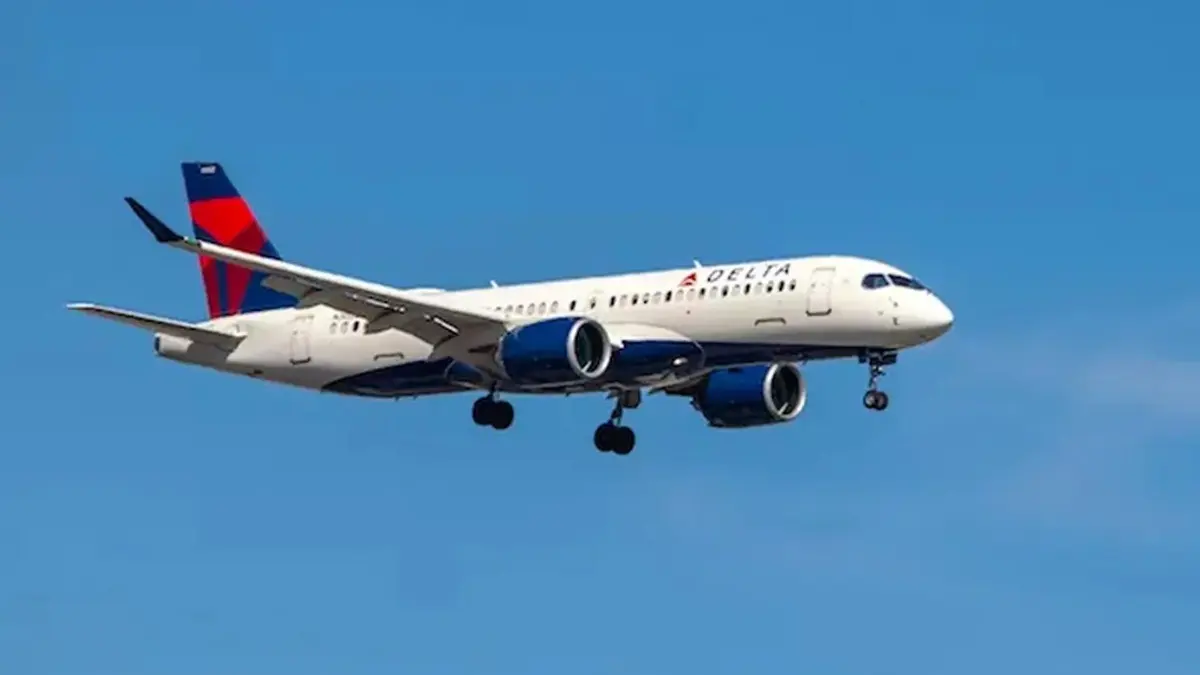
New York: A Delta Air Lines Airbus A321neo bound for Puerto Rico was forced to turn back to John F Kennedy (JFK) International Airport in New York shortly after departure on Saturday, after the flight crew reported a fuel leak and later detected fumes in the cockpit.
According to reports, the aircraft, operating as Delta Flight DL1859 to Luis Munoz Marin International Airport in San Juan, climbed away from JFK as normal before the pilots asked air traffic control (ATC) to level off at 23,000 feet rather than continue the ascent. Minutes later, the situation escalated, with the crew declaring an emergency and requesting an immediate return.
An emergency was declared at the airport, with all the emergency services on alert as the A321neo flight landed safely with 198 people on board. The emergency services met the jet on a taxiway to inspect for fire risk, hot brakes and the source of the leak. As per the airport authorities, no injuries were reported, and the runway was kept open after the aircraft cleared it. The cause of the leak and the fumes has reportedly not been established, and the aircraft is expected to undergo a full engineering check before it flies again.
According to air traffic communications, the crew informed the ATC that they were dealing with a fuel leak and could not identify or isolate the problem in flight. They asked for ARFF units to be standing by and for direct routing back to Kennedy.
Advertisement
The pilots also passed on key details to help emergency planning, as they stressed that the jet was carrying around 27,400 pounds of fuel, which they estimated would give about 5 hours of endurance. Having so much fuel still on board, the pilot warned that the landing would be overweight and that they would need a particular runway for landing. The ATC cleared other traffic and gave the Delta aircraft priority handling back to JFK on Runway 31L.
Fumes Detected On Approach, Oxygen Masks Deployed
The emergency intensified during descent, as while approaching JFK, the flight deck crew informed approach control that they had put on oxygen masks after noticing fumes and an odour in the cockpit. They could not confirm at that stage whether it was linked to the fuel leak.
Advertisement
In response, the ATC lifted speed restrictions and allowed the crew to manage the approach at their discretion. Multiple firefighting vehicles were positioned alongside Runway 31L in anticipation of the landing. The tone on the radio showed the seriousness of the moment, but the crew remained calm as they prepared for an abnormal arrival.
Overweight Landing Raises Brake Temperature Concerns
Before touchdown, the pilots advised Kennedy ATC Tower that because of the leak they would not use engine thrust reversers. The decision meant the aircraft would depend far more on wheel braking, raising the prospect of very high brake temperatures.
The crew specifically flagged the likelihood of a ‘hot brake’ condition so that responders could be ready for any sign of overheating or fire. The Delta flight touched down safely and taxied off the runway under its own power before stopping on a taxiway for inspection.
Aircraft Inspected On Taxiway, No Injuries Reported
Once clear of the runway, the emergency crews carried out an external check while communicating directly with the flight deck on a dedicated frequency. The pilots listed their concerns, which were a continuing fuel leak, the possibility of extremely hot brakes, an odour still present in the cabin, and the need to confirm there was no fire.
The airport officials stated that the runway remained in use after the aircraft vacated, suggesting the response did not require a lengthy closure. There were no reports of injuries among passengers or crew, and an inquiry has been launched to ascertain the cause of the leak or the cockpit fumes.