
Exclusive To Republic TV: Iran Ambassador Details Conditions For Ceasefire, Says Iran Wants India To Be Voice For Peace
Iran's Ambassador to India Mohammad Fathali, in an exclusive interview with Republic TV, said that Tehran proposed reopening Strait of Hormuz in 7 days if the US lifted naval blockade and oil sanctions, seeks an end to war, not surrender, wants India to back dialogue and Chabahar remains strategic.
- Global News
- 7 min read

;'%3e%3cpath%20d='m8,15.99c4.41,0,7.99-3.58,7.99-7.99S12.41,0,8,0,0,3.59,0,8s3.58,7.99,7.99,7.99Z'%20style='stroke:%23fff;%20stroke-miterlimit:10;%20stroke-width:.02px;'/%3e%3cpath%20d='m3.08,3.37l3.82,5.11-3.84,4.15h.87l3.37-3.64,2.72,3.64h2.94l-4.04-5.39,3.58-3.87h-.86l-3.1,3.35-2.5-3.35h-2.94Zm1.27.64h1.35l5.97,7.99h-1.35l-5.97-7.99Z'%20style='fill:%23fff;'/%3e%3c/g%3e%3c/svg%3e)


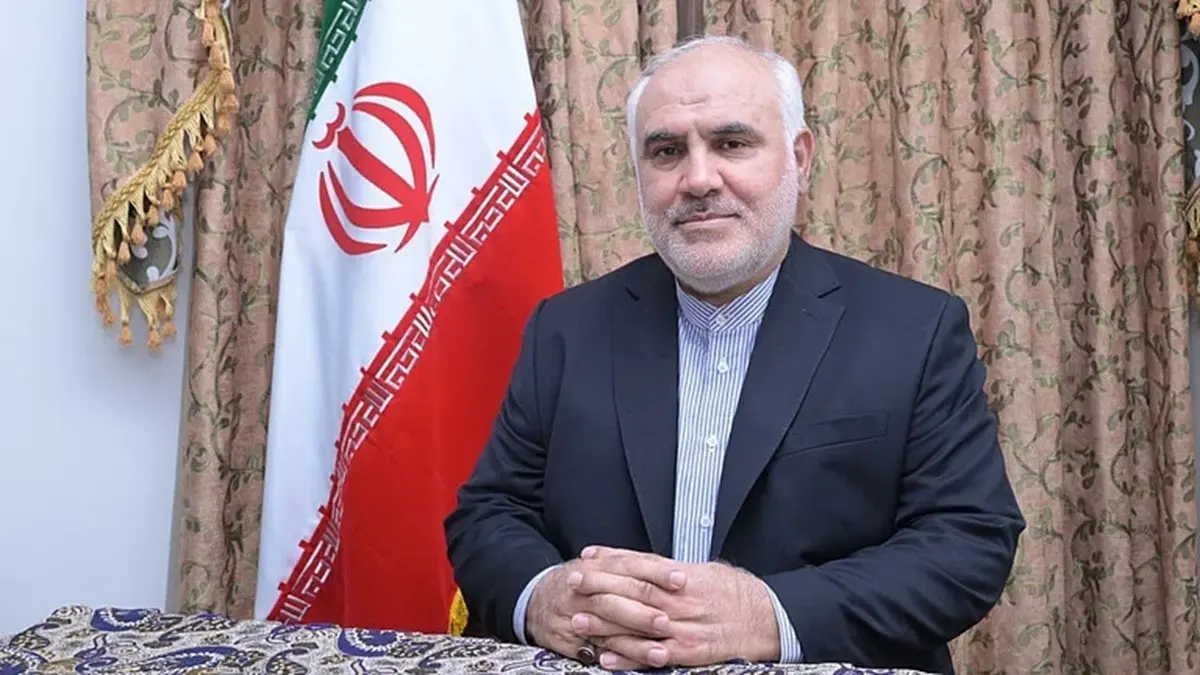
New Delhi: In an exclusive interview with Republic TV, H.E. Dr. Mohammad Fathali, Ambassador of the Islamic Republic of Iran to India, outlined Tehran's diplomatic roadmap to de-escalate months of conflict with the United States. He revealed that Iran had submitted a phased 7-day framework through mediators on September 16 around the UN General Assembly (UNGA). Fathali confirmed that the proposal offered to reopen the Strait of Hormuz and resume negotiations on the nuclear issue in exchange for reciprocal US measures including lifting the naval blockade, suspending oil export sanctions, releasing frozen assets and declaring a region-wide ceasefire in Lebanon and Yemen.
Emphasising President Pezeshkian's UNGA message that Iran will not surrender but remains committed to diplomacy, Ambassador Fathali stated that Tehran's immediate objective is ending hostilities, not war as a solution. He stressed that sustainable Gulf security must come from regional cooperation without foreign forces. He also underlined India's growing role as an influential voice for peace and multilateralism, and expressed optimism on India-Iran economic ties, calling Chabahar a long-term geopolitical project that should not be affected by temporary sanctions and conflict. Here's Iranian Envoy Fathali's exclusive interview with Republic TV:
1: Iran submitted a proposal through mediators on September 16 and subsequently presented its seven-day framework around the UN General Assembly. President Trump has rejected the proposal. What exactly did Tehran offer Washington, and what did Iran expect in return?
Based on this proposal, Iran was prepared to reopen the Strait of Hormuz within seven days and resume negotiations with the United States on agreed-upon issues, including the nuclear issue, provided that the United States also took reciprocal measures.
Advertisement
These measures included the immediate lifting of the naval blockade and the blockade of Iranian ports; the lifting or suspension of sanctions and restrictions related to the sale and export of Iranian oil; the release of Iran’s frozen assets; the establishment of a ceasefire on all fronts across the region, including in Lebanon and Yemen; and a formal declaration by the United States of its readiness to resolve the issue through diplomacy and negotiations.
This framework was based on an understanding reached earlier on June 17. Therefore, our proposal was not merely a request for a temporary ceasefire; rather, it was a phased formula aimed at ending the hostilities, lifting the U.S. economic and naval measures, reopening the Strait of Hormuz, and returning to diplomatic negotiations.
Advertisement
Unfortunately, the excessive demands of the other side have made it difficult to reach an agreement.
2: After months of conflict, what is Iran’s immediate objective — ending the war, securing a ceasefire, or achieving a broader political agreement with the United States?
Our immediate objective is to end the war and stop the hostilities. The Islamic Republic of Iran does not consider war to be a solution to the issues, and has declared its readiness to return to diplomacy and dialogue.
However, lasting peace cannot be achieved through pressure, threats, or the imposition of unilateral conditions. From our perspective, a ceasefire must lead to a genuine cessation of hostilities, followed by the beginning of negotiations in which the legitimate rights and interests of the Iranian people are ensured.
The seven-day plan presented by Iranian officials is also within this framework: first, an end to the hostilities and the lifting of hostile measures; then, the reopening of the Strait of Hormuz; and subsequently, the commencement of negotiations aimed at reaching a final agreement on the issues agreed upon by both sides.
We have not rejected diplomacy; what we do not accept is negotiation under pressure and threats.
3: President Pezeshkian told the UN that Iran would not surrender but remained committed to diplomacy. What concrete diplomatic outcome did Tehran hope to achieve from his UNGA visit?
The main objective of President Pezeshkian’s visit to the United Nations General Assembly was to use this opportunity to open a serious and genuine path for diplomacy and negotiations and to create the conditions for ending the war. Iran has demonstrated that it will not retreat in the face of aggression and military pressure and is fully prepared to defend its national interests and security. At the same time, however, our priority is negotiation, dialogue, and a diplomatic solution.
Iran’s message is clear: we are ready both to negotiate and to defend ourselves and confront any military action, but war is not our choice. We believe that the existing issues should be resolved through dialogue and negotiations, provided that such negotiations are based on mutual respect and equality, and are conducted without threats or the use of force.
President Pezeshkian’s presence in New York was also aimed at this: conveying Iran’s message to the international community and demonstrating that the Islamic Republic of Iran has not closed the doors to diplomacy. Iran is ready to reach, through negotiations, a lasting solution to end the war and create conditions for peace and stability, but we do not accept negotiations under pressure and threats.
As he emphasized at the United Nations, “We are not afraid of war in defending ourselves, and we do not shy away from negotiations for peace.”
4: Pezeshkian has argued that military pressure cannot produce a durable peace. What would a sustainable post-war security arrangement in the Gulf look like from Iran’s perspective?
In our view, sustainable security in the Persian Gulf cannot be established through military pressure, the presence of foreign forces, or by creating a balance based on threats and an arms race. The experience of recent years has shown that security built on the military power of one side or on the presence of powers from outside the region cannot provide lasting and reliable security for all countries of the region.
Iran believes that the future of security in the Persian Gulf should be shaped by the countries of the region themselves and based on dialogue, cooperation, and mutual respect. All countries of the region, including Iran and the Arab countries along the Persian Gulf, should participate in such a framework and take each other’s security concerns into consideration.
Such a framework should be based on principles such as respect for the sovereignty and territorial integrity of countries, non-interference in each other’s internal affairs, not using the territory of regional countries to launch attacks against other countries, resolving disputes through dialogue, and cooperating in ensuring the security of maritime navigation and energy.
Iran also believes that the security of the Strait of Hormuz, as a vital international waterway, can be ensured through cooperation among the countries of the region and within the framework of international law.
5: What does Iran expect from India diplomatically at this moment — mediation, support for dialogue, or a stronger position at the United Nations?
India is today one of the important and influential countries on the international stage, and its role in regional and global developments, including in the political, economic, and security spheres, has become increasingly prominent. India also maintains good and constructive relations with a wide range of countries around the world, particularly with the countries of the Persian Gulf and West Asia. These broad and balanced relations, alongside India’s historical background and friendly relations with Iran, provide valuable potential for helping reduce tensions and advancing dialogue.
In my view, India can be an important voice in support of peace, stability, and multilateralism. We welcome any constructive initiative by India that can contribute to ending the hostilities, returning to the negotiating table, and establishing lasting peace in the region.
6: How does Iran see the future of India–Iran economic cooperation, particularly Chabahar, if U.S. sanctions and the regional conflict continue?
We are optimistic about the future of economic relations between Iran and India. The relationship between the two countries is not merely a short-term commercial relationship; Iran and India share common interests and have significant potential in the areas of energy, transportation, transit, trade, investment, and regional connectivity.
In this context, the Port of Chabahar is a geopolitical port. It can provide a reliable route for access to Afghanistan and Central Asia, and, through the North–South Corridor, to the markets of Russia and Europe. For this reason, we believe that the Port of Chabahar is a long-term and strategic project and should not be affected by temporary political circumstances.