
Houthis Claim They Hit Riyadh Airport And Aramco Sites Hours After Saudis Say They Shot Down Missiles
Yemen's Houthis claimed responsibility for attacks on Dammam and Riyadh airports, a Saudi Aramco facility and an oil refinery, escalating security concerns in Saudi Arabia amid flight cancellations and aerial threat alerts.
- Global News
- 4 min read


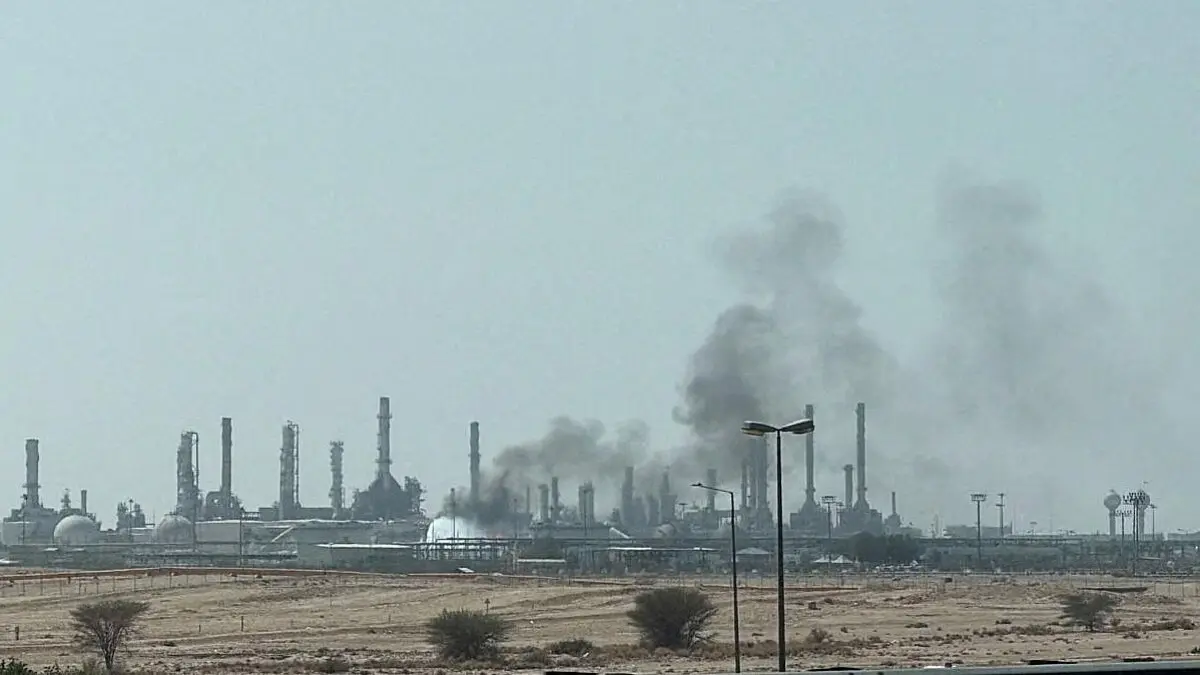
Riyadh: Yemen's Houthi movement has claimed a fresh wave of attacks against critical infrastructure across Saudi Arabia, stating on Saturday that they targeted airports, an airbase and key oil facilities in multiple cities.
Military spokesman Yahya Saree announced that the group's operations had struck the East-West pipeline, crude pumping stations, a Saudi Aramco installation in Yanbu and the Rabigh refinery. He added that the aviation hubs were also hit, including King Khalid International Airport in the capital Riyadh, King Fahd International Airport in Dammam, Najran airport and an airbase located in Khamis Mushait.
However, the Saudi officials have not confirmed the latest set of claims on multiple site attacks. The claims came only hours after the Saudi-led coalition announced that their air defences had brought down two ballistic missiles aimed at Taif and Yanbu, showing a sharp escalation in cross-border hostilities.
Missiles Intercepted Over Taif And Yanbu
Earlier in the day, the coalition led by Riyadh claimed that they had destroyed two ballistic missiles launched by the Houthis towards the western cities of Taif and Yanbu. In response, Saudi Arabia's Civil Defence issued brief public safety warnings for residents in Taif, Yanbu, Mecca and Jeddah.
Advertisement
The alerts, shared through official channels, advised caution before being withdrawn within minutes. The authority later declared that the danger had passed in the affected areas, as the interception followed a tense week of aerial threats over the kingdom.
On Thursday, the Houthis had stated that they carried out strikes on the defence ministry in Riyadh, Aramco facilities in Yanbu and King Fahd International Airport in Dammam. The Saudi administration acknowledged that two people were killed in Dammam but did not verify the reported incidents in Riyadh and Yanbu. The coalition also confirmed that drones were intercepted over Riyadh and Medina on the same day. A day prior to that, the Houthis denied that they had targeted Medina, after the coalition reported that drones had been brought down over the holy city and over the Eastern region.
Advertisement
Airports Under Repeated Fire
The group has in recent weeks intensified the focus on Saudi airports, with the most devastating incident occurring on October 10, when a strike on King Khalid International Airport in Riyadh left at least 12 people dead and 309 others injured, according to Saudi figures. The Houthis later claimed responsibility for the deadly attack on the Riyadh airport.
The October 10 attack marked the third time the airport had been targeted in a single week amidst escalating tensions. In the two previous strikes, 4 people were killed and a commercial Saudi aircraft stationed on the tarmac was severely damaged.
The victims of the October 10 attack included 4 Saudi nationals, 2 Bangladeshis and 1 citizen each from the United States, Jordan, Palestine, Syria, Sudan and Egypt. Notably, the kingdom's threat warning system did not issue any prior alert before the missile struck. Earlier this month, the Houthis had issued a warning to airlines to avoid Saudi airspace, while making an exception for the airspace above Mecca and Medina.
Threat To Oil Exports And Renewed Yemen Front
Apart from the risk to civilian airports and urban centres, the resurgence of fighting carries serious implications for global energy flows. Saudi Arabia has increasingly relied on the Red Sea coastline to export oil, seeking to bypass disruptions in the Strait of Hormuz linked to Iran. Houthi positions overlooking the Bab el-Mandeb Strait, which forms the southern entrance to the Red Sea, now place that alternative route under direct threat.
Meanwhile, the claims of new strikes have emerged as renewed combat inside Yemen opens another front in the massive US-Israeli confrontation with Iran. Riyadh has intensified the campaign against the Iran-aligned Houthis, whose long-range capabilities endanger both Saudi infrastructure and vital shipping lanes.
The Saudi-led coalition continued to support Yemen's internationally recognised government against the Houthis, who remain in control of the capital Sanaa. While Saudi-backed forces have reported advances along the Red Sea coast supported by air strikes, analysts noted that pushing into Yemen's rugged mountainous interior will present far greater challenges. The current escalation has effectively ended the relative quiet that had held since a UN-brokered truce in 2022, which had largely curbed cross-border attacks.