
Israel Election Exit Polls Show Netanyahu And Opposition Short Of Majority, Arab Parties Hold Key
Israeli PM Benjamin Netanyahu says “Israel is stronger than ever” as exit polls show his bloc and the opposition short of a majority, leaving Arab parties key to government formation.
- Global News
- 5 min read


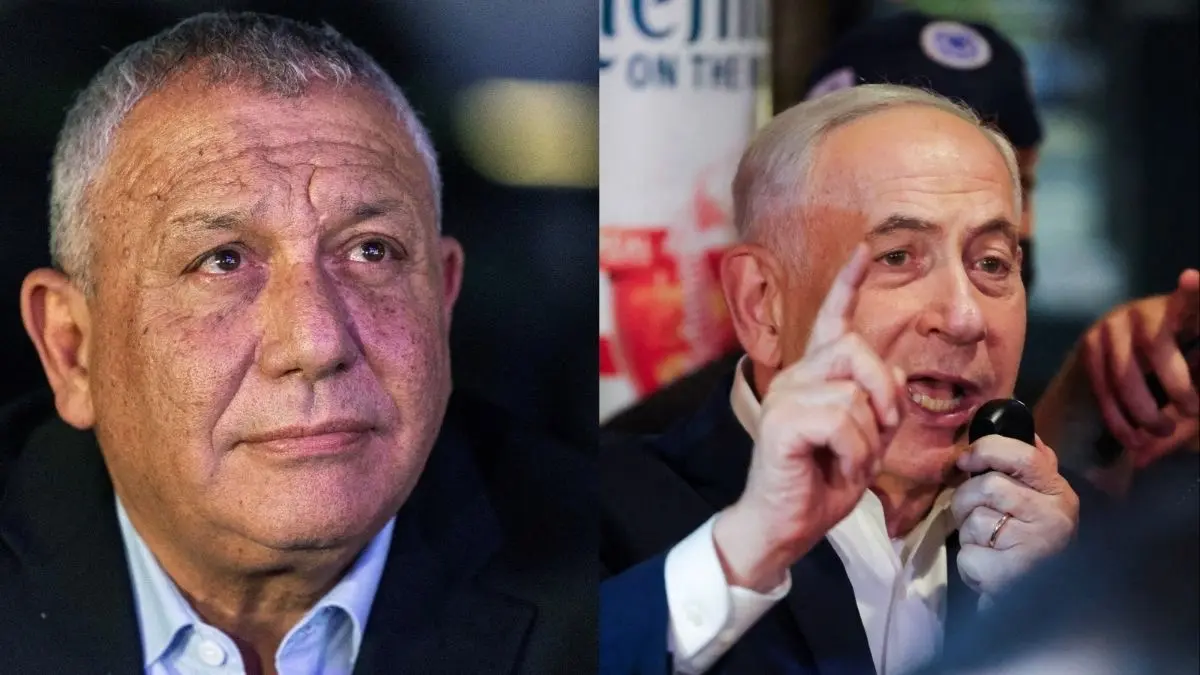
Jerusalem: Israel's election exit polls have pointed to a closely fought contest, with neither Prime Minister Benjamin Netanyahu's bloc nor the opposition appearing to have a clear path to the 61 seats needed to form a government in the 120-member Knesset.
Projections released by Channels 11, 12 and 13 on Tuesday night showed the two sides falling short of a parliamentary majority, setting the stage for difficult coalition negotiations. Arab parties, meanwhile, could play a crucial role in determining which side is able to assemble enough support to govern.
The election, the first since the Hamas-led October 7, 2023, massacre, took place amid sharp divisions over national security, political accountability and the future of Israel's democratic institutions.
Exit Polls Offer Different Pictures Of Netanyahu's Chances
The projections varied considerably between polling agencies. Direct Polls estimated 55 seats for Netanyahu's bloc, 49 for the opposition led by Gadi Eisenkot and 16 for Arab parties.
Advertisement
Kan 11's updated exit poll, however, put both the pro-Netanyahu and anti-Netanyahu blocs at 51 seats each. Its earlier projection had given the two camps 50 and 52 seats, respectively, according to The Times of Israel.
A separate survey by Filber, presented by Channel 14, offered a more favourable picture for Netanyahu, projecting 60 seats for his bloc, 43 for the opposition and 17 for Arab parties.
Advertisement
The latest projections also showed changes among individual parties. Netanyahu's Likud party was projected to rise from 25 to 27 seats, while the left-wing Democrats alliance fell from 10 to nine. The far-right Otzma Yehudit party was projected to lose one seat, dropping from seven to six.
Despite the differences between the polls, the overall picture suggested that coalition formation could remain uncertain.
Netanyahu Calls For Strong Right-Wing Government, Cites Iran Threat
Reacting to the projections, Netanyahu declared that his bloc had secured a “decisive majority” and called for the formation of a strong right-wing government. He also linked the election to Israel's security priorities, arguing that the country had an opportunity to address the threat from Iran.
"We must establish a strong, right-wing national government," Netanyahu said.
He described the situation as a turning point for Israel's security, stating, “Iran is weaker than ever, Israel is stronger than ever.”
However, as exit polls indicated a close contest between the two camps, Netanyahu later said the country was still waiting for the actual results.
“We are still waiting for real results,” Netanyahu said in an address to the Israeli people, adding that his Likud party was the “largest party in Israel.”
Eisenkot Claims Voters Want Change As Arab Parties Emerge As Kingmakers
Yashar chairman Gadi Eisenkot claimed that Israeli voters had chosen a change in leadership and rejected the prospect of Netanyahu continuing as prime minister.
Speaking at his party headquarters after polling stations closed, Eisenkot acknowledged that the exit polls were preliminary but argued that the opposition was in a stronger position. He urged Netanyahu to accept the voters' verdict and step away from politics, warning that another election would be a mistake given the high turnout.
Despite his assertion that voters wanted change, the projections did not establish a clear majority for either camp. This leaves the opposition facing the challenge of bringing together enough parliamentary support to form a government.
Arab parties have emerged as important players in the negotiations that could follow the election. Mansour Abbas, chairman of the Ra'am party, said he was in touch with representatives from both sides after the exit polls indicated a possible parliamentary deadlock.
"Everyone is speaking with us, not just from the 'change bloc'," Abbas told Channel 12, according to The Times of Israel.
Abbas also indicated that he was open to joining a government led by Eisenkot, while stressing that the numbers would have to make such an arrangement viable.
He noted that "currently there aren't numbers for a government", pointing out that Ra'am's projected seven seats would still leave the wider opposition two seats short of the 61 required to form a coalition.
Although the main exit polls suggested that factions opposed to Netanyahu could collectively secure around 70 seats, the path to a government remains complicated. Several Zionist opposition groups have ruled out partnering with Arab parties, according to The Times of Israel, potentially limiting the opposition's options.
The Joint List and Ra'am were together projected to win 17 to 18 seats, making their potential role in coalition discussions particularly significant.
Israel Records 77.7% Voter Turnout, Highest Since 1999, As Election Deadlock Looms
Voter participation reached 77.7 per cent by the time polling stations closed at 10 pm, according to final figures from Israel's Central Elections Committee. This was up from 70.6 per cent recorded at the same hour during the 2022 election and marked the highest turnout at that point since 1999.
The election has posed a major challenge for Netanyahu, who has remained at the centre of Israeli politics for 19 years. His main challenger, former Israel Defense Forces Chief of Staff Gadi Eisenkot, entered the contest with his Yashar party after gaining ground in several pre-election opinion surveys.
The election was the first to be held since the Hamas-led October 7, 2023, attacks and unfolded amid security concerns, questions over political accountability and debate over the independence of Israel's democratic institutions.
Smaller right-wing parties could also affect the final balance. According to The Jerusalem Post, some were projected to fall short of Israel's 3.25 per cent electoral threshold, which determines whether a party can enter parliament.
With the exit polls offering differing estimates and no clear governing majority emerging, the final distribution of seats and the willingness of parties to work together will determine whether Netanyahu can retain power or the opposition can put together an alternative government.