
Bat Virus PRV Emerges In Bangladesh, Should India Be Worried About Its Spread?
Researchers identified another virus, Pteropine orthoreovirus (PRV), in patients who showed severe Nipah-like symptoms but tested negative for Nipah infection.
- Health News
- 3 min read

;'%3e%3cpath%20d='m8,15.99c4.41,0,7.99-3.58,7.99-7.99S12.41,0,8,0,0,3.59,0,8s3.58,7.99,7.99,7.99Z'%20style='stroke:%23fff;%20stroke-miterlimit:10;%20stroke-width:.02px;'/%3e%3cpath%20d='m3.08,3.37l3.82,5.11-3.84,4.15h.87l3.37-3.64,2.72,3.64h2.94l-4.04-5.39,3.58-3.87h-.86l-3.1,3.35-2.5-3.35h-2.94Zm1.27.64h1.35l5.97,7.99h-1.35l-5.97-7.99Z'%20style='fill:%23fff;'/%3e%3c/g%3e%3c/svg%3e)


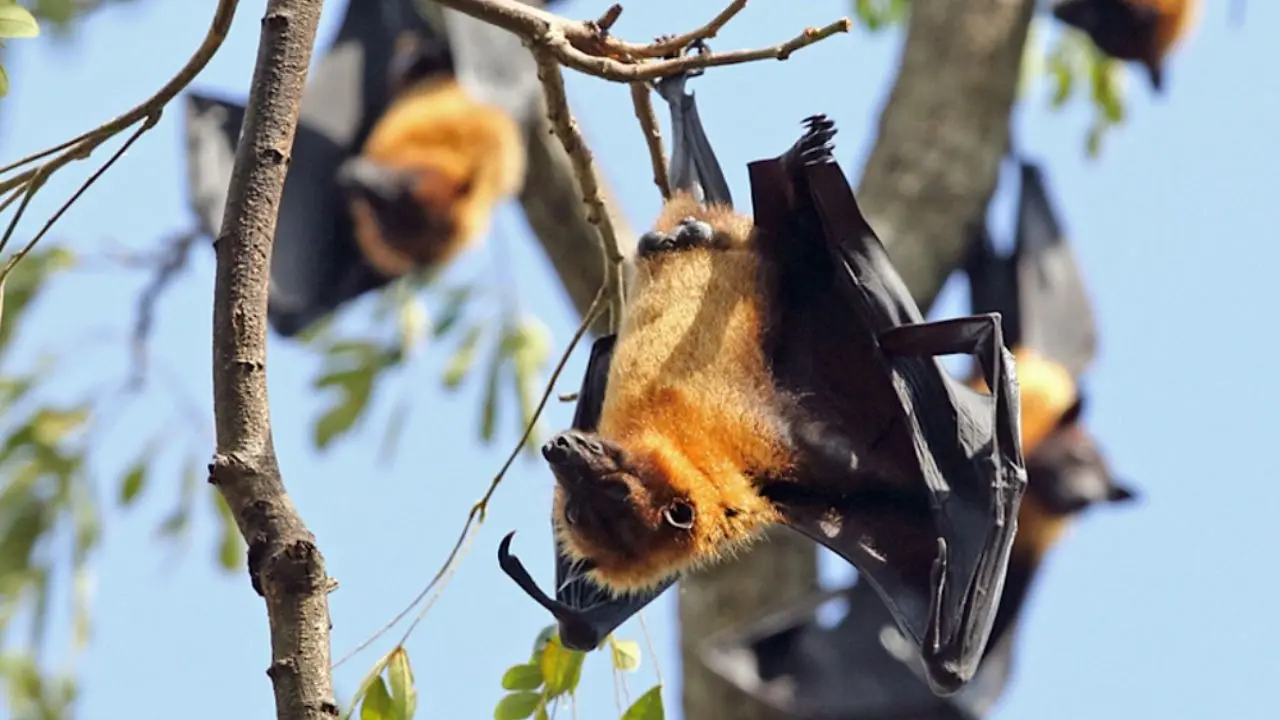
A recent study has found cases of human infection linked to a virus carried by bats in Bangladesh. This has rose fresh concerns about monitoring diseases that pass from animals to humans in South Asia. The Nipah virus(spread by fruit bats) is already a concerning public health risk in the region. However, researchers also identified another virus, Pteropine orthoreovirus (PRV), in patients who showed severe Nipah-like symptoms but tested negative for Nipah infection.
As reported by AOL, the study published in the journal Emerging Infectious Diseases states that PRV had been missed earlier because it shows symptoms similar to Nipah. Researchers identified it in archived throat swab samples from five patients who had recently consumed raw date-palm sap, which is a known route for bat virus transmission in the region.
Scientists reportedly say these results suggest that dangerous bat-borne viruses may be infecting humans more often than previously believed, especially in areas where people live close to bats. This carries serious implications for India and neighbouring countries where such viruses are common, and it underlines the need to strengthen disease surveillance and expand diagnostic testing beyond the Nipah virus to improve the detection and control of emerging infections.
Scientists from Columbia University’s Mailman School of Public Health, along with partners in Bangladesh, reportedly examined clinical samples from five patients in Bangladesh. Doctors initially suspected Nipah because the patients showed similar symptoms, including fever, headache, vomiting, tiredness, and neurological effects.
Advertisement
However, Nipah test results came back negative.
Using advanced genomic methods such as viral capture sequencing (VCS), the researchers identified PRV genetic material in the samples. They also isolated and grew the live virus in laboratory cultures, confirming that the infections were active and not accidental findings.
Advertisement
What is PRV?
PRV belongs to a virus group that bats often carry, and researchers have mostly found it in animals or linked it to only mild illness in humans in other parts of the world.
However, the cases in Bangladesh indicate that the virus can also lead to serious disease in people. It can trigger respiratory and neurological symptoms, and health teams may miss it if they rely only on standard Nipah virus tests.
Scientists describe this finding as highly important, especially as the Nipah virus remains a major public health concern after two confirmed cases emerged in India in December last year. The World Health Organization (WHO) reports that Nipah infections have a high fatality rate of 40 to 75 per cent. People can catch the virus through contact with fruit bats, eating contaminated food, or through direct human-to-human spread.
The identification of PRV adds another layer to this growing risk.