
What Is Chronic Venous Insufficiency? The Health-Condition Behind Visible Bruising on Trump’s Swollen Hand
Recent public appearances by President Donald Trump have drawn attention to visible bruising on his hands, which doctors revealed is caused by chronic venous insufficiency (CVI).
- Health News
- 3 min read

;'%3e%3cpath%20d='m8,15.99c4.41,0,7.99-3.58,7.99-7.99S12.41,0,8,0,0,3.59,0,8s3.58,7.99,7.99,7.99Z'%20style='stroke:%23fff;%20stroke-miterlimit:10;%20stroke-width:.02px;'/%3e%3cpath%20d='m3.08,3.37l3.82,5.11-3.84,4.15h.87l3.37-3.64,2.72,3.64h2.94l-4.04-5.39,3.58-3.87h-.86l-3.1,3.35-2.5-3.35h-2.94Zm1.27.64h1.35l5.97,7.99h-1.35l-5.97-7.99Z'%20style='fill:%23fff;'/%3e%3c/g%3e%3c/svg%3e)


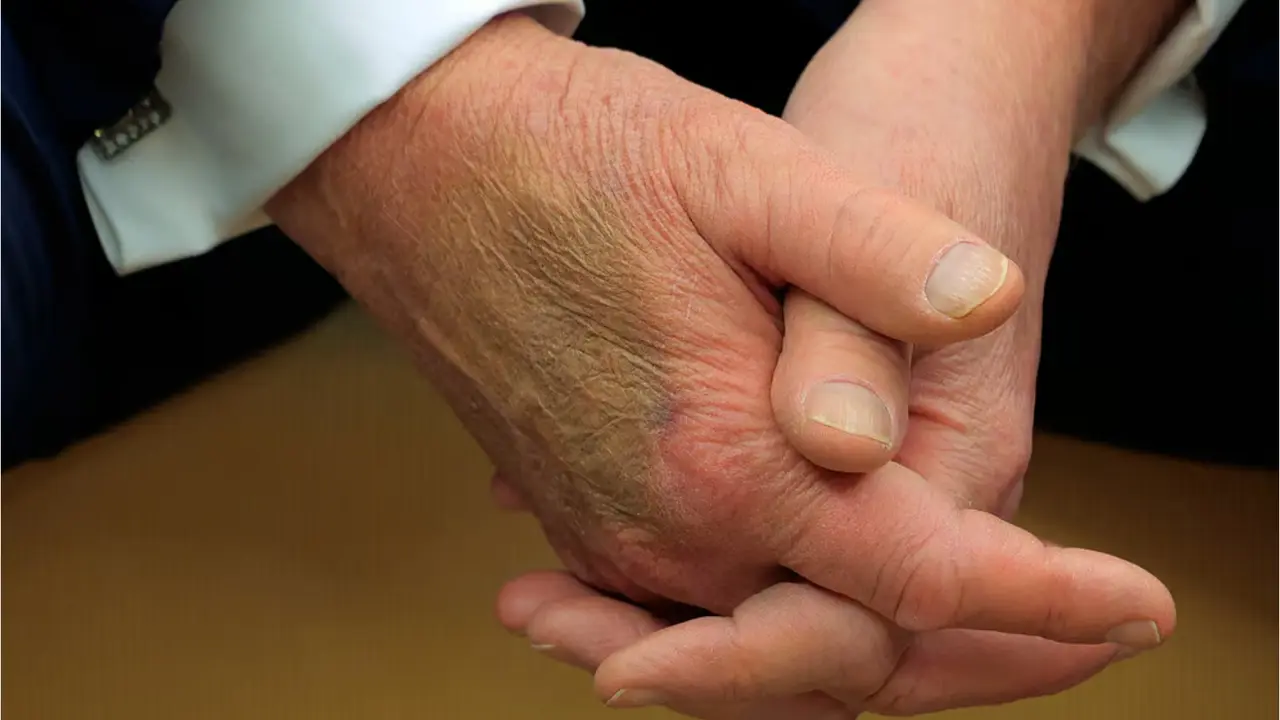
President Donald Trump has been spotted multiple times with visible bruises on his hands, prompting speculation about an underlying health issue.
The White House has confirmed that the US President president has been diagnosed with chronic venous insufficiency (CVI) a condition his physician described as “benign and common, particularly in individuals over the age of 70.”

Medical letters released by the White House clarified that the bruising and swelling seen on Trump’s hands and legs are likely due to this condition, and not caused by more serious issues like deep vein thrombosis (DVT) or arterial disease.
The bruising may also be worsened by his use of aspirin, a common medication for heart health that can thin the blood and make bruising more noticeable.
Advertisement
What Is Chronic Venous Insufficiency?
Chronic venous insufficiency is a condition in which the veins in the legs cannot efficiently return blood back to the heart. This happens when the valves in the veins become weak or damaged, allowing blood to flow backward and pool in the legs. Over time, this can cause symptoms like swelling, aching, skin discoloration, and bruising.
What Causes CVI?
CVI often develops slowly and is more common in older adults. The main causes include:
Advertisement
Aging (valves naturally weaken with age)
A history of blood clots or DVT
Obesity
Pregnancy
Standing or sitting for long periods
Family history of vein problems
What are the Common Symptoms for CVI?
People with chronic venous insufficiency may experience:
Swelling in the lower legs and ankles
Aching, tiredness, or heaviness in the legs
Skin changes, such as dryness, itchiness, or dark patches
Visible veins or varicose veins
Frequent bruising, especially on the hands or legs
Leg cramps or restless legs at night
Is CVI Dangerous?
While CVI is typically not life-threatening, it can lead to more serious complications if left untreated. These include:
Venous ulcers (open sores that are slow to heal)
Infections
Severe skin damage
Increased risk of blood clots
How Is CVI Diagnosed?
Doctors diagnose chronic venous insufficiency through a physical examination and imaging tests like Doppler ultrasound, which checks blood flow in the veins. Symptoms and medical history also help guide the diagnosis.
CVI can usually be managed with lifestyle changes and medical treatments. The treatment options These include:
Wearing compression stockings to improve blood flow
Elevating the legs regularly
Exercise to strengthen calf muscles
Avoiding long periods of sitting or standing
Medications to support vein health or reduce blood clots
Surgical procedures in severe cases (like vein ablation or vein stripping)
Maintaining a healthy weight, staying active, and avoiding prolonged inactivity are the best ways to prevent or manage CVI.
Individuals over the age of 60 are encouraged to have regular vascular checkups, especially if they experience symptoms like swelling, skin discoloration, or frequent bruising.