
11 Years of Digital India: How Your Phone Became Your Bank, ID Card and Government Office
As the Digital India programme completes 11 years, Prime Minister Narendra Modi calls its impact “transformative.” From UPI payments crossing 24,000 crore transactions to Aadhaar’s 144 crore registrations and DigiLocker’s 70 crore users, India’s digital infrastructure has reshaped daily life. Direct Benefit Transfers have moved over Rs 51 lakh crore straight into citizens’ accounts, while BharatNet has connected 97% of gram panchayats.
- India News
- 5 min read

;'%3e%3cpath%20d='m8,15.99c4.41,0,7.99-3.58,7.99-7.99S12.41,0,8,0,0,3.59,0,8s3.58,7.99,7.99,7.99Z'%20style='stroke:%23fff;%20stroke-miterlimit:10;%20stroke-width:.02px;'/%3e%3cpath%20d='m3.08,3.37l3.82,5.11-3.84,4.15h.87l3.37-3.64,2.72,3.64h2.94l-4.04-5.39,3.58-3.87h-.86l-3.1,3.35-2.5-3.35h-2.94Zm1.27.64h1.35l5.97,7.99h-1.35l-5.97-7.99Z'%20style='fill:%23fff;'/%3e%3c/g%3e%3c/svg%3e)


Eleven years ago, sending money meant a trip to the bank. Proving your identity meant carrying a folder of photocopies. Getting a government certificate meant standing in a queue, sometimes for hours. Today, all of that fits inside a smartphone.
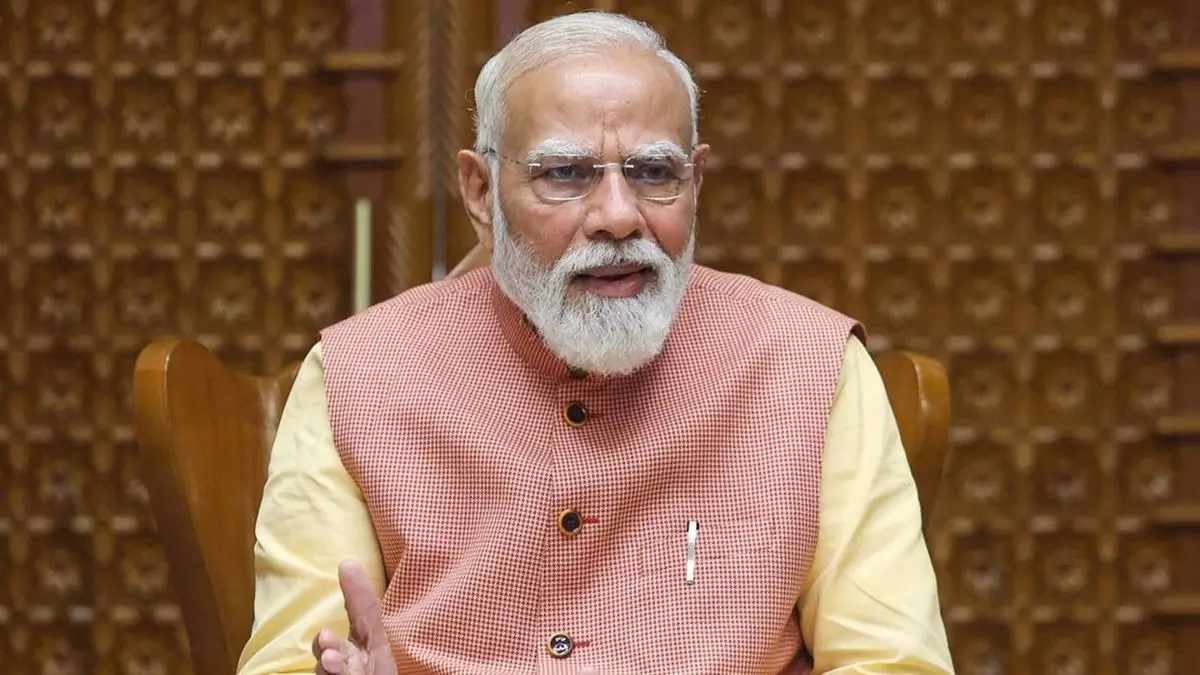
That's the story India is telling itself as the Digital India programme completes 11 years on July 1. Prime Minister Narendra Modi marked the day with a post on X, calling the programme's impact "transformative" and adding that when over a billion people embrace technology, the results speak for themselves. In a separate post, he said the initiative has given India "a new identity worldwide" and credited it with making everyday life easier, especially for the poor.
It's a big claim. Here's what's actually behind it, in plain terms.
UPI: Your Phone Became Your Bank
The clearest change is in how Indians handle money. The Unified Payments Interface, or UPI, launched in 2016 and lets people send money instantly using just a phone number or a QR code, no bank details, no cash, no waiting.
Advertisement
The growth has been massive. UPI handled around 2 crore transactions in its first full year. By this past financial year, that number had crossed 24,000 crore transactions. The International Monetary Fund has called it the world's largest real-time payment system. It isn't just an India story anymore either, UPI is now used in countries including the UAE, Singapore, France, Mauritius, Sri Lanka, and, most recently, Cambodia.
Aadhaar & DigiLocker: Your Phone Became Your ID Card
Before Aadhaar and DigiLocker, proving who you were often meant carrying original documents everywhere, birth certificates, mark sheets, driving licences. Losing one meant real trouble.
Advertisement
Aadhaar, India's biometric ID system, has now crossed 144 crore registrations, making it the largest identity system of its kind in the world. DigiLocker, which lets people store official documents digitally, has over 70 crore registered users and has issued more than 850 crore documents. Together, they mean a driving licence or degree certificate can now be shown from a phone screen instead of a folder.
JAM & Direct Benefit Transfer: Your Phone Became a Government Office
This is the part that's changed life most for lower-income and rural families. Government support - pensions, scholarships, subsidies - used to pass through several hands before reaching people, often losing money along the way. Now, thanks to what's called the JAM system (Jan Dhan bank accounts, Aadhaar identity, and Mobile connectivity), money moves straight from the government to a citizen's bank account.
The numbers back this up. Jan Dhan bank accounts have grown from 14.72 crore in 2015 to 57.78 crore now, with deposits rising from around Rs 15,670 crore to nearly Rs 2.94 lakh crore. As of this June, over Rs 51 lakh crore in direct benefits has been transferred straight into citizens' accounts, money that once had to pass through middlemen and paperwork.
Healthcare has moved online too. The eSanjeevani telemedicine platform has handled over 48 crore consultations, letting people in remote areas consult doctors without travelling. During the Covid-19 vaccination drive, the CoWIN platform managed more than 220 crore vaccine doses and became a model other countries studied.
BharatNet: Reaching the Villages
None of this works without the internet reaching people in the first place. Under the BharatNet project, around 2.15 lakh gram panchayats, about 97% of the target, have been connected using nearly 7 lakh kilometres of optical fibre cable. India now has over 106 crore broadband subscribers, and more than 6.5 lakh Common Service Centres, plus 1.6 lakh post offices, offer digital services close to where people live, especially in areas without easy access to a computer or bank branch.
Digital Public Infrastructure (DPI): India Is Now Exporting the Model
What started as a domestic project has turned into something other countries want to copy. India has signed cooperation agreements with 24 countries to share its digital systems - covering digital identity, payments, and public service delivery. During its G20 presidency in 2023, India launched a global version of its digital toolkit to help other nations build similar systems.
Electronics manufacturing has grown alongside this. India imported about 74% of its mobile phones in 2014; by 2025, nearly half of all phones sold in India were made domestically. The country is now the world's second-largest mobile phone manufacturer.
Digital Divide: Not a Finished Story
For all the progress, gaps remain. Not everyone has reliable internet, and not everyone, especially older citizens and people in remote areas finds it easy to use these digital systems. Rural connectivity has improved sharply but isn't complete, and access to a smartphone doesn't automatically mean comfort using government apps.
The government's own framing suggests the next phase will lean heavily on artificial intelligence and semiconductor manufacturing, with 12 semiconductor projects already approved. Whether that next leap reaches the same people who are still catching up on the first one will likely be the real test of the next 11 years.
In just over a decade, Digital India has quietly rewired how ordinary citizens bank, prove who they are, and access government support mostly through a single device many now carry everywhere. The scale is genuinely global. The next challenge is making sure no one gets left behind while it keeps growing.
Get Current Updates on India News, Entertainment News, Cricket News along with Latest News and Web Stories from India and around the world.