
2018 Sabarimala Verdict Was Wrongly Decided, Needs Reconsideration: Centre Tells Supreme Court
Solicitor General Tushar Mehta, representing the Centre, submitted that the 2018 verdict, which struck down the traditional ban on women of menstruating age entering the temple dedicated to Lord Ayyappa, was wrongly decided on legal grounds and "deserves to be declared a wrong law."
- India News
- 2 min read

;'%3e%3cpath%20d='m8,15.99c4.41,0,7.99-3.58,7.99-7.99S12.41,0,8,0,0,3.59,0,8s3.58,7.99,7.99,7.99Z'%20style='stroke:%23fff;%20stroke-miterlimit:10;%20stroke-width:.02px;'/%3e%3cpath%20d='m3.08,3.37l3.82,5.11-3.84,4.15h.87l3.37-3.64,2.72,3.64h2.94l-4.04-5.39,3.58-3.87h-.86l-3.1,3.35-2.5-3.35h-2.94Zm1.27.64h1.35l5.97,7.99h-1.35l-5.97-7.99Z'%20style='fill:%23fff;'/%3e%3c/g%3e%3c/svg%3e)


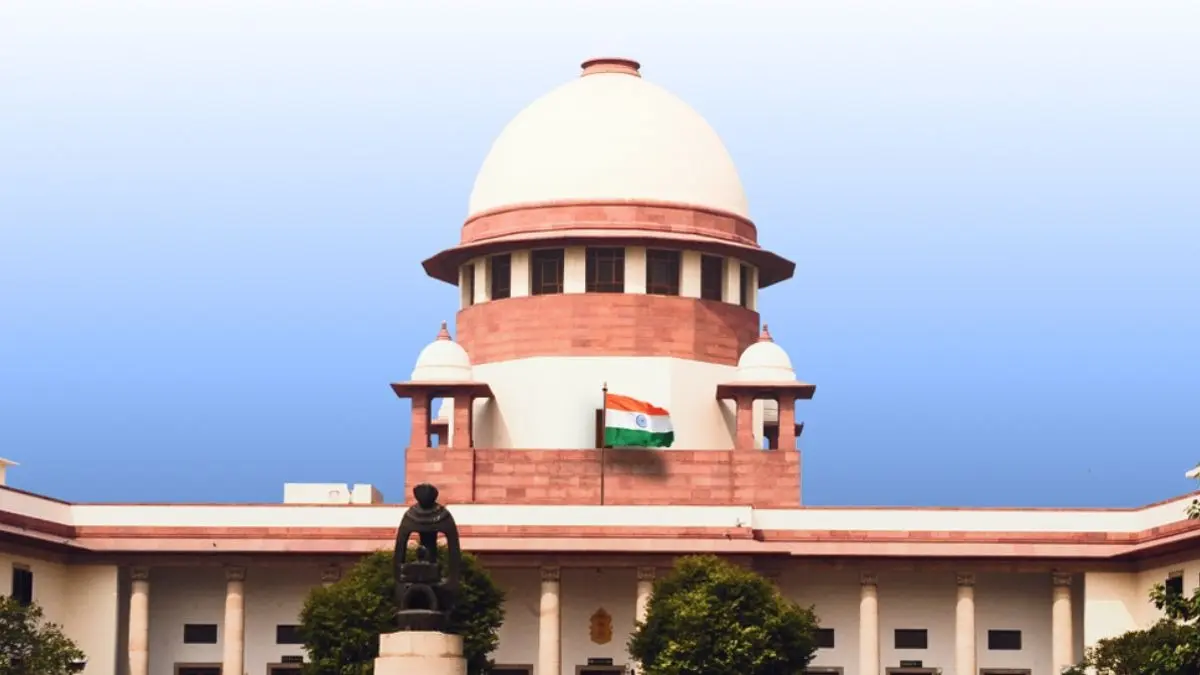
New Delhi: The Union Government on Tuesday urged the Supreme Court to reconsider its 2018 judgment that allowed women of all ages, including those in the 10-50 age group, to enter the historic Sabarimala temple in Kerala, arguing that the ruling was erroneous and requires fresh examination by a larger bench.
Appearing before a nine-judge Constitution Bench headed by Chief Justice of India Surya Kant, Solicitor General Tushar Mehta, representing the Centre, submitted that the 2018 verdict, which struck down the traditional ban on women of menstruating age entering the temple dedicated to Lord Ayyappa, was wrongly decided on legal grounds and "deserves to be declared a wrong law."
Mehta strongly objected to a specific observation in the 2018 judgment, particularly the view that the exclusion of women aged 10-50 from the Sabarimala shrine amounted to a form of "untouchability" prohibited under Article 17 of the Constitution. He argued that equating the temple's age-old custom--rooted in the celibate nature of the deity--with untouchability being flawed.
In the 2018 ruling, a five-judge bench (by a 4:1 majority) had held that the restriction violated women's fundamental rights to equality and religious freedom. Justice D.Y. Chandrachud, in his concurring opinion, had described the exclusion based on age or menstrual status as placing women in a "subordinate" position. He viewed it as perpetuating patriarchy and being "derogatory to their dignity," while interpreting Article 17 expansively to cover such gender-based exclusion as a manifestation of discriminatory practices akin to untouchability, drawing from notions of purity and pollution.
Advertisement
The Centre's submission on Tuesday aligns with review petitions challenging the 2018 verdict and comes as the apex court resumes hearings on broader questions concerning the interplay between religious freedoms, essential religious practices, and constitutional rights. The nine-judge bench is examining not just Sabarimala but similar faith-based restrictions at other religious sites.
The government has maintained that matters linked to the attributes of a deity and denominational customs fall within the domain of faith and may not be amenable to extensive judicial scrutiny. The hearing is part of a structured schedule, with arguments expected to continue over the coming days.
Advertisement
This development revives a contentious debate that has polarised opinions on balancing tradition with gender equality, eight years after the original judgment sparked widespread protests and discussions across the country.
Get Current Updates on India News, Entertainment News, Cricket News along with Latest News and Web Stories from India and around the world.