
Air Chief Marshal Dilbagh Singh: The Man Who Commanded India’s First MiG-21 Squadron
Air Chief Marshal Dilbagh Singh made history by leading India’s first MiG-21 squadron, playing a pivotal role in modernising the Indian Air Force. Here's a look at his legacy.
- India News
- 4 min read

;'%3e%3cpath%20d='m8,15.99c4.41,0,7.99-3.58,7.99-7.99S12.41,0,8,0,0,3.59,0,8s3.58,7.99,7.99,7.99Z'%20style='stroke:%23fff;%20stroke-miterlimit:10;%20stroke-width:.02px;'/%3e%3cpath%20d='m3.08,3.37l3.82,5.11-3.84,4.15h.87l3.37-3.64,2.72,3.64h2.94l-4.04-5.39,3.58-3.87h-.86l-3.1,3.35-2.5-3.35h-2.94Zm1.27.64h1.35l5.97,7.99h-1.35l-5.97-7.99Z'%20style='fill:%23fff;'/%3e%3c/g%3e%3c/svg%3e)


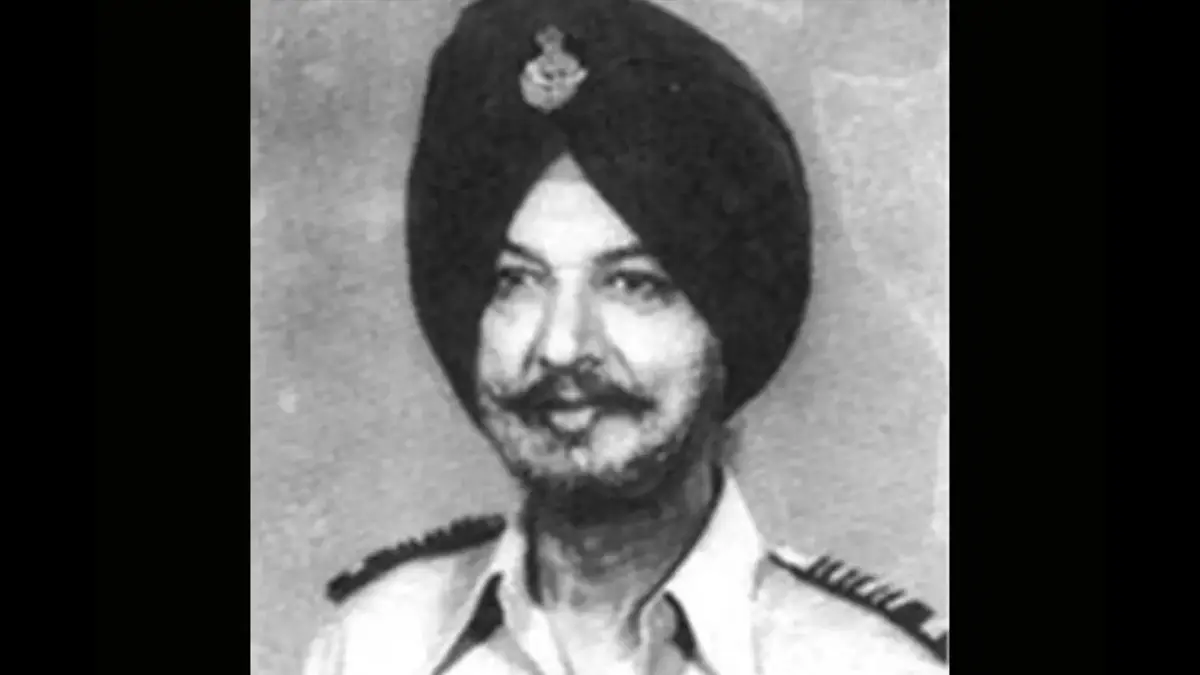
The Indian Air Force (IAF) bids farewell to its iconic warhorse MiG-21 fighter aircraft after it ruled the Indian skies for over six decades. The aircraft have been referred to as both a "flying coffin" and a "warhorse," but the tale cannot be completed without acknowledging the person who commanded them for the first time - Air Chief Marshal Dilbagh Singh.

India was being threatened by China and Pakistan increasingly during the early 1960s. The IAF required more speed, power, and newer aircraft. This is when India selected the Soviet MiG-21, a supersonic jet that travelled faster than the speed of sound.
In 1962, Singh was selected to be trained on the MIG 21F. In 1963, young Wing Commander Dilbagh Singh led the first batch of seven chosen pilots and 15 engineers for training at Lugovya, an airbase in Kazakhstan in the erstwhile USSR for training on the MiG-21F fighter. After 5 months of rigorous training, the team returned to India to form the core of the first supersonic squadron- No. 28 Squadron with Singh raising the unit in Chandigarh with an order of battle of six MiG-21s.
For Dilbagh Singh, this was more than simply flying a new plane. He had to train pilots, plan flying strategies, and demonstrate that India could commandeer a jet that was entirely alien to the nation. His leadership marked the beginning of a new era for the IAF. What he established in those initial years made the MiG-21 the pillar of India's airpower for decades to come.
Advertisement
The MiG-21 demonstrated itself in numerous fights. In the Bangladesh Liberation War of 1971, MiG-21s bombed Dhaka airfields and even raided the Governor's House, leading to the resignation of the Pakistani leadership in East Pakistan.
In the 1999 Kargil war, these aircraft conducted hundreds of sorties in the rugged mountains, attacking enemy camps and supply lines. Even as recently as 2019, a MiG-21 piloted by Wing Commander Abhinandan Varthaman downed a Pakistani F-16, showing that even an ageing fighter aircraft could still make history.
Advertisement
But the MiG-21 was also a deadly machine. According to reports, there have 500 crashes over the years, and over 170 gallant pilots died flying it, earning the aircraft its nickname of the "Flying Coffin." However, for the Air Force and its pilots, it was still a machine of pride, bravery, and might.
Dilbagh Singh proceeded to become Chief of Air Staff in 1981. From commander of the first MiG-21 squadron to commanding the entire Air Force, his career and life were always connected to the jet that he introduced into Indian skies first. Singh passed away on February 9, 2001. After serving for 40 years to IAF, Singh retired in 1984.
As the final MiG-21 squadron -the Panthers of No. 23 Squadron - is retiring at Chandigarh, the story goes full circle. The odyssey that started in 1963 with Dilbagh Singh is concluding in the same city in 2025. The MiG-21 might be departing from the skies, but its legacy and the dream of the man who first led it will be etched in India's history forever.
Get Current Updates on India News, Entertainment News, Cricket News along with Latest News and Web Stories from India and around the world.