
Aravallis Definition Changed: Why These Hills Are Crucial And What Are The Risks Ahead If They Vanish
Several environmentalists have pointed out how the Aravallis have been influencing the climatic and geological features shaping the Indian subcontinent, giving the Northern Plains its distinct identity, and making the entire hill region an ecological hotspot known for its distinct flora and fauna.
- India News
- 7 min read

;'%3e%3cpath%20d='m8,15.99c4.41,0,7.99-3.58,7.99-7.99S12.41,0,8,0,0,3.59,0,8s3.58,7.99,7.99,7.99Z'%20style='stroke:%23fff;%20stroke-miterlimit:10;%20stroke-width:.02px;'/%3e%3cpath%20d='m3.08,3.37l3.82,5.11-3.84,4.15h.87l3.37-3.64,2.72,3.64h2.94l-4.04-5.39,3.58-3.87h-.86l-3.1,3.35-2.5-3.35h-2.94Zm1.27.64h1.35l5.97,7.99h-1.35l-5.97-7.99Z'%20style='fill:%23fff;'/%3e%3c/g%3e%3c/svg%3e)


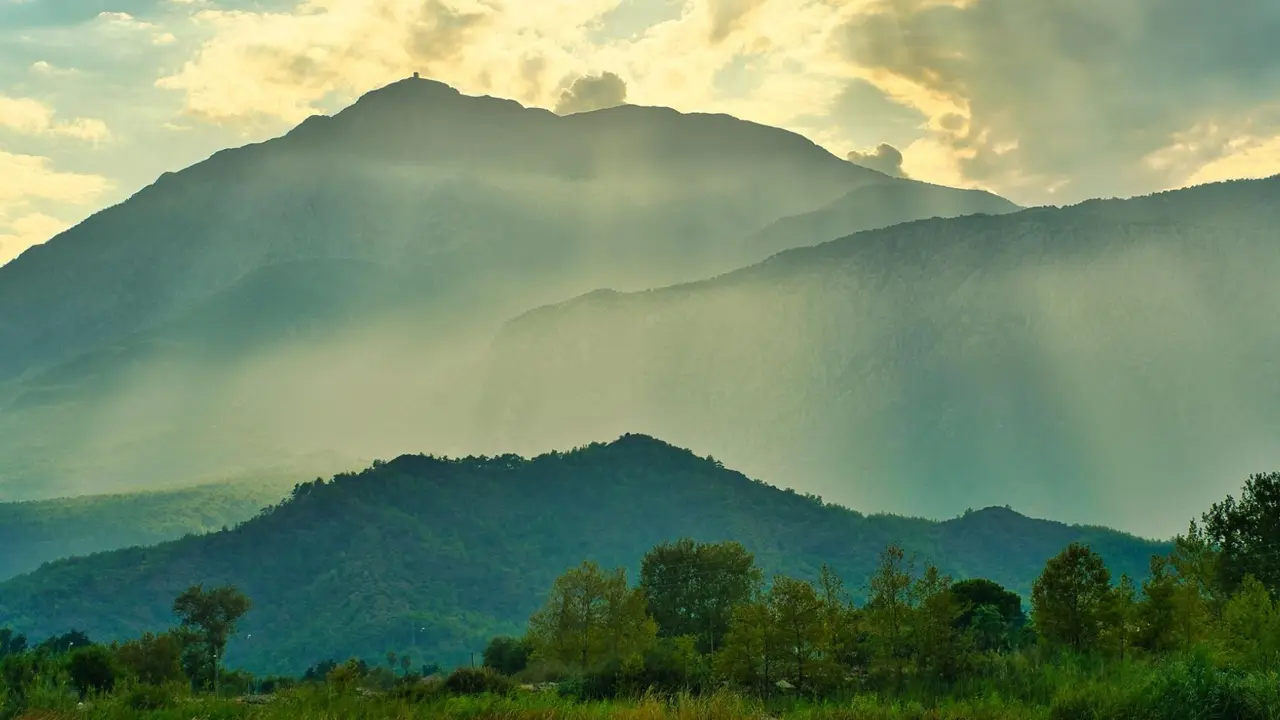
New Delhi: The Supreme Court has recently accepted the recommendations by a committee of the Ministry of Environment on the definition of the Aravalli Hills which mentioned that hills lower than 100 metres will no longer being be recognised as part of the ancient hill system. This controversial definition has set off concerns among environmentalists who claim that this would exclude 91% of the hills, which in turn, would be at risk of losing its 'protection' status from the central government.
Experts have also warned that if most of this ancient mountain system loses its 'protected areas' tag, it would eventually pave the way for big business conglomerates to move into the region and set up new mining plants in the mineral-rich belt. Environmental experts have also warned that the de-classified hills would also be attractive spots for real estate developers and hotel or resort businesses to cut down low-height hills, and exploit this picturesque region for huge profits.
Several environmentalists have pointed out how the Aravallis have been influencing the climatic and geological features shaping the Indian subcontinent, giving the Northern Plains its distinct identity, and making the entire hill region an ecological hotspot known for its distinct flora and fauna.
Amid these concerns, Republic World takes a deep dive into why the Aravalli hills are important and what might happen if these hills cease to exist in its current form.
Advertisement
Significance Of The Aravallis
Several environmentalist have pointed out how the Aravallis shape the climatic conditions of our country and make it distinct:
Act As A Watershed: The Aravalli Hills act as a watershed between the two great river basins in Northern India: the Ganga and the Indus river systems. It plays a key factor behind the flow and distribution of water resources in the area, thereby influencing the overall ecosystem.
Advertisement
Cushions Pollution: The green forests on the slopes of these hill ranges serve as green lungs, essential in mitigating air pollution in the national capital area and other cities. The vegetation also prevents soil erosion, benefitting the local regions.
Prevents Desertification: The Hills have a significant impact on influencing weather patterns and preventing desertification by acting as a natural barrier. The hills slow down wind velocity and prevent the Thar desert in western Rajasthan from spreading eastward towards Haryana, eastern Rajasthan, Western Uttar Pradesh, and the Indo-Gangetic plains.
Water Source For Rivers: The Aravallis also help in causing some rainfall, thereby serving as a key water source for some rivers which originate there, like the Sahibi and Banas, which are tributaries of the Yamuna, as well as the Luni River, which flows in the Rann of Kutch. This further emphasizes the critical role of the Aravallis in maintaining the water cycle and supporting various ecosystems downstream.
Rainfall Increases Water Availability: The rainfall caused due to the Aravalli Hills enriches the rich biodiversity in the region. This in turn helps in supporting livelihood and promote agriculture in the states where the Aravalli runs. The Aravallis are also known to facilitate ground water recharge.
Barrier Against Westerly Winds: The Aravalli cushions the plains from the effects of westerly winds that blows from Central Asia. The presence of the hills prevents clouds from moving eastward to the lower Himalayas. This in turn influences the climate of northern India.
Climatic Variations: The Aravallis spans across different regions, each of which has its distinct climate. The Northern Aravalli range stretching across Delhi and Haryana, experiences humid subtropical climate with hot summers and cool winters. In Rajasthan, the Central Aravalli experiences arid and dry climate. The Southern Aravalli range in Gujarat has tropical wet and dry climate. These distinct climatic conditions contributes to the rich ecological diversity in the region.
Rich In Minerals: The Aravalli range being the oldest mountain range in northern India, is a treasure trove of minerals like copper, rock phosphate, lead-zinc-silver deposits at Zawar, marble, kyanite, asbestos, which can be mined in commercially viable quantities.
What Can Happen If The Aravallis Are No More
Several environmentalists have suggested dystopian situations, if the Aravalli hills cease to exist. Many have suggested that the starkest impact will be seen in Rajasthan, where lakes in Udaipur may dry up, Jaipur may face extreme dust pollution, and temperatures in Jodhpur may soar to extreme levels. They have also warned that instances of heatwaves and dust storms could increase. This will in turn lead to breathing problems among many individuals. It may also lead to water shortage and deforestation, which in turn can impact wildlife in the region.
Dust Pollution: Environmentalists have pointed out that Aravallis act as a barrier against the sand of the Thar desert. In case it is levelled down, the sand may blow into most of our cities, spiking up pollution levels and increasing health risks.
Delhi NCR Pollution May Have Wider Impact: The pollution levels of states surrounding the national capital region has already spiked up wing to its proximity to Delhi. This will increase manifold as the Aravallis would have helped in filtering out this harmful air. PM2.5 and PM10 particles may increase. This will put the health conditions of people at risk.
Deforestation: The rich vegetation on the slopes of the Aravallis will also be impacted. This will in turn lead to soil erosion, presence of less moisture in the air, and also lead to less rainfall in the region. Without these crucial forests, wildlife will also at stress in the region.
Lakes May Dry Up: If the Aravallis cease to exist, it will also put a stress on the catchment area of the lakes and impact groundwater recharge. It will also change the flow of streams in the region. Deforestation in the region will further reduce rainfall. With rising temperatures, the lakes in the region will face the risk of getting dried up.
No Farming in the region: The disappearance of the Aravalli may lead to sparce rainfall leading to less recharge of groundwater. This may heighten soil erosion and make the area sandy, which in turn will make the land barren, impacting agricultural activities in the region.
Water shortage: If the Aravallis cease to exist, monsoon winds will blow over the area unhindered, thereby reducing local rainfall. The absence of forests will reduce humidity in the air. This will also not lead to formation of clouds in the region. Rising temperatures and arid conditions will lead to irregular rainfall, which may lead to droughts.
High Temperature: The Aravallis act as a barrier against hot, dusty winds from the Thar desert. If these hills disappear, strong winds will continue moving eastwards, leading to frequent dust storms. Deforestation will also lead to less rainfall, increased daily temperature. This will make the region more prone to heatwaves.
Get Current Updates on India News, Entertainment News, Cricket News along with Latest News and Web Stories from India and around the world.