
Archaeological Discovery in Jharkhand's Chouparan, Remains of 3000 Year Old Civilisation Found
Archaeological evidence of a 2,500-3,000-year-old civilisation has been unearthed in Chouparan block of the Hazaribagh district in Jharkhand.
- India News
- 2 min read

;'%3e%3cpath%20d='m8,15.99c4.41,0,7.99-3.58,7.99-7.99S12.41,0,8,0,0,3.59,0,8s3.58,7.99,7.99,7.99Z'%20style='stroke:%23fff;%20stroke-miterlimit:10;%20stroke-width:.02px;'/%3e%3cpath%20d='m3.08,3.37l3.82,5.11-3.84,4.15h.87l3.37-3.64,2.72,3.64h2.94l-4.04-5.39,3.58-3.87h-.86l-3.1,3.35-2.5-3.35h-2.94Zm1.27.64h1.35l5.97,7.99h-1.35l-5.97-7.99Z'%20style='fill:%23fff;'/%3e%3c/g%3e%3c/svg%3e)


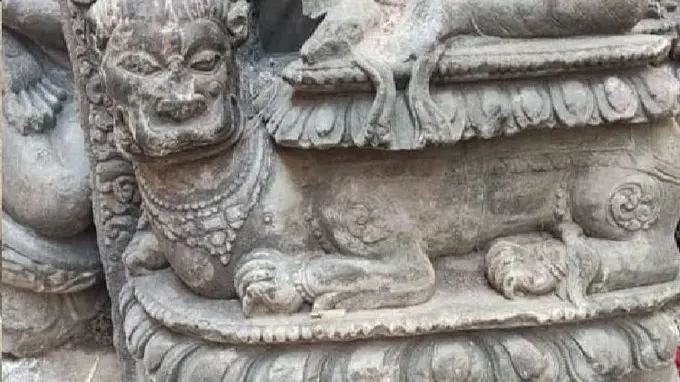
Ranchi: Archaeological evidence of a 2,500-3,000-year-old civilisation has been unearthed in Chouparan block of the Hazaribagh district in Jharkhand. Dr. Abhishek Singh Amar, Head of Asian Studies at Hamilton College, New York, recently visited the site and described it as a major center of archaeological importance.
The Discovery
The discovery was made by teams from the Archaeological Survey of India (ASI) who explored Daihar, Sohra, Mangarh, and Hathindar villages in the region. They collected samples of Northern Black Polished Ware (NBPW), a type of black-glazed pottery associated with civilizations dating back to 300 to 100 BC.
A massive mound in Mangarh village was identified as an ancient Buddhist stupa, which villagers have worshipped for generations.
3000 Year Old Civilisation
Advertisement
Over the past 70 years, numerous statues and stone slabs have been unearthed in the area during pond digging, well construction, and agricultural activities. Among the significant discoveries are a large divine statue revered by locals as Mata Kamala, and ancient statues of Gautam Buddha, Buddhist goddess Tara, Marichi, Avalokiteshvara, Brahma, Vishnu, Mahesh, and Ganesha.
In Hathindar village, archaeologists have recovered an ancient Sati stone and a terracotta ring well, further indicating the site's historical significance.
Advertisement
Discovery in MP's Panna
Excavations at Nachna village in Madhya Pradesh's Panna district, have uncovered a Shiv temple and a residential house, both made of stone, while mud is used as mortar. A nearby brick structure, found beside the north of the Shiv temple, dates to the Kushana period.
As excavations continue, the hope is to uncover more artifacts and inscriptions that will shed light on the lives and cultures of those who lived thousands of years ago.
Get Current Updates on India News, Entertainment News, Cricket News along with Latest News and Web Stories from India and around the world.