
As India Grapples With a Severe 42% Rainfall Deficit, Climate History Reveals Why the Monsoon Hasn't Failed in 13 Million Years
A 42% rainfall deficit hits India's agriculture, but paleoclimate expert Prof. Anil K. Gupta assures geography guarantees the monsoon's future.
- India News
- 5 min read

;'%3e%3cpath%20d='m8,15.99c4.41,0,7.99-3.58,7.99-7.99S12.41,0,8,0,0,3.59,0,8s3.58,7.99,7.99,7.99Z'%20style='stroke:%23fff;%20stroke-miterlimit:10;%20stroke-width:.02px;'/%3e%3cpath%20d='m3.08,3.37l3.82,5.11-3.84,4.15h.87l3.37-3.64,2.72,3.64h2.94l-4.04-5.39,3.58-3.87h-.86l-3.1,3.35-2.5-3.35h-2.94Zm1.27.64h1.35l5.97,7.99h-1.35l-5.97-7.99Z'%20style='fill:%23fff;'/%3e%3c/g%3e%3c/svg%3e)


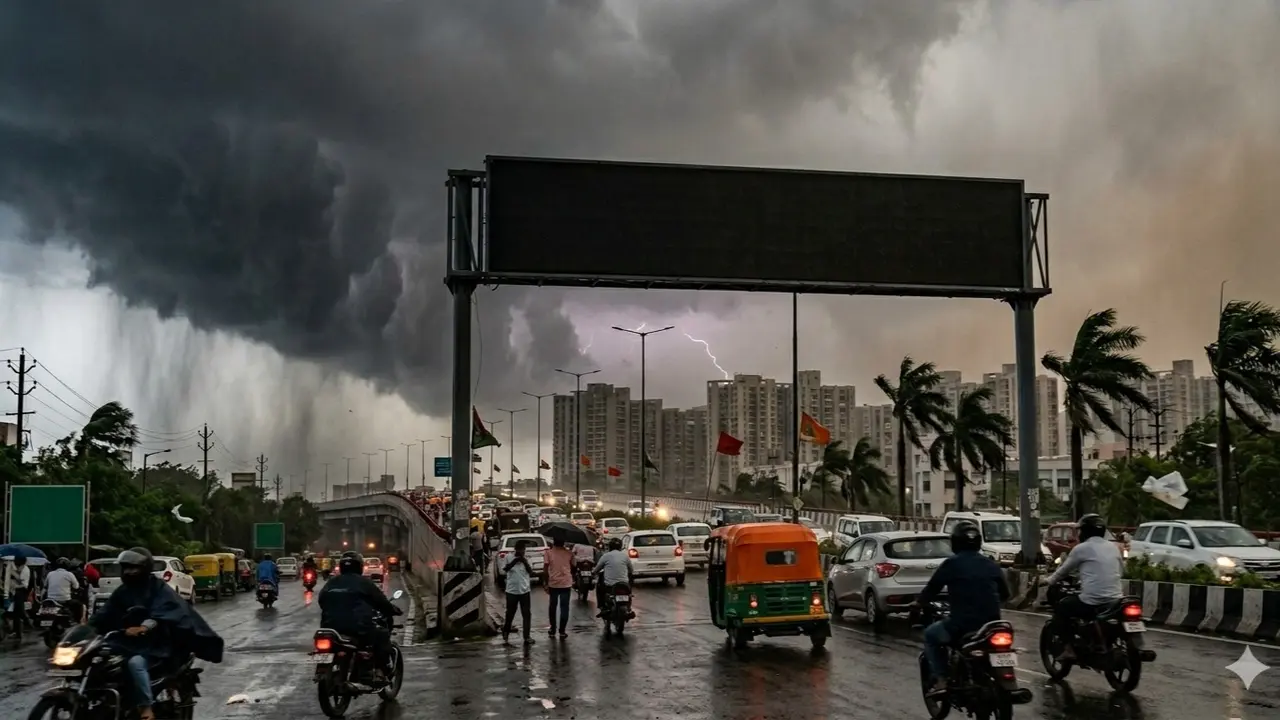
The situation of the monsoon is now concerning everyone, as the Southwest monsoon is not performing the way it should. According to reports from the India Meteorological Department (IMD), between June 4 and June 18 this year, India faced a 42 percent rainfall deficit. This is a very serious gap that has concerned everyone, especially farmers, water supply management, and reservoir levels.
Rain Deficit Across the Nation
Looking at the data from previous years, India typically receives 72.2 mm of rain during this stretch of June, but according to this year’s data, it stayed at just 42.1 mm. The monsoon has just started, and the country is already facing a significant rainfall deficit. The Central, Eastern, and Peninsular regions of the country are already feeling the hit. In some districts, rainfall is down by anywhere from 20 to 90 percent. However, there are exceptions to this trend. Some parts of Northwest India and the Western Himalayan regions have actually received more rain than usual.
Growing Concerns for Agriculture
This ununiformed rain has alarmed farmers, forcing them into delayed sowing, leading to insufficient water for crops and growing tension over a weak monsoon in many states.
Meteorological Factors Behind the Delay
According to meteorologists, the core reason for this delay is a weaker monsoon circulation over India. Satellite imagery shows that the rain-bearing clouds are concentrated over Northern India and the Western Himalayan regions due to strong Western Disturbances. Meanwhile, Central India and states like Maharashtra, Gujarat, and Madhya Pradesh are not seeing any cloud cover.
Advertisement
Furthermore, the Arabian Sea arm of the monsoon is showing sluggish progress, while the Bay of Bengal side has only managed to produce scattered thunderstorms in the East and Northeast, which is not enough to cover the rain deficit.
Severe Impacts on Maharashtra and Central India
The state of Maharashtra is taking a hard hit this year and is on track for one of its driest Junes in the last 10 years, leading several regions to already implement water restrictions. Vidarbha and Madhya Pradesh are also waiting for the skies to wet the land, leaving farmers hanging as they wait to start sowing their crops.
Advertisement
Many forecasters have stated that the only way to get a big push for the monsoon is a simultaneous revival of both the Arabian Sea and the Bay of Bengal systems. A strong low-pressure system could pull moisture inland and get things moving, but currently, there are no signs of an immediate monsoon revival.
The Critical Monsoon Outlook for the Coming Weeks
As we enter the latter half of June, weather experts are intensely analyzing incoming data, searching for signs of a turnaround. If moisture levels fail to intensify or fresh weather systems don't emerge quickly, the current lack of rainfall could stretch late into June this year. Such a delay threatens agricultural yields, dam capacities, and drinking water reserves. With stakes this high, these next few weeks remain absolutely vital in determining the trajectory of this year's monsoon.
The 13-Million-Year Lifeline That Never Fails
Amid these pressing anxieties, a prominent expert in paleoclimatology provides a deeply comforting perspective.
Professor Anil K Gupta—a faculty member at the Indian Institute of Technology, Kharagpur, former Director of the Wadia Institute of Himalayan Geology, Dehradun, and a premier authority on ancient weather patterns—assures that a total collapse of the seasonal rains is highly improbable. By studying deep climate history across millions of years, his work confirms that the system is fundamentally linked to the unique geography of the Indian subcontinent.
"The monsoon has been in this landmass for the last 13 million years," said Professor Gupta. "As long as we have the present-day landmass configuration, the monsoon will remain."
How India’s Geography Secures Its Climate Future
This geological timeline is staggering. It reveals that for more than one crore and thirty lakh years, the monsoon has endured despite sweeping global climate transformations. Professor Gupta explains that the primary catalyst for this stability is the specific alignment of the Indian peninsula combined with the massive Himalayan range to the north. Together, they generate the atmospheric pressure differences required for seasonal wind reversals and rainfall.
Because this geographic blueprint is permanent, the underlying system is secure. "As long as the Indian landmass remains similar, peninsular land to the south and high Himalayas in the north, the monsoon will continue," he said.
What Ancient Megadroughts Reveal About Modern Climate
However, historic permanence does not guarantee year-to-year predictability. Earth’s climate records indicate that these rains have experienced severe disruptions before. Notably, a catastrophic dry spell gripped vast swaths of Asia roughly 4,200 years ago. "We see there is an event that happened around 4,200 years ago. During that time, the whole Asian landmass suffered a major drought event and population migration was rampant," said Prof Gupta. "Such extreme events have been in the monsoon system in the past."
While those ancient shifts occurred naturally before humanity left its mark, today’s patterns must contend with the added variables of global warming and modern human development.
Get Current Updates on India News, Entertainment News, Cricket News along with Latest News and Web Stories from India and around the world.