
Big Win For Centre: Supreme Court Declines To Put Blanket Suspension On Waqf Act
The Supreme Court on Monday put on hold a controversial provision in the Waqf (Amendment) Act, 2025 that required a person to be a practitioner of Islam for at least five years to create a waqf.
- India News
- 5 min read

;'%3e%3cpath%20d='m8,15.99c4.41,0,7.99-3.58,7.99-7.99S12.41,0,8,0,0,3.59,0,8s3.58,7.99,7.99,7.99Z'%20style='stroke:%23fff;%20stroke-miterlimit:10;%20stroke-width:.02px;'/%3e%3cpath%20d='m3.08,3.37l3.82,5.11-3.84,4.15h.87l3.37-3.64,2.72,3.64h2.94l-4.04-5.39,3.58-3.87h-.86l-3.1,3.35-2.5-3.35h-2.94Zm1.27.64h1.35l5.97,7.99h-1.35l-5.97-7.99Z'%20style='fill:%23fff;'/%3e%3c/g%3e%3c/svg%3e)


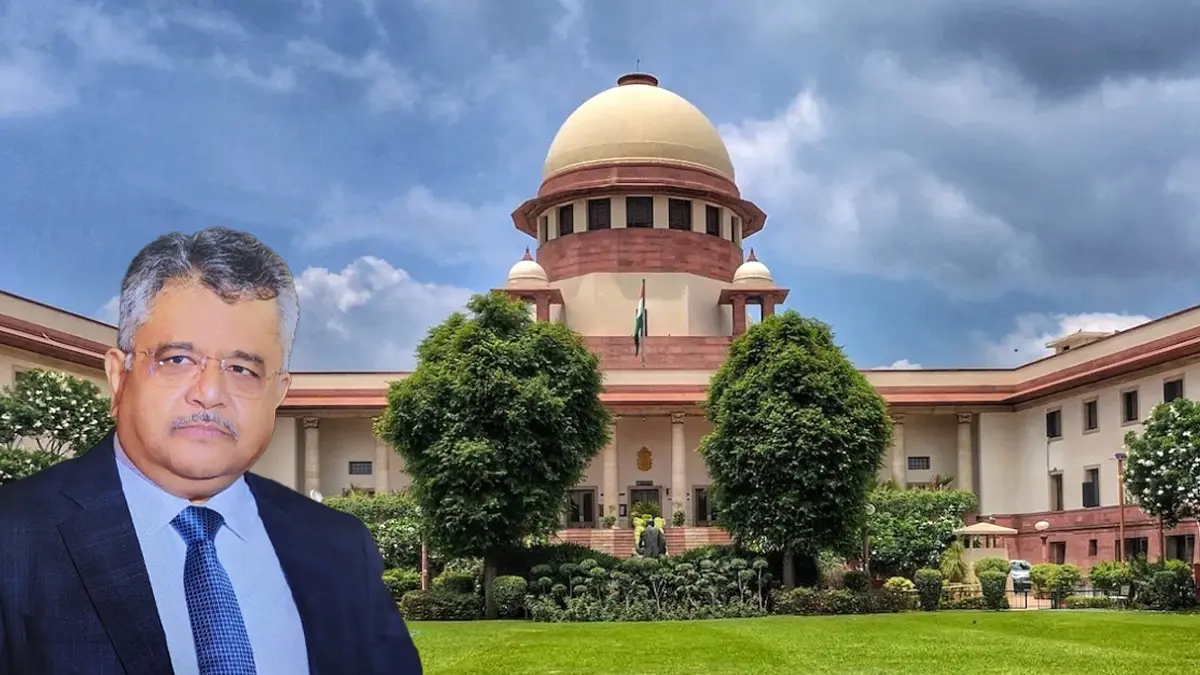
Supreme Court On Waqf Act: The Supreme Court on Monday refused to suspend the Waqf (Amendment) Act, 2025, in its entirety, observing that no case had been made out to justify a blanket stay on the legislation.
The bench noted that the Act enjoys the presumption of constitutionality and, therefore, cannot be put on hold as a whole. This was seen as a major win for the Centre.
However, the court granted protection in respect of specific controversial clauses, making it clear that certain provisions required safeguards pending a final hearing.
Centre’s Defence: Waqf is a “Secular Concept”
Before reserving its interim order, the bench heard arguments over three consecutive days from advocates representing petitioners and Solicitor General of India Tushar Mehta, the central government’s top lawyer.
Advertisement
Mehta strongly defended the Act, stressing that while Waqf has Islamic origins, it is not an essential part of Islam but rather a “secular concept” of property dedication. He argued that laws passed by Parliament enjoy a presumption of constitutionality and cannot be lightly stayed.
The Centre’s affidavit also flagged alleged misuse of the Waqf framework, pointing to a “shocking” 116% rise in Waqf lands since the 2013 amendment, and claimed that private and public properties were being wrongly brought under Waqf despite mandatory registration since 1923.
Advertisement
Supreme Court Refuses Blanket Stay on Waqf Act
The Supreme Court on Monday delivered an interim order on challenges to the Waqf (Amendment) Act, 2025. The bench made it clear that while the bulk of the law will remain in force, certain controversial provisions have been put on hold.
Petitioners had urged the Court to suspend the entire Act, but the judges substantially rejected that plea. They said only a few provisions required immediate safeguards, not the whole legislation.
Recognition of Waqfs and Non-Muslim Representation
One of the most contested issues was the recognition of unregistered Waqfs. The petitioners argued that the bar was arbitrary. However, the Court refused to intervene. It ruled that Waqfs not formally registered will not be treated as Waqfs.
The Court also addressed non-Muslim representation in Waqf bodies. Under the amended law, up to four non-Muslims can serve in the Central Waqf Council and up to two in State Waqf Boards. Petitioners opposed this, claiming only Muslims should serve on such bodies.
The Centre, represented by Solicitor General Tushar Mehta, clarified that these were maximum limits and not mandatory inclusions. Accepting this stand, the Court reiterated the cap and refused to strike down the provision.
Property Disputes and Creation of New Waqfs
On property disputes, the Court stayed the clause that allowed district collectors to decide whether land was Waqf property or government property.
The Centre itself had argued that such decisions could only be tentative, with final authority resting with courts or Waqf tribunals. The judges agreed, holding that property titles cannot be decided by executive officers.
The bench also protected Waqf assets by directing that no Waqf property should be sold, transferred, or encumbered until disputes are settled by tribunals. The Centre did not oppose this safeguard.
Another controversial clause dealt with the creation of new Waqfs. The amendment required that only a Muslim practising Islam for at least five years could create a Waqf.
The Court stayed this provision, noting there was no mechanism to verify such practice, and said it would remain suspended until clear rules are framed.
Court Upholds Abolition of ‘Waqf by User’
On the broader issue of “Waqf by user,” the Court upheld the legislature’s decision to abolish the concept prospectively. Petitioners feared this would allow the government to seize Waqf lands, but the judges dismissed the claim.
“After noticing such instances of misuse, if the legislature finds that the concept of ‘Waqf by User’ has to be abolished and that too prospectively, in our view, the same cannot prima facie be said to be arbitrary,” the bench observed.
SC Says Govt Intent Beyond Doubt
The Supreme Court said that the government's intentions are beyond doubt. It added, “The deletion of clause (i) of Section 3(r) of the Original Waqf Act would come into effect from the date on which the impugned Act has come. Therefore, the contention of the petitioners that the lands vested in the Waqfs would be grabbed by the Government prima facie holds no water.”
Petitioners’ Concerns
Over 100 petitioners have challenged the amended law, describing it as a “creeping acquisition” of Muslim properties. They argued that provisions allowing the denotification of properties earlier declared as Waqf by courts, by usage, or by deed, could weaken protections for community assets.
The Supreme Court clarified that while the Act would remain in operation, the stayed provisions will not be enforced for now. The larger constitutional validity of the Waqf (Amendment) Act, 2025, will be examined at the final hearing.
What is the Full Dispute?
President Droupadi Murmu gave her approval to the Waqf (Amendment) Bill, 2025, on April 5, after it was passed in Parliament following intense debates. The Central government had earlier asked the Supreme Court not to stay any part of the law, arguing that courts usually do not put laws on hold and instead decide their validity at the final stage.
In its affidavit, the Centre said the amendments deal only with the secular management of Waqf properties and do not interfere with the religious freedoms guaranteed under Articles 25 and 26 of the Constitution.
On the clause barring non-Muslims from creating Waqf, Solicitor General of India Tushar Mehta, appearing for the government, explained that non-Muslims were first given such rights only in the 2013 amendment.
In the original 1923 law, they were not allowed to create a Waqf because of concerns that it could be misused to defraud creditors.
Get Current Updates on India News, Entertainment News, Cricket News along with Latest News and Web Stories from India and around the world.