
CAQM Implements GRAP-IV In Delhi-NCR As Air Quality Deteriorates To Severe+ Category
CAQM implemented GRAP-IV in Delhi-NCR, hours after implementing GRAP-III, as the air quality deteriorated to the severe+ category.
- India News
- 2 min read

;'%3e%3cpath%20d='m8,15.99c4.41,0,7.99-3.58,7.99-7.99S12.41,0,8,0,0,3.59,0,8s3.58,7.99,7.99,7.99Z'%20style='stroke:%23fff;%20stroke-miterlimit:10;%20stroke-width:.02px;'/%3e%3cpath%20d='m3.08,3.37l3.82,5.11-3.84,4.15h.87l3.37-3.64,2.72,3.64h2.94l-4.04-5.39,3.58-3.87h-.86l-3.1,3.35-2.5-3.35h-2.94Zm1.27.64h1.35l5.97,7.99h-1.35l-5.97-7.99Z'%20style='fill:%23fff;'/%3e%3c/g%3e%3c/svg%3e)


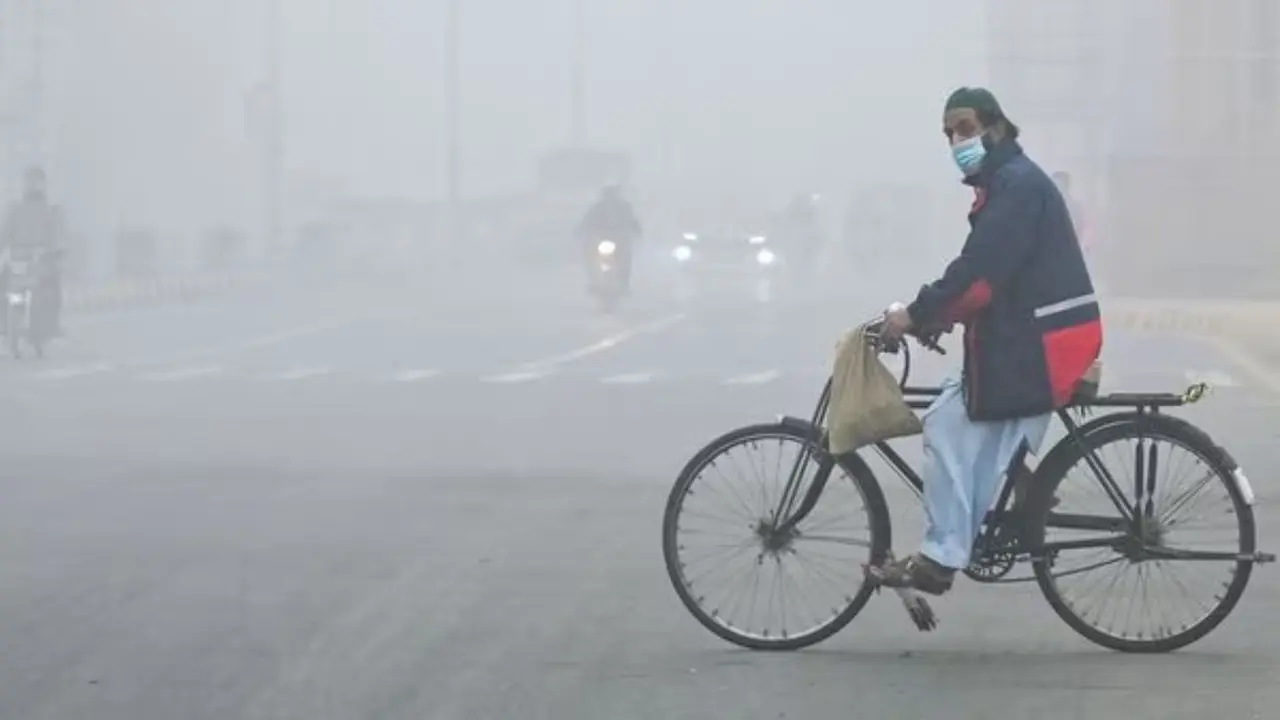
New Delhi: Hours after implementing stage 3 of the Graded Response Action Plan (GRAP-IV), the Commission for Air Quality Management (CAQM) imposed stage 4 of the GRAP across Delhi-NCR on Saturday. The capital’s Air Quality Index (AQI) surged to 448, slipping into the ‘severe+’ band on Saturday, as per the Central Pollution Control Board (CPCB). The escalation came up after the previous day’s 24‑hour AQI average stood at 349, which was still classed as ‘very poor’ but well below the new high.
The Stage 4 order bans all non‑essential construction, stops polluting trucks from entering Delhi, and forces schools, except for classes 10 and 12, to switch to hybrid teaching. The diesel generators may only run for essential services, and open burning is prohibited. These restrictions are in addition to the earlier Stage 3 rules that had already halted many construction sites and limited vehicle movement.
What The Revised GRAP Means
Acting faster as the AQI deteriorated, the CAQM has rewritten the trigger points for each stage. The most important stage 4, the toughest set of curbs, will now be activated when the AQI falls into the 301‑400 range, rather than waiting for it to exceed 450. During stage 5 of the GRAP, the public, municipal and private offices will operate with half their staff on site, while central government offices will move to work‑from‑home.
The stage 3 measures have been pulled forward to the 201‑300 band, meaning staggered office timings will start earlier than before. Even stage 2 actions have been moved up to stage 1, steps such as guaranteeing an uninterrupted power supply to discourage diesel generators will now be enforced when the AQI is between 101 and 200.
Advertisement
Health Warnings And Public Reaction
The sudden surge has reignited concerns for the most vulnerable, children, the elderly and anyone with respiratory problems. The doctors report a rise in patients with breathing difficulties. The winter weather, characterised by low wind speeds and a stable atmosphere, is trapping pollutants over the city and prolonging the hazardous conditions.
The Air Quality Early Warning System (AQEWS) predicts that the severe category will persist through Sunday, with only a modest improvement to ‘very poor’ expected by Monday.
Advertisement
Get Current Updates on India News, Entertainment News, Cricket News along with Latest News and Web Stories from India and around the world.