
Delhi Mandates 50% Work-from-Home for Govt & Private Offices Every Winter in Landmark Anti-Pollution Measure
The order, which comes into effect from the upcoming winter season (November 1 to February 28), aims to slash vehicular emissions and reduce overall economic activity-related pollution in the National Capital Region.
- India News
- 2 min read

;'%3e%3cpath%20d='m8,15.99c4.41,0,7.99-3.58,7.99-7.99S12.41,0,8,0,0,3.59,0,8s3.58,7.99,7.99,7.99Z'%20style='stroke:%23fff;%20stroke-miterlimit:10;%20stroke-width:.02px;'/%3e%3cpath%20d='m3.08,3.37l3.82,5.11-3.84,4.15h.87l3.37-3.64,2.72,3.64h2.94l-4.04-5.39,3.58-3.87h-.86l-3.1,3.35-2.5-3.35h-2.94Zm1.27.64h1.35l5.97,7.99h-1.35l-5.97-7.99Z'%20style='fill:%23fff;'/%3e%3c/g%3e%3c/svg%3e)


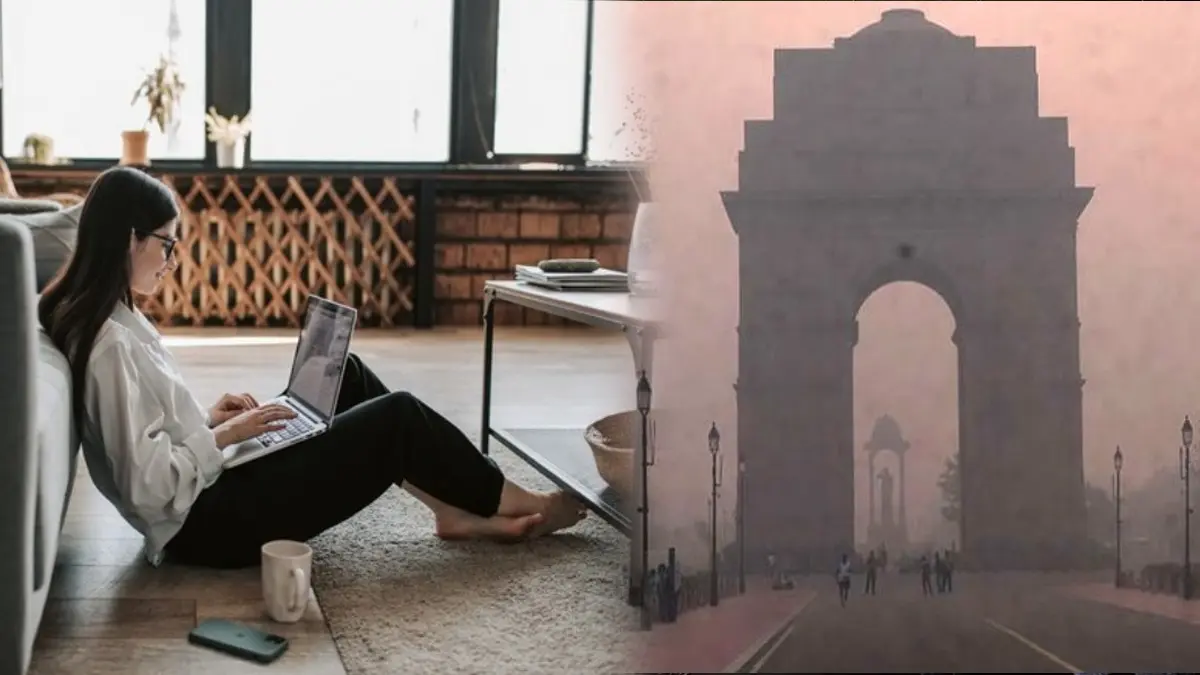
New Delhi: In a decisive step to combat the capital’s chronic winter smog, the Delhi government has announced a permanent policy requiring all government departments and large private establishments to implement at least 50% work-from-home for employees during the winter months.
The order, which comes into effect from the upcoming winter season (November 1 to February 28), aims to slash vehicular emissions and reduce overall economic activity-related pollution in the National Capital Region.
Under the new rules, both central and state government offices in Delhi, along with private companies employing more than 50 people, must ensure that no more than 50% of their workforce is physically present on any given workday between November and February. Essential services, healthcare, emergency response, and certain critical infrastructure sectors have been exempted. Companies must submit compliance reports monthly to the Delhi Pollution Control Committee (DPCC).
“Keeping Delhi clean and healthy requires everyone’s participation,” Chief Minister Rekha Gupta said.
Advertisement
Health and Environmental Backdrop
Delhi’s air quality routinely deteriorates to “severe” and “hazardous” levels in winter due to a combination of crop residue burning in neighboring states, meteorological conditions that trap pollutants, and local sources including vehicles, industries, and dust. According to health estimates, prolonged exposure during these months contributes to increased cases of respiratory diseases, cardiovascular problems, and premature deaths.
Independent studies have suggested that reducing peak-hour traffic by even 20-30% can significantly lower particulate matter (PM2.5) levels. The 50% WFH mandate is expected to cut daily vehicle trips by several lakh in the NCR.
Advertisement
Enforcement and Monitoring
The Delhi government plans to use a mix of self-reporting, random audits, and data from metro ridership and traffic sensors to verify compliance. Penalties for non-compliant organizations will range from warnings to fines of up to ₹5 lakh.
This permanent seasonal policy builds on temporary WFH measures tried during previous pollution crises and the COVID-19 pandemic. Experts believe institutionalizing hybrid work could serve as a model for other polluted megacities across South Asia.
As Delhi battles its annual airpocalypse, the 50% winter WFH rule marks a shift from reactive fire-fighting to a structured, year-on-year pollution reduction strategy.
Get Current Updates on India News, Entertainment News, Cricket News along with Latest News and Web Stories from India and around the world.