
Explained: Government's Crackdown Against OTT Platforms for Vulgar Content
Union Minister for Information and Broadcasting Anurag Thakur has emphasised the responsibility of the platforms to not propagate obscenity, vulgarity & abuse.
- India News
- 3 min read

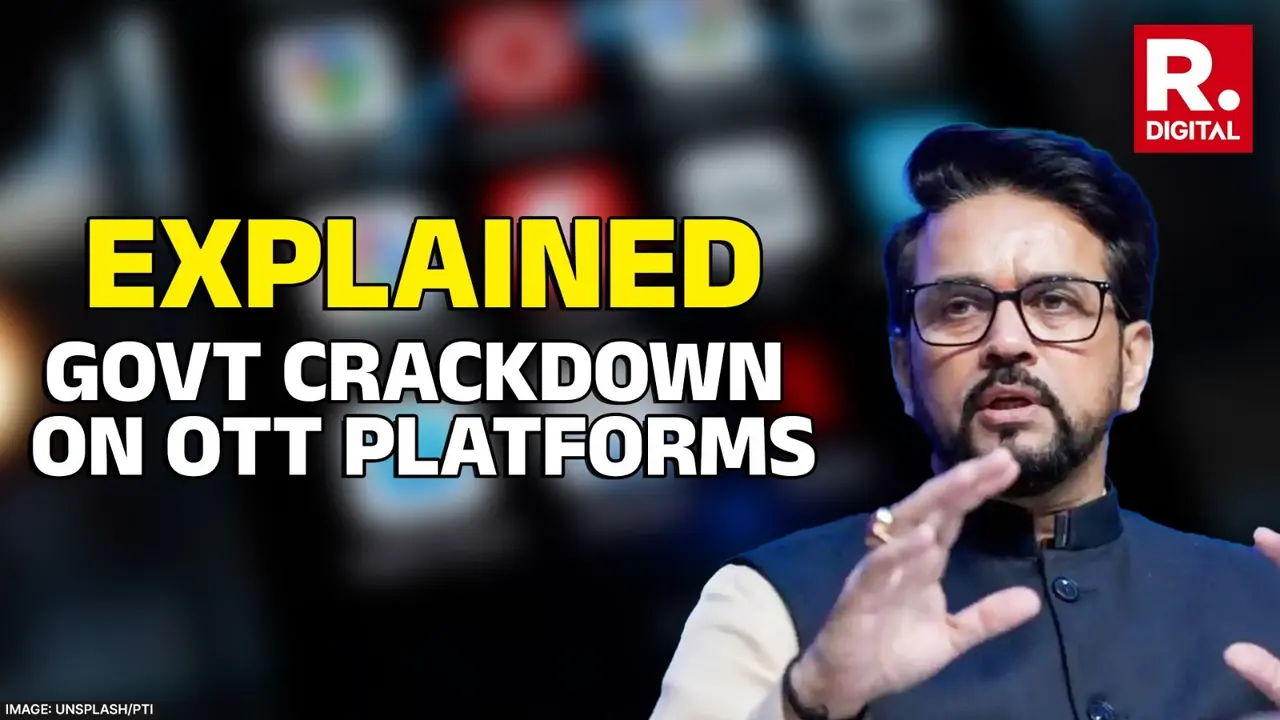
New Delhi: The Modi government at the Centre on Thursday announced it is blocking 18 OTT platforms and social media accounts associated with the Centre for publishing obscene and vulgar content. In a statement, the Ministry of Information and Broadcasting said 18 OTT platforms and 19 websites, 10 apps (seven on Google Play Store, three on Apple App Store), and 57 social media accounts associated with them have been disabled for public access in India.
Here is all you need to know about the latest crackdown on the OTT Platforms:
Which OTT Platforms/Social Media Accounts Have Been Banned?
- Dream Films
- Neon X VIP
- MoodX
- Voovi
- Besharams
- Mojflix
- Yessma
- Hunters
- Hot Shots VIP
- Uncut Adda
- Rabbit
- Fugi
- Tri Flicks
- Xtramood
- Chikooflix
- X Prime
- Nuefliks
- Prime Play

Out of these, one of the OTT apps had amassed more than 1 crore downloads, while two others had over 50 lakh downloads on the Google Play Store, a release from the I&B Ministry said. Additionally, these OTT platforms had extensively utilised social media to disseminate trailers, specific scenes, and external links aimed at attracting audiences to their websites and apps.
Why Were The OTT Platforms Banned?
A significant portion of the content hosted on these platforms was found to be obscene, vulgar, and portrayed women in a demeaning manner. The content depicted nudity and sexual acts in various inappropriate contexts, such as relationships between teachers and students, incestuous family relationships, etc. Besides, the content also included sexual innuendos and, in some instances, prolonged segments of pornographic and sexually explicit scenes devoid of any thematic or societal relevance.
Advertisement
Under Which Law(s) Were the OTT Platforms Banned?
The Centre's decision to act against the OTT platforms was taken under the provisions of the Information Technology Act, 2000 in consultation with other ministries/government departments, and domain experts specialising in media and entertainment, women's rights, and child rights, the I&B Ministry release stated. The content was found to be prima facie in violation of Section 67 and 67A of the Information Technology Act, 2000, Section 292 of the Indian Penal Code (IPC), and Section 4 of the Indecent Representation of Women (Prohibition) Act, 1986.
How Does the Govt Ensure Sensitisation on OTT Platforms?
The Ministry of Information and Broadcasting frequently conducts sensitization efforts with OTT platforms and their self-regulatory bodies established under the IT Rules, 2021 through meetings, webinars, workshops, etc. in alignment with the aim of fostering the growth and development of the OTT industry. The government has undertaken several measured in this regard, including the introduction of the Inaugural OTT Award for Web Series at the 54th International Film Festival of India, collaboration with OTT platforms in the media and entertainment sector, and the establishment of a light touch regulatory framework with an emphasis on self-regulation under the IT Rules, 2021.