
GST Reforms Boost Tourism, Public Transport, And Automobile Sector In India
India's GST reforms cut taxes on budget hotels, buses and cultural goods to boost tourism, public transport, artisans and cars.
- India News
- 5 min read

;'%3e%3cpath%20d='m8,15.99c4.41,0,7.99-3.58,7.99-7.99S12.41,0,8,0,0,3.59,0,8s3.58,7.99,7.99,7.99Z'%20style='stroke:%23fff;%20stroke-miterlimit:10;%20stroke-width:.02px;'/%3e%3cpath%20d='m3.08,3.37l3.82,5.11-3.84,4.15h.87l3.37-3.64,2.72,3.64h2.94l-4.04-5.39,3.58-3.87h-.86l-3.1,3.35-2.5-3.35h-2.94Zm1.27.64h1.35l5.97,7.99h-1.35l-5.97-7.99Z'%20style='fill:%23fff;'/%3e%3c/g%3e%3c/svg%3e)


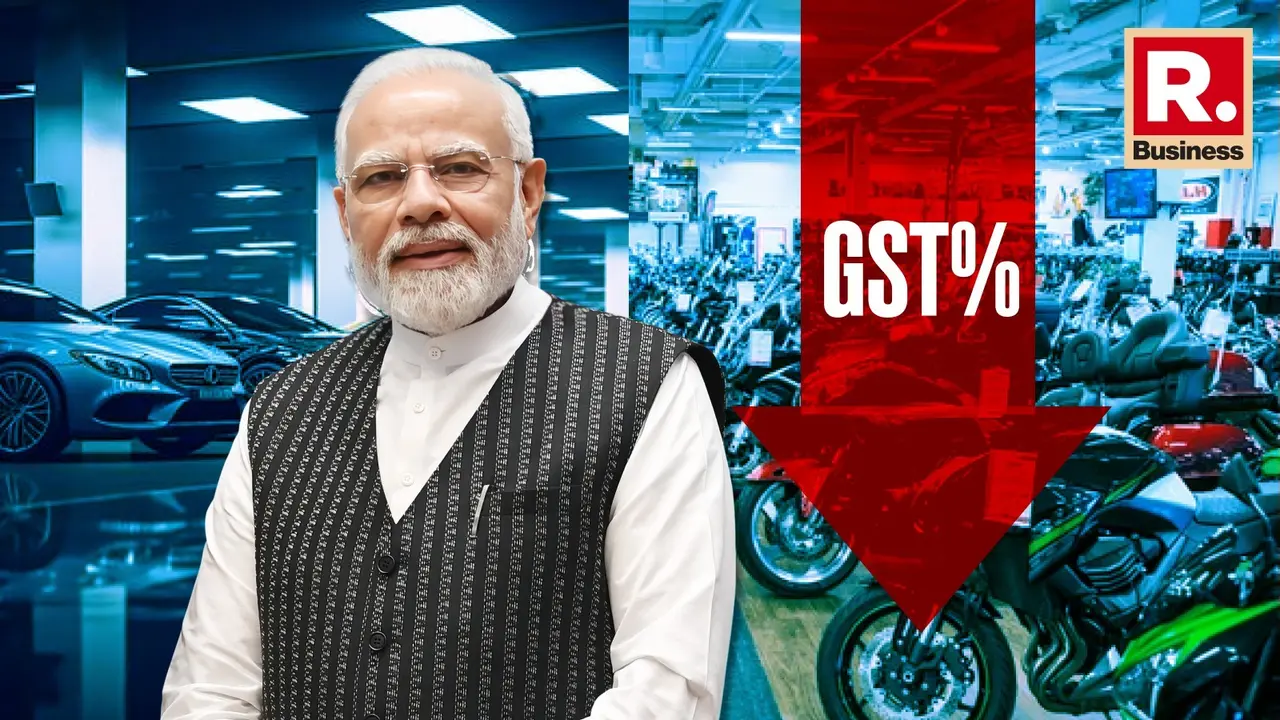
New Delhi: The Narendra Modi government has announced major alterations to the Goods and Services Tax (GST) rates in order to render tourism more affordable, fortify public transport, boost the automobile market and provide support to artisans. The decision, as per an official communique, is designed to create employment opportunities, encourage investments, and support India's cultural patrimony.
The new measures diminish GST on hotel rooms priced beneath Rs 7500 per day from 12 per cent to 5 per cent. It is anticipated that the new GST reforms will make hotel stays more economical for middle-class and budget travellers. The communique stated that the move would bring India's hospitality tax structure into closer alignment with global tourism destinations and help attract a greater number of foreign visitors. The government expected that the reform would augment weekend travel, pilgrimage circuits, heritage tourism, and eco-tourism, whilst also encouraging investment in mid-segment hotels, homestays, and guesthouses.
GST on buses possessing a seating capacity of more than 10 persons has been curtailed from 28 per cent to 18 per cent. According to the communique, this will lower the cost for fleet operators, schools, corporates, tour providers, and state transport bodies. The change is expected to reduce ticket fares, particularly on semi-urban and rural routes. The officials asserted that the step will impel people towards utilising shared and public transport, helping reduce traffic and pollution whilst improving safety and comfort standards. Furthermore, with GST reduction from 28% to 18%, the reforms have also given a thrust to the automobile sector, making it more affordable and registering a record number of car sales.
GST Reforms Support Artisans, Sculptors
The reforms also extend to the cultural sector as GST on art and cultural goods, such as statues, prints, ornamental articles, stone artware, and inlay work, has been lowered from 12 per cent to 5 per cent. The Centre stated that this will directly support artisans and sculptors engaged in India's traditional cottage industries. The move also aims to keep temple art, folk traditions, miniature painting, printmaking, and stone craftsmanship economically viable and promote Indian culture globally.
Advertisement
Between 2021 and 2024, India recorded a sharp recovery in foreign tourist arrivals, from 1.527 million visitors in 2021 to 9.952 million in 2024. The officials said the rise shows growing international interest in India as a destination. The central government believes the new GST measures will further support this growth.
"The Government of India, through the Ministry of Culture, has launched comprehensive efforts to preserve, promote, digitise, and globally showcase India's rich cultural heritage, including traditional arts, monuments, and heritage sites, whilst actively supporting artisans and cultural institutions," the communique said.
Advertisement
According to the communique, the expected impact of the reforms includes a rise in tourism, greater job creation in hospitality, transport, and craft sectors, and stronger economic support for traditional art forms. The measures would also promote sustainable practices by encouraging the use of public transport. Under the leadership of Prime Minister Narendra Modi, these reforms form part of a larger vision of sustainable and inclusive growth. By reducing the cost of travel, accommodation, and cultural goods, steps are expected to make India more attractive to both domestic and international tourists, whilst also ensuring that traditional artisans find new markets and opportunities.
GST Reforms Boost Automobile Sector
The new GST reforms are also bringing smiles to the faces of automobile manufacturers and car buyers alike. Implemented ahead of the festive season, the reforms are expected to give a massive thrust to the automobile sector and car sales in the country.
The GST reforms have lowered tax rates on certain vehicles, making them more affordable for buyers. For instance, small petrol-hybrid cars will benefit from a GST reduction from 28% to 18%, promoting green mobility and boosting sales for manufacturers like Tata Motors and Maruti Suzuki. Similarly, motorcycles with an engine capacity up to 350cc now fall under the 18% slab, down from the previous 28% bracket.
These changes are part of the government's vision for sustainable and inclusive growth. By reducing the cost of travel, accommodation, and cultural goods, the reforms are expected to make India more attractive to both domestic and international tourists. Similarly, the automobile industry is expected to see a surge in demand with the more favourable tax structure.
Day 1 Expert Analysis
Industry players like Hyundai Motor India Limited are passing on the GST benefits to customers, which has led to a strong festive season performance. On the first day of Navratri, Hyundai recorded around 11,000 dealer billings, the company's highest single-day performance in the last five years.
Analysing the automobile market after the rollout of GST 2.0 reforms on day 1, the Whole-Time Director and HMIL COO, Tarun Garg, said, “The auspicious start of Navratri, amplified by the momentum from GST 2.0 reforms, has infused strong positivity into the market. On Day 1 alone, Hyundai Motor India Limited recorded around 11,000 Dealer billings, which is our highest single-day performance in the last five years. This is a clear testament to robust festive sentiment and customer confidence. As one of the first automobile companies to fully pass on the full GST benefits to customers, we are delighted to make our customers’ celebrations even more joyful. Looking ahead, we anticipate sustained festive demand and remain committed to delivering value and excitement to our customers.”
Overall, the GST reforms are expected to have a positive impact on the Indian economy by boosting consumption and sales in the automobile sector. With over 375 items, including groceries, agri-equipment, clothing, medicines, and automobiles, becoming cheaper due to the GST 'next-Gen' reform, consumer savings are anticipated to drive higher purchase volumes.
Also Read | Letter from The Prime Minister
Get Current Updates on India News, Entertainment News, Cricket News along with Latest News and Web Stories from India and around the world.