
LPG Supply Normalised: Govt Restores Commercial Cylinders Supply To Pre-Crisis Levels After West Asia Disruption
Government has restored non-domestic packed LPG supplies to pre-West Asia crisis levels, eased bulk LPG curbs to 50% and reduced C3-C4 diversion while maintaining 40 TMT/day production, directing OMCs to monitor data and expand PNG connectivity.
- India News
- 3 min read

;'%3e%3cpath%20d='m8,15.99c4.41,0,7.99-3.58,7.99-7.99S12.41,0,8,0,0,3.59,0,8s3.58,7.99,7.99,7.99Z'%20style='stroke:%23fff;%20stroke-miterlimit:10;%20stroke-width:.02px;'/%3e%3cpath%20d='m3.08,3.37l3.82,5.11-3.84,4.15h.87l3.37-3.64,2.72,3.64h2.94l-4.04-5.39,3.58-3.87h-.86l-3.1,3.35-2.5-3.35h-2.94Zm1.27.64h1.35l5.97,7.99h-1.35l-5.97-7.99Z'%20style='fill:%23fff;'/%3e%3c/g%3e%3c/svg%3e)


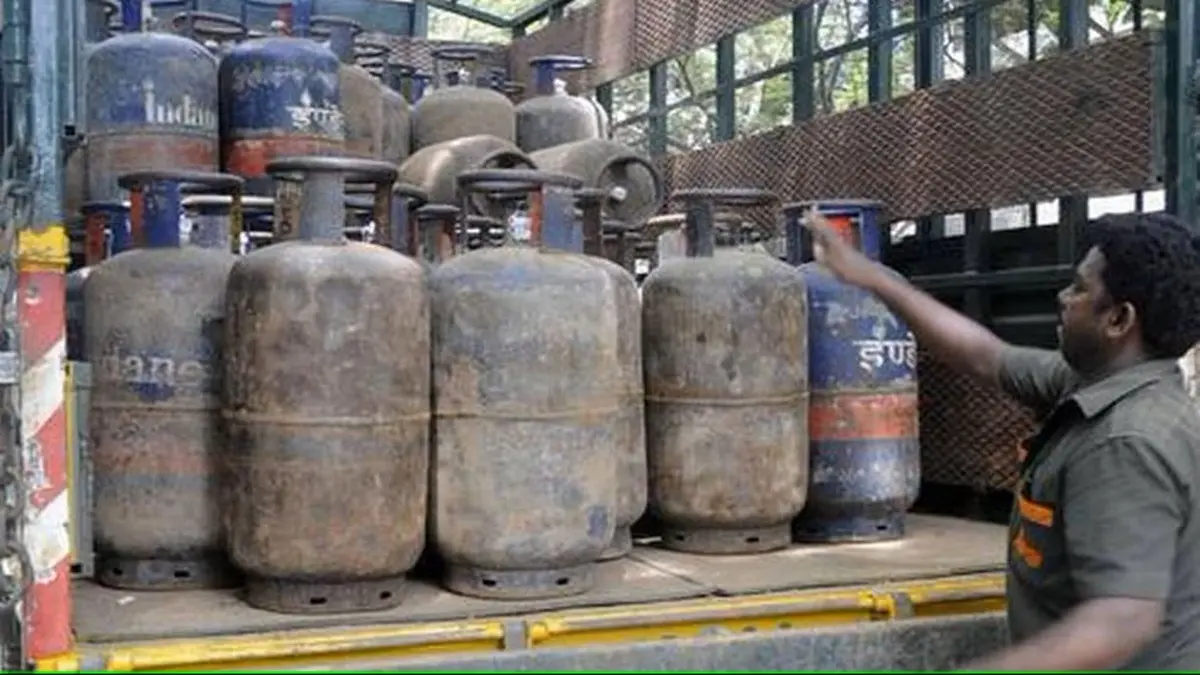
New Delhi: The central government has withdrawn all sectoral restrictions on non-domestic packed LPG and brought supplies back to the levels that existed before the West Asia crisis disrupted global energy flows in a move set to ease pressure on businesses. The government’s decision brings immediate relief to hotels, restaurants, factories and other commercial users who had been grappling with reduced quotas for months.
The officials stated that the restoration follows a clear improvement in the overall LPG supply picture at home and abroad. The officials have also deemed it safe to roll back the emergency curbs, with indigenous production strengthening and imported cargoes expected to arrive as planned, which were imposed to protect household consumers when international markets turned volatile.
According to the officials, the relief package goes beyond packed cylinders, as bulk LPG supply, which had been suspended entirely when the crisis began, will now be permitted up to 50 percent of pre-crisis consumption levels. The commercial and industrial consumers, which translates into better access to fuel for boilers, furnaces and other processes that keep operations running.
Curbs Imposed During West Asia Crisis
The Centre stepped in under the Essential Commodities Act when global supply chains wobbled after the West Asia crisis. In order to boost domestic LPG output, the government ordered that C3 and C4 hydrocarbon streams be channelled exclusively into LPG production, which meant diverting these streams away from petrochemical units and other downstream industries that normally rely on them as feedstock. The temporary restrictions on commercial packed LPG were also put in place to ensure kitchens across the country did not run dry.
Advertisement
The government, with indigenous LPG production now more stable and the outlook for imported shipments looking firm, has decided to ease the C3/C4 diversion. A smaller share of these streams will be directed to the LPG pool, freeing up more material for petrochemical and other critical sectors. The adjustment has been designed carefully so that household LPG availability does not suffer and overall domestic LPG production stays at no less than 40 thousand metric tonnes per day.
The Centre of High Technology under the Ministry of Petroleum and Natural Gas has been tasked with working out organisation-wise allocations for the enhanced C3/C4 streams. Further, it will also be required to submit regular reports to the Ministry so that the balance between LPG and industrial needs can be monitored easily.
Advertisement
Data Monitoring And PNG Transition Continue
Meanwhile, even as supply normalises, the government has asked Oil Marketing Companies (OMCs) to keep detailed records of commercial and industrial LPG consumers. A unified sectoral database across all OMCs is to be maintained to improve planning, track consumption patterns and coordinate operations better.
Further, the policy push toward cleaner fuels remains unchanged, as consumers who have already switched to Piped Natural Gas will continue on PNG. Additionally, those with access to the PNG network, or those in the process of connecting, will be gradually moved over in coordination with city gas distribution companies. The Secretary of the Petroleum Ministry has written to Chief Secretaries of all States and Union Territories (UTs) asking them to ensure the revised supply arrangements are implemented smoothly on the ground.
The officials termed the decision as part of a calibrated approach to energy security, saying that the aim is to meet the country’s immediate industrial and commercial energy needs while staying committed to expanding access to cleaner, safer and more efficient fuels for the long term.
Get Current Updates on India News, Entertainment News, Cricket News along with Latest News and Web Stories from India and around the world.