
Modi Government Brings 1-Year Gratuity And Minimum Wage Rules In Sweeping Labour Reforms
The government introduces big changes in the labour rules, offering one‑year gratuity for fixed‑term staff, expanded wages, gig rights, and four new codes from November 21.
- India News
- 5 min read

;'%3e%3cpath%20d='m8,15.99c4.41,0,7.99-3.58,7.99-7.99S12.41,0,8,0,0,3.59,0,8s3.58,7.99,7.99,7.99Z'%20style='stroke:%23fff;%20stroke-miterlimit:10;%20stroke-width:.02px;'/%3e%3cpath%20d='m3.08,3.37l3.82,5.11-3.84,4.15h.87l3.37-3.64,2.72,3.64h2.94l-4.04-5.39,3.58-3.87h-.86l-3.1,3.35-2.5-3.35h-2.94Zm1.27.64h1.35l5.97,7.99h-1.35l-5.97-7.99Z'%20style='fill:%23fff;'/%3e%3c/g%3e%3c/svg%3e)


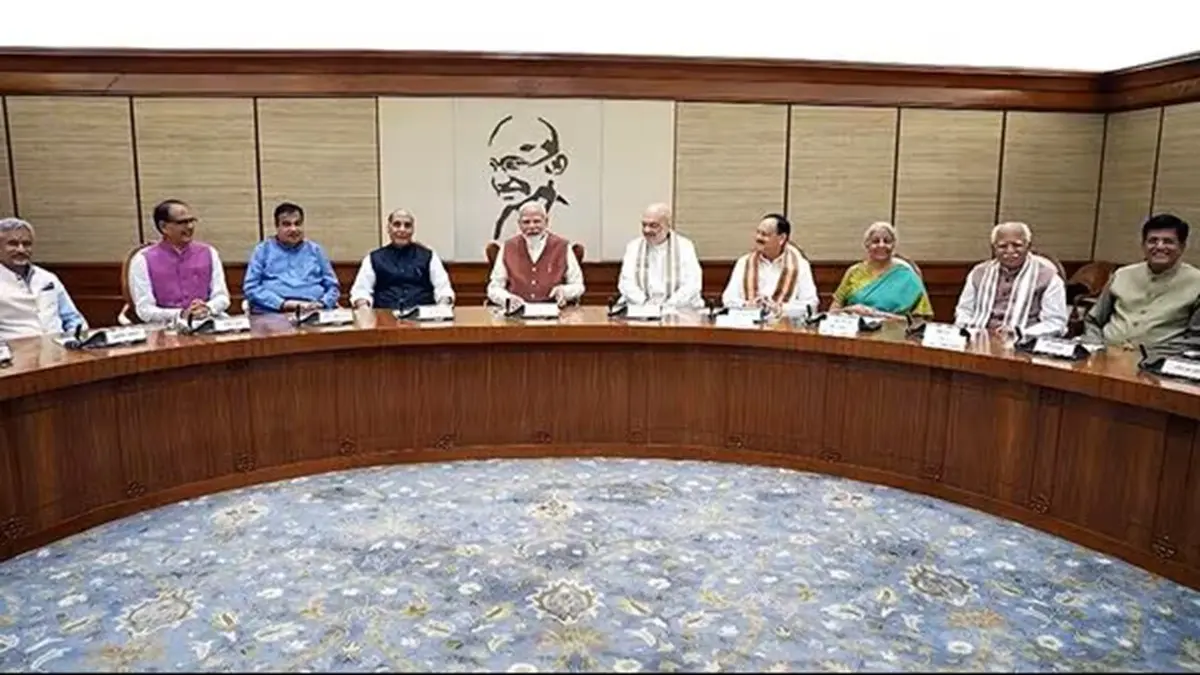
New Delhi: The Narendra Modi government announced on Friday major changes in the country’s labour law, centred on the Payment of Gratuity Act of 1972. The new gratuity regulations, which will take effect alongside other big changes in the 4 labour codes, are designed to broaden retirement benefits for workers on fixed‑term contracts and to alter the way wages are defined for calculation purposes.
According to the Ministry of Labour & Employment, under the old rules, an employee had to complete five continuous years of service before becoming eligible for a gratuity payment when they left a company. The amendment reduces that threshold to just one year, meaning that many more contract and temporary staff will now qualify for the lump‑sum benefit that was previously out of reach for those whose assignments ended earlier.
In addition to the shorter eligibility period, the reform expanded the definition of wages to include several components that were previously excluded. The gratuity itself will now be counted when calculating an employee’s wage base, and the definition also brings in basic pay, dearness allowance (DA) and retaining allowance (RA), with up to half of the total remuneration (or a percentage set by the government) added back into the calculation. The change is expected to raise the amount on which gratuity, pension and other social‑security benefits are based, delivering a larger payout to workers.
4 New Labour Codes
The four new labour codes, including the Code on Wages (2019), the Industrial Relations Code (2020), the Code on Social Security (2020) and the Occupational Safety, Health and Working Conditions Code (2020), will replace 29 existing statutes and introduce uniform wage rules, stronger safety standards and a simpler compliance regime for employers. From now on, all workers will be entitled to a minimum wage, salary payment by the seventh day of each month, double pay for overtime, and a formal appointment letter. A free annual health check‑up will be provided for every employee over the age of forty, and women will gain a suite of enhanced rights, including equal pay, the right to consent to night‑shift work with improved safety measures, 26 weeks of paid maternity leave and access to jobs in manufacturing, mining, services and IT.
Advertisement
Notably, the most striking shift is the formal recognition of gig and platform workers. The delivery partners, ride‑hailing drivers and other app‑based workers will, for the first time, be defined in law and will benefit from a social‑security fund to which aggregator platforms must contribute up to five per cent of their payouts. The fund will finance portable insurance, accident compensation and other benefits that can be carried from state to state. To make the system work, a universal Aadhaar‑linked account number will be introduced, ensuring that benefits follow workers wherever they move.
PM Modi Welcomes Reforms
Prime Minister Narendra Modi welcomed the reforms in a post on X, echoing ‘Shramev Jayate’, saying the new codes strengthen the rights of every worker, whether formal, informal and gig, and will be a major stride towards a more prosperous India. In a post on X, PM Modi wrote, “Shramev Jayate! Today, our Government has given effect to the Four Labour Codes. It is one of the most comprehensive and progressive labour-oriented reforms since Independence. It greatly empowers our workers. It also significantly simplifies compliance and promotes ‘Ease of Doing Business.’”
Advertisement
The Prime Minister further said, “These Codes will serve as a strong foundation for universal social security, minimum and timely payment of wages, safe workplaces and remunerative opportunities for our people, especially Nari Shakti and Yuva Shakti.”
“It will build a future-ready ecosystem that protects the rights of workers and strengthens India’s economic growth. These reforms will boost job creation, drive productivity and accelerate our journey towards a Viksit Bharat,” PM Modi added.
Labour Minister Mansukh Mandaviya also noted that gig workers are now recognised within the labour framework and that the changes guarantee minimum wages, timely payments and safer workplaces.
Gujarat, Maharashtra, Andhra And UP To Be Early Adopters
Early adopters such as Gujarat, Maharashtra, Andhra Pradesh and Uttar Pradesh, which introduced similar measures ahead of the national rollout, have already reported higher investment inflows, a rise in formal employment and faster industrial growth. The government argued that the reforms are essential as India seeks to diversify its economy and attract investment amid a competitive global environment and trade‑related disruptions.
The response from trade unions has been mixed. The Left‑leaning and Congress‑affiliated unions have voiced criticism of certain aspects of the package, warning that the government may face resistance as the new rules are implemented. Nevertheless, the officials said that the changes will give millions of workers greater financial security and will help to create a more transparent and equitable labour market.
Employers, meanwhile, are being urged to update their payroll and human‑resources policies to reflect the expanded wage definition and the shorter gratuity eligibility period. The new rules could increase labour costs for firms that rely heavily on fixed‑term contracts, but they also promise a more stable and motivated workforce. The fixed‑term employees are advised to check their contracts to see whether they now qualify for gratuity sooner, while HR departments are encouraged to review employment classifications and to model the potential impact on gratuity liabilities.
In the longer term, the government expects the reforms to contribute to a healthier, more productive economy, with better wages, improved safety and a social‑security net that covers the entire labour force, from factory workers to the growing number of people earning a living through digital platforms.
Get Current Updates on India News, Entertainment News, Cricket News along with Latest News and Web Stories from India and around the world.