
NDMC Hikes Parking Charges In Delhi Amid Deteriorating Air Quality To Discourage Private Transport
Delhi doubles parking fees to curb private vehicles as air quality deteriorates, invoking GRAP Stage-II. Revised rates apply to off-road and indoor parking areas managed by NDMC.
- India News
- 3 min read

;'%3e%3cpath%20d='m8,15.99c4.41,0,7.99-3.58,7.99-7.99S12.41,0,8,0,0,3.59,0,8s3.58,7.99,7.99,7.99Z'%20style='stroke:%23fff;%20stroke-miterlimit:10;%20stroke-width:.02px;'/%3e%3cpath%20d='m3.08,3.37l3.82,5.11-3.84,4.15h.87l3.37-3.64,2.72,3.64h2.94l-4.04-5.39,3.58-3.87h-.86l-3.1,3.35-2.5-3.35h-2.94Zm1.27.64h1.35l5.97,7.99h-1.35l-5.97-7.99Z'%20style='fill:%23fff;'/%3e%3c/g%3e%3c/svg%3e)


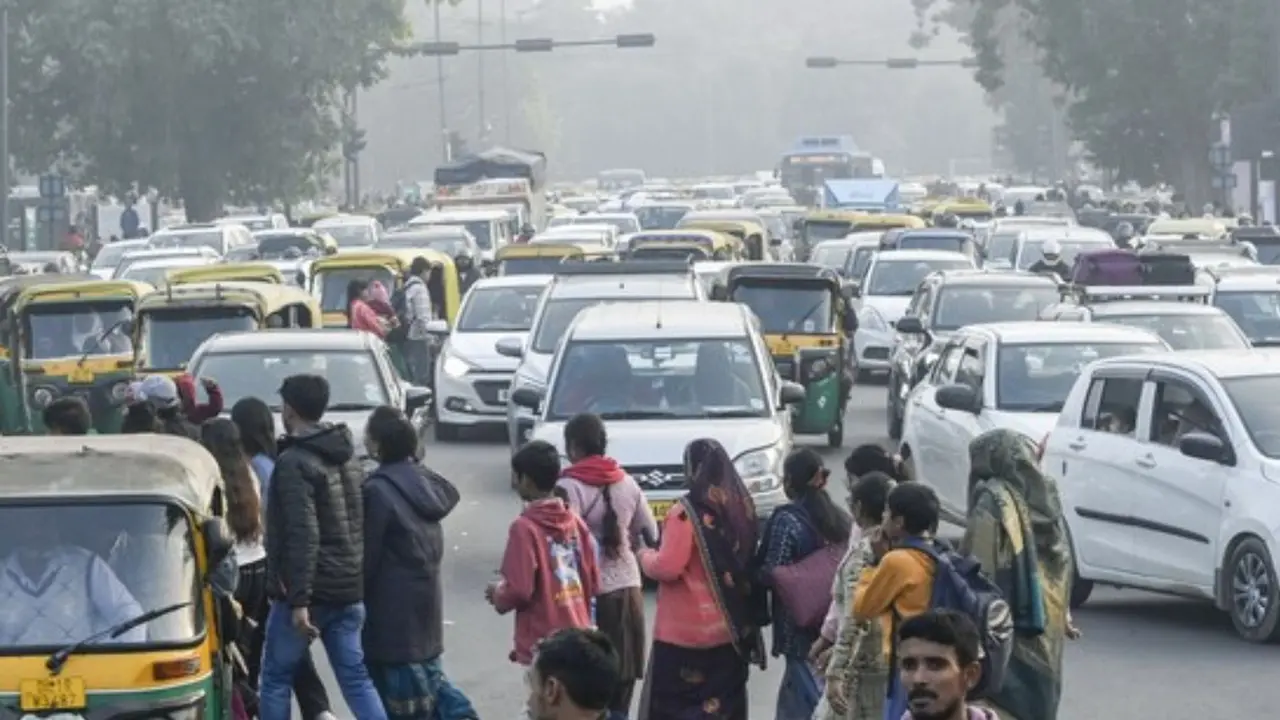
New Delhi: The New Delhi Municipal Council (NDMC), in a tough move to tackle the air pollution crisis in the national capital, has announced a doubling of parking fees across Delhi, effective immediately. The NDMC's decisive action is part of the Graded Response Action Plan (GRAP) Stage-II imposed in the national capital, triggered by the city's deteriorating air quality, which has plunged into the ‘Very Poor’ category.
The decision to raise the parking charges is to discourage the use of private vehicles, and will see parking charges double for off-road and indoor parking areas managed by the NDMC. According to the public notice issued by NDMC, the revised rates will remain in effect until the revocation of Stage-II of GRAP. The hourly parking fee for four-wheelers will rise from Rs 20 to Rs 40, for two-wheelers from Rs 10 to Rs 20, and for buses from Rs 150 to Rs 300. Similarly, indoor parking rates have also been doubled, with car parking increasing from Rs 10 to Rs 20 per hour and scooter parking from Rs 5 to Rs 10 per hour.
However, NDMC clarified that the hike will not apply to on-street parking sites and monthly pass holders under GRAP stage-II, as their rates are already on the higher side. The exemption is expected to provide some relief to regular commuters who have already factored in the higher rates.
The parking charges doubling decision follows a meeting of the GRAP Sub-Committee held on October 19, which reviewed Delhi's worsening air quality.
Advertisement
Notably, the Air Quality Index (AQI) had climbed from 296 at 4 pm to 302 by 7 pm, prompting the concerned administration to invoke Stage II of GRAP. The forecast by IMD and IITM also predicted further deterioration of AQI in the coming days, leaving residents and policymakers with no room for complacency.
On the other hand, the Commission for Air Quality Management (CAQM) has announced a ban on all commercial goods vehicles registered outside Delhi and not compliant with BS-VI emission standards from entering the city from November 1. The measure is expected to largely reduce the influx of polluting vehicles into the city.
Advertisement
The CAQM notification stated that non-BS-VI compliant commercial goods vehicles are allowed to enter Delhi only until October 31. After this deadline, even essential commodities and services will have to be catered only through CNG/LNG/EV/BS-VI diesel vehicles.
These various measures by the Delhi government and the concerned authorities are a strategic move to combat air pollution in Delhi, which has become a major public health concern. The GRAP measures are implemented under the direction of the Commission for Air Quality Management and in line with Supreme Court orders.
Get Current Updates on India News, Entertainment News, Cricket News along with Latest News and Web Stories from India and around the world.