
Pahalgam Terror Attack: NIA Chargesheet Reveals How Terrorists Used Pak-Sourced Phones and Five-Hour Stay in 'Dhok' of Local Guides
The NIA chargesheet reveals how Pahalgam terror attackers utilized Pakistan-sourced phones and a crucial 5-hour stay in a local guide's hut before the strike.
- India News
- 5 min read

;'%3e%3cpath%20d='m8,15.99c4.41,0,7.99-3.58,7.99-7.99S12.41,0,8,0,0,3.59,0,8s3.58,7.99,7.99,7.99Z'%20style='stroke:%23fff;%20stroke-miterlimit:10;%20stroke-width:.02px;'/%3e%3cpath%20d='m3.08,3.37l3.82,5.11-3.84,4.15h.87l3.37-3.64,2.72,3.64h2.94l-4.04-5.39,3.58-3.87h-.86l-3.1,3.35-2.5-3.35h-2.94Zm1.27.64h1.35l5.97,7.99h-1.35l-5.97-7.99Z'%20style='fill:%23fff;'/%3e%3c/g%3e%3c/svg%3e)


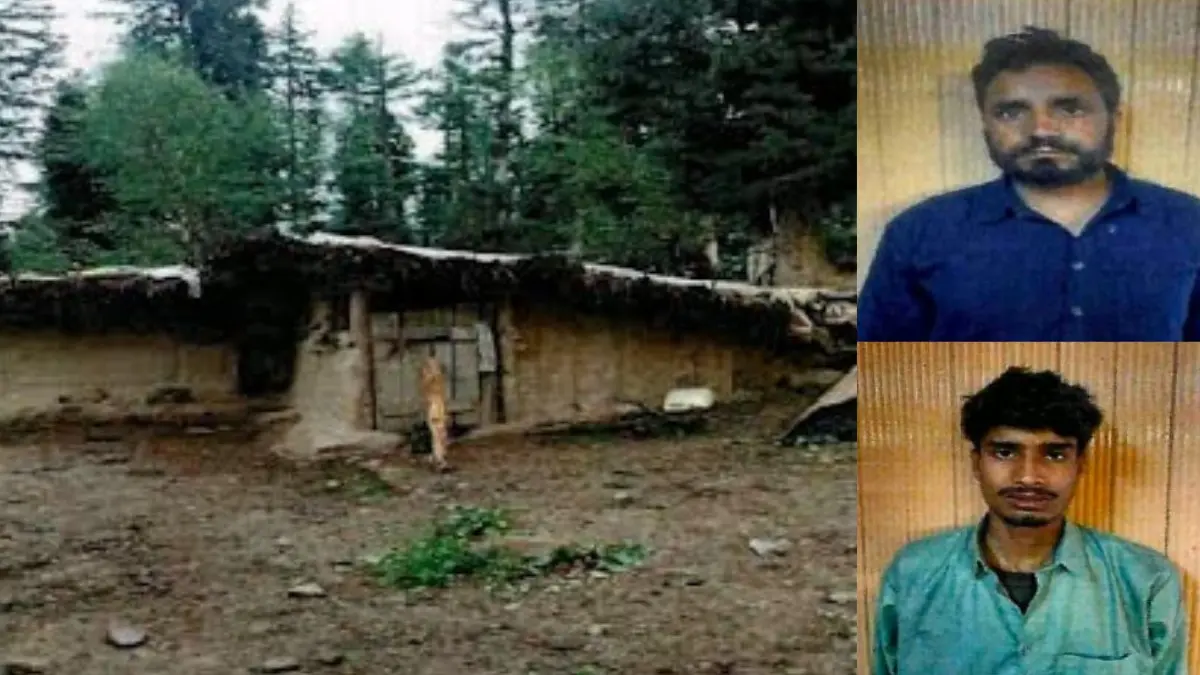
A major breakthrough has emerged in the investigation of the Pahalgam terror attack, with the Republic Media Network gaining exclusive access to the official charge sheet. The network has also obtained photographs of the specific "Dhok" (a traditional mud-and-stone hut) where the attackers sheltered just before launching their attack on civillians.
The findings reveal a stark reality: the deadly operation could not have been pulled off without critical local assistance.

NIA Chargesheet Discloses Deeper Information
Crucial documentation within the NIA charge sheet details exactly how the conspiracy connected back to top terror leadership and Pakistani supply chains:
“During examination of the disclosures made by A-5 (D-74) & A-6 (D-75), the name of one Sajid Jatt @Ali had surfaced. The investigation for gathering details regarding the details of said individual from the reports, social media profiles, previous FIRS registered by JKP was set in motion. The investigation revealed that Sajid Jatt @Ali is the commander of proscribed terrorist organization Lashkar-e-Taiba/The Resistance Front (A-7).”
Advertisement
Furthermore, the physical devices used by the network provided undeniable proof of foreign origin. The NIA sought tracking details from Xiaomi India regarding the supply chain of two mobile phones seized during the investigation. The manufacturer's data explicitly verified that both devices were sold and distributed within Pakistan:
Device 1: Bearing IMEI numbers 865792067481628 and 865792067481636, delivered to 109-M, C-10, Quaid-e-Azam Industrial Estate, Kot Lakh Path, Lahore (Pakistan).
Advertisement
Device 2: Bearing IMEI numbers 867906051958387 and 867906051958395, delivered to St/02, Faysal House, Main Branch, Shahrah-e-Faisal, Karachi (Pakistan).
This concrete technical evidence has again raised international concerns about the ongoing use of Pakistani territory and corporate supply chains for launching and coordinating terrorist attacks in India.
More Details From National Investigation Agency
According to National Investigation Agency (NIA) sources, two local tourist guides, identified as Parvez and Bashir Ahmed, provided direct aid to the attackers. On April 21, exactly one day before the strike, three heavily armed terrorists, Faizal Jatt alias Suleiman, Habib Tahir alias Chhotu, and Hamza Afghani, occupied Parvez's hut for roughly five hours.
During this time, the two guides served the men tea and prepared a full meal for them. When the terrorists prepared to leave, the guides went so far as to pack extra food rations and supply them with utensils for their journey. In return for the hospitality, the militants allegedly paid the guides 3,000 rupees.
NIA sources emphasize that both guides recognized the men as armed Mujahideen the moment they saw them. While inside the hut, the attackers questioned the guides extensively about security force camps, troop movements, and the upcoming Amarnath Yatra pilgrimage.
"Had Parvez and Bashir informed the police in a timely manner, the lives of 26 people could have been saved." - NIA Source
The next day, April 22, the guides spotted the same three terrorists sitting openly on a fence outside Baisaran Park. Despite recognizing them again, neither guide contacted security agencies. Once the assault was carried out, both men quietly went underground to evade the law.
Panic in the Valley: How the Attack Unfolded
The strike took place at approximately 2:30 PM on April 22, 2025, in an area globally celebrated for its scenic landscapes. The peaceful atmosphere instantly shattered into chaos when masked gunmen suddenly materialized and began firing indiscriminately into a crowd of tourists.
Before opening fire, the attackers took steps to single out their targets. "Before the terrorists opened fire, they confirmed the identity of the tourists whether they were Muslim or Hindu," recalled one survivor.
The unexpected ambush on a moving tourist convoy left one person dead and at least 12 others wounded. The Pahalgam District Hospital confirmed treating 12 injured individuals and registering one tourist fatality. Because the rugged terrain is accessible only by foot or horseback, security forces quickly cordoned off the entire zone to launch a massive manhunt, with top officials, including the Deputy Commissioner of Anantnag, arriving on-site to oversee operations.
High-Tech Weaponry and the TRF Propaganda Strategy
The attackers were not poorly trained local recruits; they operated with advanced, military-grade gear. Investigators recovered evidence of M-4 carbines, AK-47 rifles, and helmet-mounted GoPro-style cameras used during the ambush.
The use of body cameras points toward a calculated effort to record the violence for propaganda filmmaking, a signature tactic frequently employed by Pakistan-based outfits like Lashkar-e-Taiba (LeT) and Jaish-e-Mohammed (JeM).
Shortly after the incident, The Resistance Front (TRF), an offshoot of Lashkar-e-Taiba, officially claimed responsibility for the bloodshed. The group released a statement outlining their motives:
"More than 85,000 domiciles have been issued to non-locals, creating a pathway for demographic change in India-occupied Jammu and Kashmir (IIOJK). These non-locals arrive posing as tourists, obtain domiciles, and then begin to act as if they own the land. Consequently, violence will be directed toward those attempting to settle illegally."
Digital Footprints Trace Back to Pakistan
Intelligence agencies have successfully mapped the digital footprints of the six-man terror cell behind the operation, tracing their handlers directly back to Pakistan. By analyzing intercepted communications, including online chats and voice calls, investigators mapped the exact communication routes used to coordinate the attack.
The handlers were located in Karachi and Muzaffarabad in Pakistan-occupied Kashmir, reinforcing long-standing conclusions regarding cross-border command and control. This evidence renews international concerns over the continued utilization of Pakistani territory to organize and launch terror operations inside India.
This cross-border connection aligns with broader security trends in the region. A senior intelligence source disclosed that 60 percent of the terrorists neutralized by security forces in Jammu and Kashmir throughout 2024 were Pakistani citizens, confirming a steady rise in foreign infiltration and active involvement by external terror networks.
Get Current Updates on India News, Entertainment News, Cricket News along with Latest News and Web Stories from India and around the world.