
Patanjali Foods Clocks Record Q3FY26, Revenue Tops ₹10,483 Crore on Strong FMCG Push
Patanjali Foods posts record Q3FY26 performance with ₹10,483 crore revenue, strong FMCG growth, rising margins, expanding exports, and focus on sustainability and backward integration.
- India News
- 3 min read

;'%3e%3cpath%20d='m8,15.99c4.41,0,7.99-3.58,7.99-7.99S12.41,0,8,0,0,3.59,0,8s3.58,7.99,7.99,7.99Z'%20style='stroke:%23fff;%20stroke-miterlimit:10;%20stroke-width:.02px;'/%3e%3cpath%20d='m3.08,3.37l3.82,5.11-3.84,4.15h.87l3.37-3.64,2.72,3.64h2.94l-4.04-5.39,3.58-3.87h-.86l-3.1,3.35-2.5-3.35h-2.94Zm1.27.64h1.35l5.97,7.99h-1.35l-5.97-7.99Z'%20style='fill:%23fff;'/%3e%3c/g%3e%3c/svg%3e)


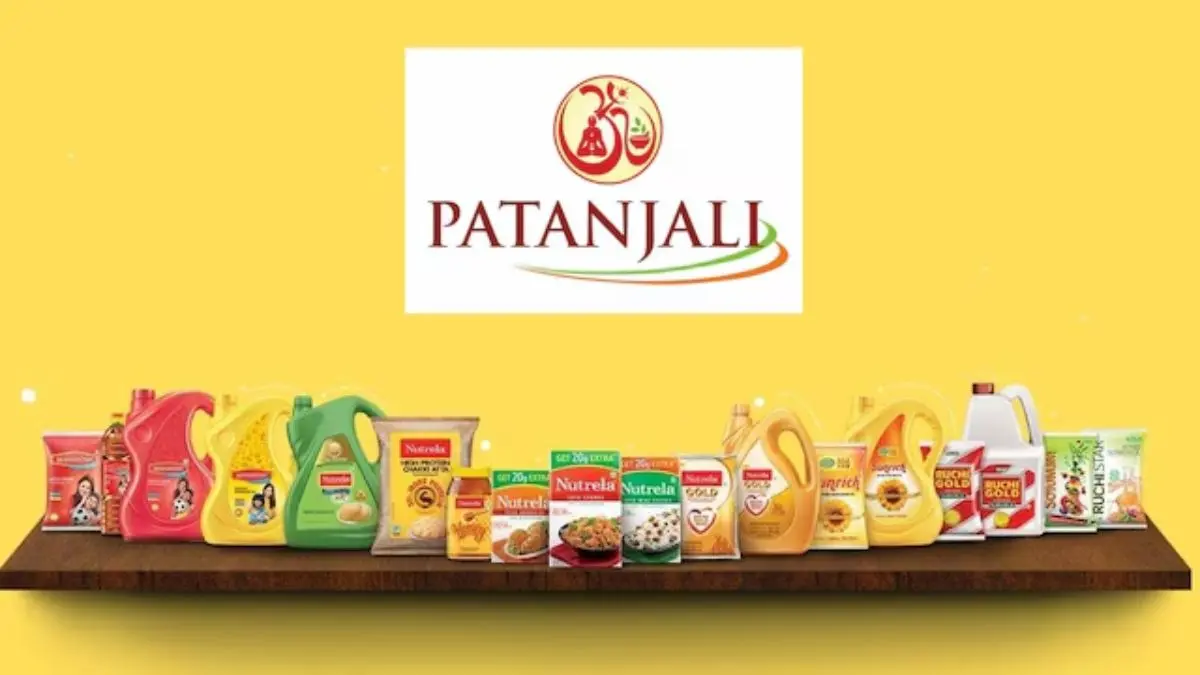
New Delhi: Patanjali Foods Limited delivered an exceptional performance in Q3FY26, clocking its highest-ever quarterly revenue and extending the momentum into a second consecutive record quarter. Despite industry-wide challenges, including global commodity price volatility, INR-USD currency fluctuations, and broader macroeconomic pressure, Patanjali Foods Limited delivered a healthy topline growth.
The company reported ₹10,483 crore in Q3FY26 as revenue from operations, while 9M FY26 revenue reached a historic ₹29,013 crore. The EBITDA for the quarter stood at ₹492 crore and the EBITDA margin was at 4.69%.
The strongest positive is the company’s FMCG acceleration. FMCG now contributes over 30% of total revenue, signifying a strategic pivot towards diversified consumer products in the FMCG segment. Over time, this trajectory positions Patanjali to evolve into a full-fledged FMCG powerhouse, reducing reliance on edible oils, with revenue reaching ₹3,248 crore and segment margins improving to 11%+ for the nine-month period. The EBITDA for the quarter was at ₹353 crores with the margin breaching the 10% mark.
The EBITDA margin in the HPC business continued to be close to 25% for the quarter, with the revenue reaching ₹628 crores and an EBITDA of ₹157 was clocked. The revenue growth was supported by stable demand trends, effective pricing strategies, and continued focus on scale and distribution efficiencies.
Advertisement
Category performance was equally encouraging: Ghee grew 46% YoY, biscuits rose 26% YoY, and the company’s ₹1,000+ crore ‘Doodh’ biscuit brand crossed last year’s full-year levels within the first 9 months of FY26—showcasing strong brand pull and repeat consumption.
Patanjali’s edible oil business continues to provide leadership at scale, delivering ₹7,336 crore in quarterly revenue with an EBITDA margin of 2.39%. Notably, ~85% of sales came from branded oils, reinforcing the shift toward higher-quality, brand-driven growth even amid commodity volatility—supported by brand investments and expanding distribution.
Advertisement
The company is also strengthening its long-term advantage through backward integration. Its oil palm plantation area has expanded to 1.08 lakh+ hectares, supported by partnerships across 12 states and 78,000+ farmers, 202 farmer producer organizations (FPOs), buyback guarantees, and operational processing mills with 13.82 lakh MT capacity. New mills coming up in Mizoram and Telangana are improving long-term supply visibility and security.
Beyond India, Patanjali Foods is widening its footprint, with exports now spanning 25 countries in the quarter and reaching 36 countries in the nine-month period. Domestically, its reach is a major competitive positive: an omni-channel network of 2 million+ retail touchpoints, alongside growing D2C and e-commerce presence.
On sustainability, renewable energy usage improved 20%, supported by 18.6 MW of captive wind power capacity out of a total of 84.6 MW—a meaningful operational strength as energy efficiency becomes increasingly important.
During the year, Patanjali signed an MoU with the Ministry of Food Processing Industries to invest ₹1,000 crore across six states. Various organizations like the World Customs Organization and Indian Customs departments have awarded AEO-Tier 2 certification for outstanding supply chain security and transparency.
With a strong market position, robust balance sheet, and focus on long-term value creation, Patanjali Foods Limited is well positioned to navigate near-term volatility and capitalize on growth opportunities in the evolving FMCG landscape. The company continues to strengthen its fundamentals through operational efficiencies, backward integration, and disciplined cost management.
ALSO READ: How Virtual Office is Redefining National Expansion for SMEs?
Get Current Updates on India News, Entertainment News, Cricket News along with Latest News and Web Stories from India and around the world.