
PM Modi Holds Telephonic Conversation With Iran President Pezeshkian, Discusses West Asia Developments
PM Modi spoke with Iran’s President Pezeshkian on West Asia developments, welcomed the understanding reached, and urged dialogue, diplomacy, and efforts to ensure lasting regional peace and stability.
- India News
- 4 min read

;'%3e%3cpath%20d='m8,15.99c4.41,0,7.99-3.58,7.99-7.99S12.41,0,8,0,0,3.59,0,8s3.58,7.99,7.99,7.99Z'%20style='stroke:%23fff;%20stroke-miterlimit:10;%20stroke-width:.02px;'/%3e%3cpath%20d='m3.08,3.37l3.82,5.11-3.84,4.15h.87l3.37-3.64,2.72,3.64h2.94l-4.04-5.39,3.58-3.87h-.86l-3.1,3.35-2.5-3.35h-2.94Zm1.27.64h1.35l5.97,7.99h-1.35l-5.97-7.99Z'%20style='fill:%23fff;'/%3e%3c/g%3e%3c/svg%3e)


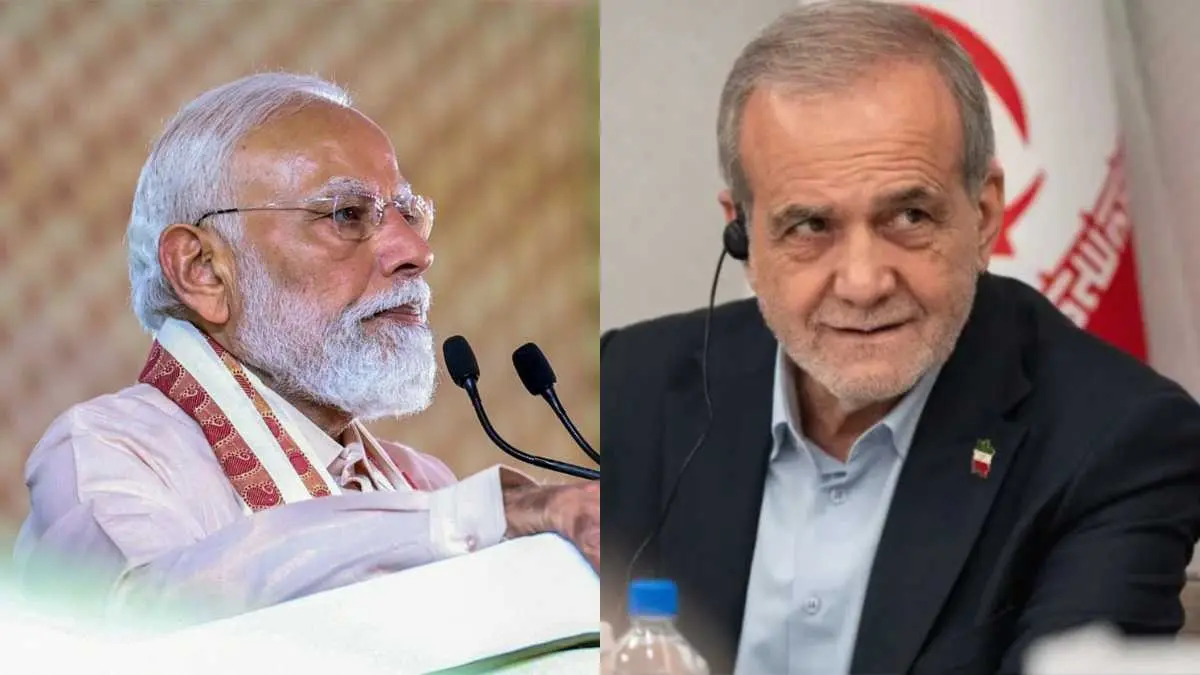
New Delhi: Prime Minister Narendra Modi held a telephone conversation on Tuesday with Iranian President Masoud Pezeshkian, during which the two leaders reviewed the latest developments in West Asia and discussed the path ahead. The telephonic exchange between the two leaders took place against the backdrop of heightened regional tensions and followed the recent virtual signing of a 14-point memorandum of understanding (MoU) between the United States and Iran.
According to a release from the Prime Minister’s Office, President Pezeshkian briefed PM Modi on the evolving situation in the region. The Prime Minister welcomed the understanding that had been reached and reiterated New Delhi’s long-standing position that all disputes must be settled through dialogue and diplomacy rather than confrontation.
Prime Minister Modi also outlined the need for sustained efforts to secure enduring peace and stability across West Asia. He stressed that safeguarding freedom of navigation and commerce remained critical, particularly given the strategic importance of the Strait of Hormuz to India and the world.
Call Focuses On Negotiations, Regional Stability
Providing details of the conversation on social media platform X, PM Modi said, “Spoke with the President of Iran, Dr. Masoud Pezeshkian, on the recent developments in West Asia. Welcomed the progress made in the negotiations and expressed hope that continued efforts will lead to lasting peace in the region. Reiterated the importance of freedom of navigation in the Hormuz Strait for India and the World.”
Advertisement
The PMO release added that PM Narendra Modi had welcomed the progress achieved in the negotiations with the US and had reiterated the importance of keeping the Hormuz Strait open for international shipping. The Strait, a vital maritime chokepoint, is central to global energy flows and India’s own energy security.
The latest phone call was the third interaction between the two leaders since hostilities flared in West Asia on February 28, involving Israel and the US on one side and Iran on the other. The previous conversations between the two took place on March 12 and March 21. During those calls, PM Modi had spotlighted India’s priority of ensuring the safety and well-being of Indian nationals in the region, including those in Iran, and had stressed the importance of unhindered movement of energy and goods. He had also extended greetings on Navroz and Eid.
Advertisement
US-Iran MoU And Doha Talks
The latest call between PM Modi and President Pezeshkian took place days after Washington and Tehran virtually signed a 14-point MoU. The agreement lays out provisions for reopening the Strait of Hormuz and for easing financial restrictions imposed on Iran.
Despite the MoU, Tehran clarified on Tuesday that it had no immediate plans to engage in direct meetings with the US. Speaking at a press briefing, Iranian Foreign Ministry spokesperson Esmaeil Baghaei stated to the state broadcaster IRIB, saying, “Basically, we have no plans to meet with the American side at any level in the next few days.”
Baghaei explained that discussions scheduled to take place in Doha were not political negotiations with Washington but technical-level deliberations tied to implementing the MoU. “What will be done in Doha tomorrow is a discussion on the implementation of clauses of the memorandum of understanding, including the release of Iran’s frozen assets, which is with the Qatari side,” he said.
India’s Consistent Approach
Throughout the West Asia crisis, New Delhi has maintained that dialogue is the only viable route to de-escalation. The Prime Minister’s remarks on Tuesday again reflected that approach, with a clear emphasis on protecting commercial shipping lanes and ensuring regional stability.
With thousands of Indian nationals residing across West Asia and India’s heavy reliance on Gulf energy supplies, freedom of navigation through Hormuz remains a core strategic concern for the country and the nations across the globe.
Get Current Updates on India News, Entertainment News, Cricket News along with Latest News and Web Stories from India and around the world.