
PM Modi Shares Why Bankim Chandra Wrote Freedom 'War Cry' Vande Mataram To Counter This British Anthem
Calling Vande Mataram ‘the modern incarnation of India’ and ‘the mantra that united a nation fighting for its soul’, PM Narendra Modi said the British saw it as a threat. He said Vande Mataram was a ‘sacred war cry to rid Bharatmata of vestiges of colonialism’.
- India News
- 6 min read

;'%3e%3cpath%20d='m8,15.99c4.41,0,7.99-3.58,7.99-7.99S12.41,0,8,0,0,3.59,0,8s3.58,7.99,7.99,7.99Z'%20style='stroke:%23fff;%20stroke-miterlimit:10;%20stroke-width:.02px;'/%3e%3cpath%20d='m3.08,3.37l3.82,5.11-3.84,4.15h.87l3.37-3.64,2.72,3.64h2.94l-4.04-5.39,3.58-3.87h-.86l-3.1,3.35-2.5-3.35h-2.94Zm1.27.64h1.35l5.97,7.99h-1.35l-5.97-7.99Z'%20style='fill:%23fff;'/%3e%3c/g%3e%3c/svg%3e)


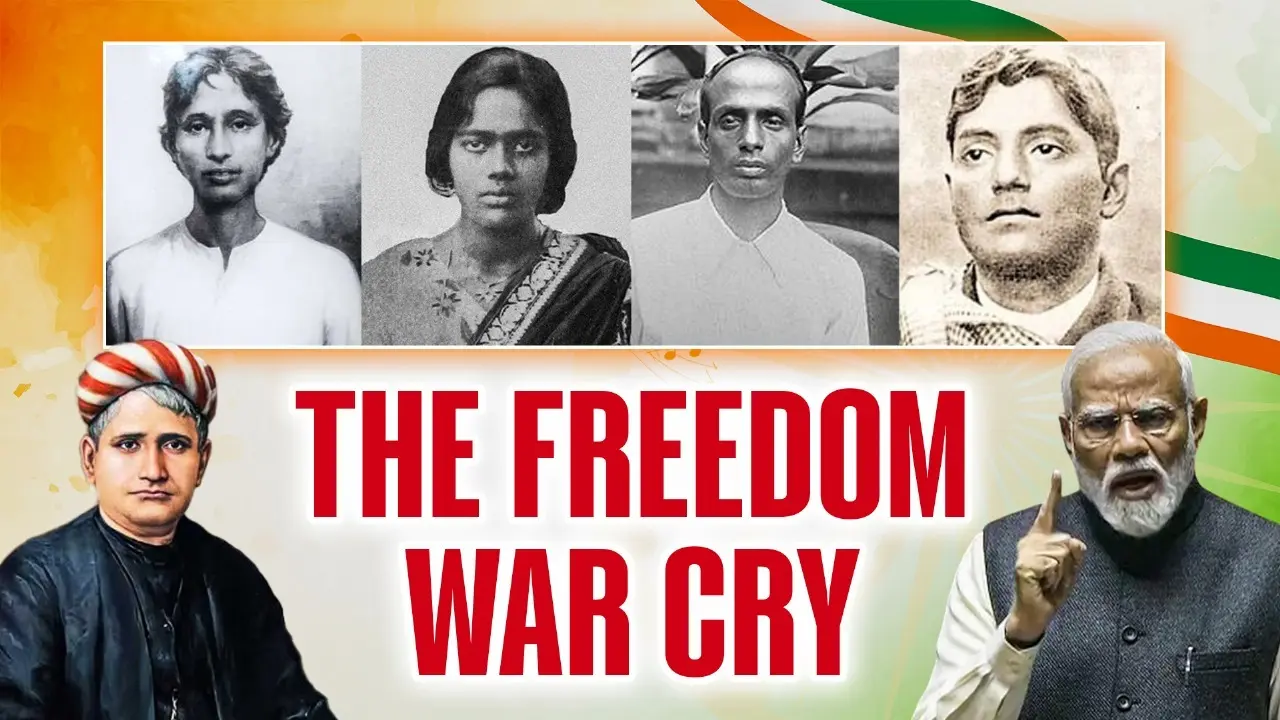
New Delhi: Prime Minister Narendra Modi on Monday delivered a stirring address in the Lok Sabha as the country marked 150 years of ‘Vande Mataram’, calling the iconic composition “the modern incarnation of India” and “the mantra that united a nation fighting for its soul”.
Addressing the Lok Sabha during the special discussion to mark 150 years of the patriotic song, PM Modi called it “a proud moment" and emphasised the importance of collective reflection on this landmark occasion.
Taking the House back in time, PM Modi reconstructed the birth, evolution, suppression and resurgence of the song that became the heartbeat of India’s freedom struggle.
Born in Resistance: 1875
The Prime Minister said Vande Mataram was born in 1875, crafted by Bankim Chandra Chattopadhyay during a period when the British Empire was shaken after the 1857 revolt.
Advertisement
“At a time when colonial rulers were aggressively promoting God Save the Queen as the anthem Indians must bow to, Bankim Chandra ne inth ka jawab pathar se diya (paid them back in the same coin) and wrote a song to unite us, to awaken us, to remind us of who we were as a civilisation for over a thousand years,” PM Modi said.
“By 1882, when Bankim Da wrote his novel Anandamath, Vande Mataram was woven into its narrative and soon became the clarion call of nationalism,” he said.
Advertisement
A Song That Crossed Eras of Suppression
Highlighting its symbolic endurance, PM Modi said, “When Vande Mataram completed 50 years in 1925, India was still chained under colonial rule, while at its 100th anniversary in 1975, the country was gripped by the Emergency and democracy was strangled.”
He said when ‘Vande Mataram’ turned 100, people were jailed for even uttering its words. “That era must never be forgotten,” he said, adding, "It is a matter of pride for us that we are witnessing the historic occasion of Vande Mataram completing 150 years today. Now we have the opportunity to restore the greatness of Vande Mataram. And I believe this opportunity should not be allowed to pass," PM Modi said.
The Song The British Feared
PM Modi reminded the House that the British considered Vande Mataram a threat. “The British believed if Bengal could be broken, India could be broken. Instead, Vande Mataram became the proclamation of Bengal’s unity,” he said.
“The British divided Bengal in 1905, but Vande Mataram stood like a rock and inspired unity,” he said as he mentioned how the British were forced to ban the poem and brought in laws to prevent its printing and propagation.
“Such was its power that the British imposed strict laws. Singing it, writing it or even uttering the words became punishable,” he said, narrating how women removed gold bangles in protest, how children drew courage from it and how that courage became the strength of the nation.
"In the same era, Vande Mataram’s recording reached different parts of the world. At London’s India House, which became a hub for freedom fighters, Veer Savarkar, a polarising figure in India's freedom movement and the ideological architect of Hindutva, used to sing Vande Mataram time and again," he said.
A Song Beyond Politics
PM Modi said Vande Mataram was not just a mantra for political freedom, but a “sacred war cry to rid Bharatmata of vestiges of colonialism”.
“Vande Mataram is not just a political song. It is the modern incarnation of India. It is the sankalp of every individual of this country,” he said.
He emphasised that the song restored India’s civilisational confidence, carrying within it “the same culture and same values embedded in the melodies of this land”.
“Bankim Da wrote it when the British were trying to divide us. And yet this song united us. Vande Mataram became the mantra of the freedom movement. It energised generations. It got us Independence,” he said, adding that it was time to “re-establish the song’s legacy and restore its glory for future generations”.
Saying that there was no leadership or Opposition in the House on Vande Mataram, PM Modi said, “We are here to appreciate and accept the debt of Vande Mataram collectively. There is no leadership and Opposition here. It is because of this song that we are all here together. It is a sacred occasion for all of us to acknowledge the debt of Vande Mataram... It united the nation from North to South and from East to West. The time has come to unite again and move together with everyone. This song should inspire and energise us to fulfil the dreams of our freedom fighters. We need to reiterate the resolve to make our nation self-reliant and developed by 2047," he said.
The Nehru Mention
Slamming the Congress in the Lok Sabha, PM Modi said Jawaharlal Nehru had succumbed to pressure. "Vande Mataram was so great, then why did injustice happen to it in the last century? Why was there betrayal with Vande Mataram? Which were those powers whose wishes overshadowed the emotions of Mahatma Gandhi?" he asked.
He accused the former Prime Minister of echoing Muhammad Ali Jinnah’s opposition to the national song and “pandering to communal concerns”. PM Modi said Nehru had once written to Netaji Subhas Chandra Bose that Vande Mataram might “provoke and irritate Muslims”, and suggested examining its usage. “This, despite Vande Mataram being born in Bankim Chandra’s Bengal,” he said.
A Proud Moment for India
Calling the 150-year commemoration “a proud moment for the entire nation,” PM Modi said, “We have chosen the path of collective discussion on this important occasion. To remember Vande Mataram is an absolute honour.”
The debate will continue in Parliament as leaders reflect on the song’s legacy and its enduring power to unite India — just as it did 150 years ago.
The government has been allotted three hours for its participation in the Lok Sabha debate, while a total of 10 hours has been earmarked for the entire discussion.
On Tuesday, Union Home Minister Amit Shah will open the discussion in the Rajya Sabha. Health Minister and Leader of the Rajya Sabha JP Nadda will be the second speaker.
The poem was written by Bankim Chandra Chatterjee on the occasion of Akshaya Navami, which fell on November 7, 1875. The song first appeared in the literary journal "Bangadarshan" as part of Chatterji's novel "Anandamath".
Get Current Updates on India News, Entertainment News, Cricket News along with Latest News and Web Stories from India and around the world.