
Supreme Court Orders 112 As One Unified Emergency Response Number, Trauma Rescue Protocol
The Supreme Court has recognised trauma care as a fundamental right under Article 21 and ordered all States and UTs to merge multiple emergency helplines into 112 within three months.
- India News
- 3 min read

;'%3e%3cpath%20d='m8,15.99c4.41,0,7.99-3.58,7.99-7.99S12.41,0,8,0,0,3.59,0,8s3.58,7.99,7.99,7.99Z'%20style='stroke:%23fff;%20stroke-miterlimit:10;%20stroke-width:.02px;'/%3e%3cpath%20d='m3.08,3.37l3.82,5.11-3.84,4.15h.87l3.37-3.64,2.72,3.64h2.94l-4.04-5.39,3.58-3.87h-.86l-3.1,3.35-2.5-3.35h-2.94Zm1.27.64h1.35l5.97,7.99h-1.35l-5.97-7.99Z'%20style='fill:%23fff;'/%3e%3c/g%3e%3c/svg%3e)


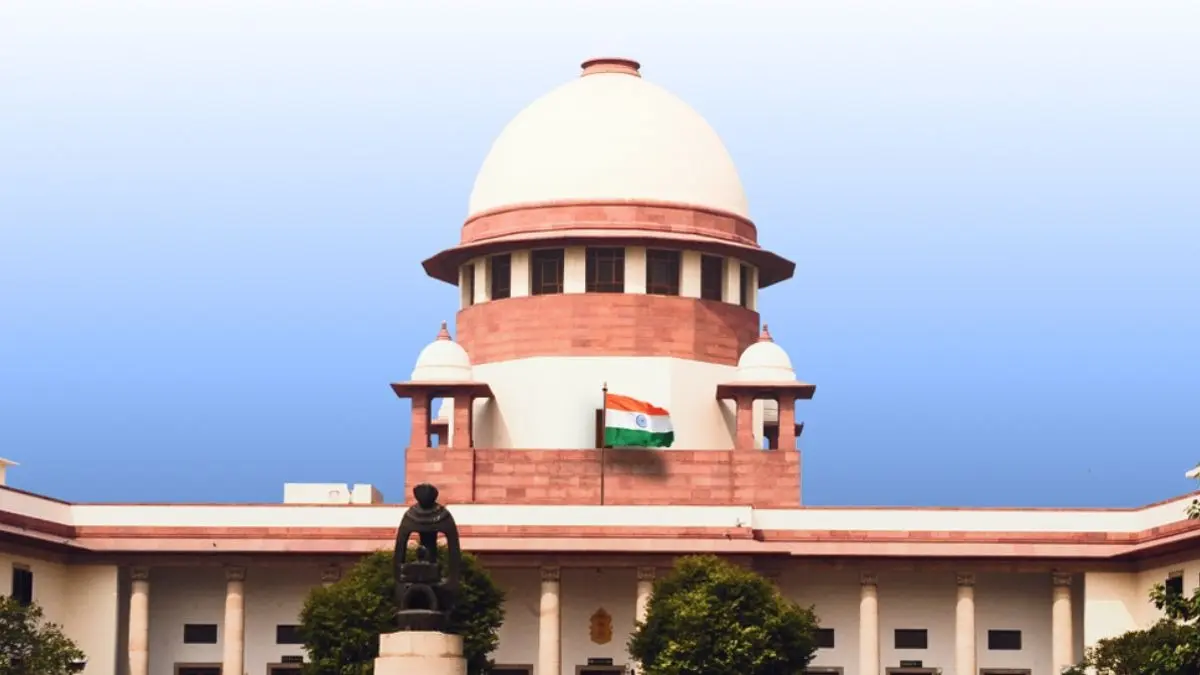
New Delhi: In a landmark order aimed at overhauling India’s emergency medical response system, the Supreme Court on Tuesday recognised the right to trauma care as an integral part of the Right to Life under Article 21 of the Constitution and directed all States and Union Territories to integrate multiple emergency helplines into the single national emergency number 112, within three months.
A Bench comprising Justice J.K. Maheshwari and Justice Atul S. Chandurkar passed the directions while hearing a petition filed by SaveLIFE Foundation, which highlighted the alarming number of deaths caused due to delayed emergency response and the absence of a uniform trauma-care framework across the country.
The petitioners submitted that India continues to witness a high number of fatalities after road accidents because ambulance systems remain fragmented, emergency response mechanisms are slow and uneven, Good Samaritans still fear harassment, and trauma-care infrastructure varies widely across states. They also pointed out that multiple emergency helpline numbers create confusion during critical situations, often delaying treatment for accident victims.
Appearing in the matter were Mr. Sidharth Luthra and Ms. Malvika Kapila for petitioner SaveLIFE Foundation, Mr. R. Venkatramani, learned Attorney General, and Mr. Arijit Prasad, Senior Counsel for the Union of India.
Advertisement
One Emergency Number, National Trauma Protocol & GPS-Tracked Ambulances
Observing that every minute after an accident is crucial, the Court held that fast and coordinated trauma response is essential for protecting life and directed States and UTs to merge emergency numbers including 100, 101, 102, 108, 1033 and 1091 with helpline 112 within three months.
The Court further directed the Union government to formulate a standardised national medical rescue protocol for trauma cases to ensure uniform procedures for picking up victims, stabilising them, transporting them and providing emergency treatment.
Advertisement
Taking note of deficiencies in ambulance systems, the Bench ordered States to ensure full compliance with the National Ambulance Code by all registered ambulances. It also directed mandatory GPS/Vehicle Location Tracking Device (VLTD) fitment and real-time integration of ambulances with helpline 112. Periodic structured audits covering response time, quality of care, equipment and treatment outcomes have also been ordered.
The Court additionally directed States to adopt and implement the standardised Emergency Medical Technician (EMT) curriculum notified by the National Commission for Allied and Healthcare Professions (NCAHP) and align their training institutions and personnel certification systems accordingly.
Good Samaritan Protection, Trauma Registry & PM RAHAT Implementation
Recognising the role played by bystanders in saving accident victims, the Supreme Court directed States and UTs to establish a functional Good Samaritan grievance redressal system within three months. The directions include appointment of nodal officers at district and state levels, creation of digital complaint systems and monthly monitoring mechanisms to ensure that citizens helping accident victims are not harassed by police or hospital authorities.
The Court also ordered the creation of State Trauma Registries and a coordinated national trauma database to maintain structured records relating to accidents, injuries, treatment and medical outcomes.
Further, all public and private hospitals are to be graded based on their trauma-care capacity across highways, urban areas, peri-urban regions and district roads. The Bench directed all States and Union Territories to fully operationalise the PM RAHAT cashless treatment scheme for road accident victims within three months, warning that non-implementation may amount to a violation of the Motor Vehicles Act.
The Court also ordered nationwide multilingual awareness campaigns regarding helpline 112, Good Samaritan protections, PM RAHAT and emergency trauma systems. The Supreme Court described the matter as a major public-interest issue linked directly to Article 21 and emphasised that coordinated and timely trauma care is essential to saving lives across the country.
Get Current Updates on India News, Entertainment News, Cricket News along with Latest News and Web Stories from India and around the world.