
Supreme Court to Rule on Presidential Reference Tomorrow Amid Row Over Governors’ Powers on State Bills
The Supreme Court will deliver its advisory opinion on November 20 on a Presidential Reference questioning whether it can set timelines for Governors and the President to act on State bills
- India News
- 3 min read

;'%3e%3cpath%20d='m8,15.99c4.41,0,7.99-3.58,7.99-7.99S12.41,0,8,0,0,3.59,0,8s3.58,7.99,7.99,7.99Z'%20style='stroke:%23fff;%20stroke-miterlimit:10;%20stroke-width:.02px;'/%3e%3cpath%20d='m3.08,3.37l3.82,5.11-3.84,4.15h.87l3.37-3.64,2.72,3.64h2.94l-4.04-5.39,3.58-3.87h-.86l-3.1,3.35-2.5-3.35h-2.94Zm1.27.64h1.35l5.97,7.99h-1.35l-5.97-7.99Z'%20style='fill:%23fff;'/%3e%3c/g%3e%3c/svg%3e)


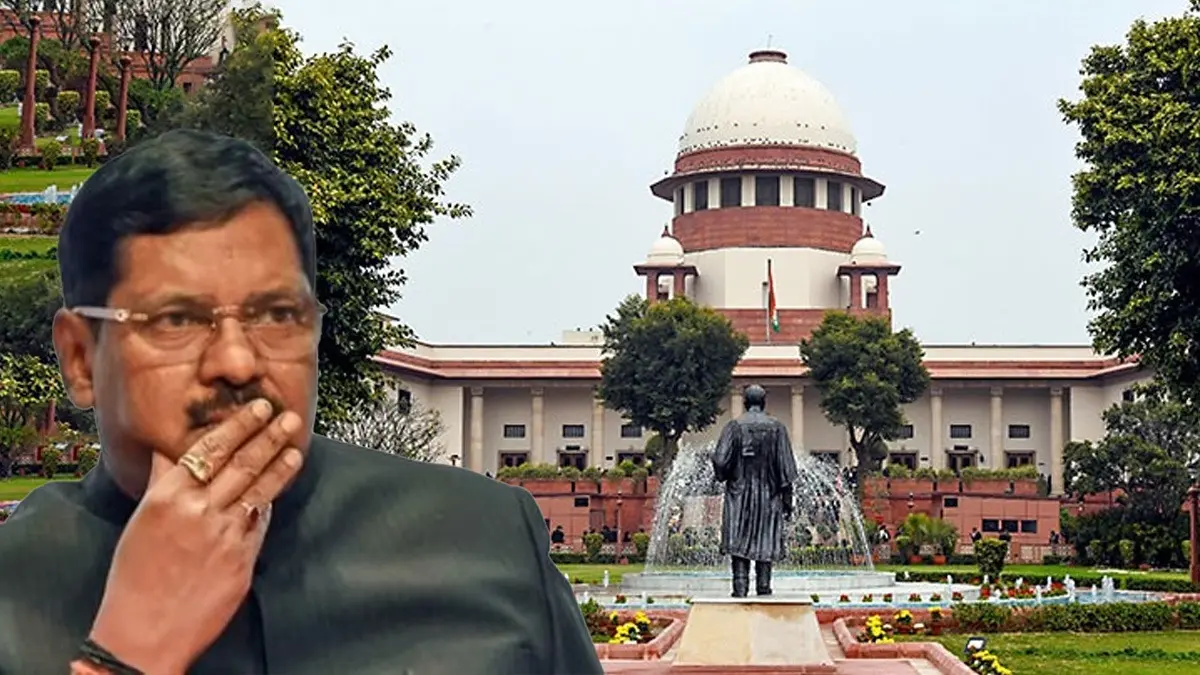
New Delhi: The Supreme Court will on Thursday (November 20, 2025) deliver its advisory opinion on a Presidential Reference that questions whether the apex court can “impose” timelines or direct how Governors and the President should deal with State bills submitted for assent or reserved for consideration.
The case was reserved in September by a five-judge Constitution Bench led by Chief Justice of India B.R. Gavai. The Bench clarified throughout the hearings that the Union government could not expect the court to "sit idle" in the event that a constitutional entity neglected to carry out its mandate.
The disagreement has brought to light ongoing conflicts between governors of opposition-ruled states and the delays in passing significant state laws. Using the Presidential Reference, the Union government claimed that the court was interfering with the President's and governors' authority.
The Supreme Court's April 8 ruling, which gave governors and the President three months to act on bills presented to them for consideration or approval, set off the Reference. According to the ruling, governors may not hinder government by delaying welfare legislation indefinitely.
Advertisement
During the proceedings, Solicitor General Tushar Mehta criticized the decision, referring to it as a "one-size-fits-all" answer. He argued that imposing a consistent chronology would be "self-destructive" because each Bill had its own unique context. He went on to say that the court could not assume legislative duties by ordering governors to provide their assent.
Attorney General R. Venkataramani argued that governors should have the authority to approve or reject bills after determining if they are constitutional.
Advertisement
Dispute Origin: TN Government vs Governor R.N. Ravi
The Tamil Nadu government filed a plea contesting Governor R.N. Ravi's choice to send the Tamil Nadu Physical Education and Sports University (Amendment) Bill, 2025 to the President rather than giving his own assent.
The Supreme Court promised to make a decision on the matter by November 21 and directed the Tamil Nadu government to wait for its ruling in October. A governor cannot propose a bill to the president after getting the "aid and advice" of the Council of Ministers, according to senior attorney Abhishek Singhvi.
President Seeks Clarification
President Droupadi Murmu used Article 143(1) in May to ask the Supreme Court to rule on whether judges have the authority to impose deadlines on the President when she must take action on bills enacted by state assembly. She presented 14 questions in a five-page reference to get clarification on the President's and Governors' responsibilities under Articles 200 and 201.
In its written response, the Center argued that "constitutional disorder" could result from one arm of government assuming powers not authorized by the Constitution due to set timetables for the President or Governors.
The decision on Thursday is anticipated to give important clarification on how constitutional authorities must deal with state legislation and the scope of the Supreme Court's oversight function in these cases.
Get Current Updates on India News, Entertainment News, Cricket News along with Latest News and Web Stories from India and around the world.